



Drone Wind Resistance Levels How Much Wind They Can Handle
Various companies and industries utilise Unmanned Aerial Vehicles (UAVs) and drones nowadays for different purposes. Drones can fulfill both easy and complex tasks in professional projects and recreational activities. In all operations, drones can be exposed to different factors that can cause issues. These advanced technologies will encounter other physical objects, hazardous materials, and even extreme weather conditions.
Extreme weather is a potent factor, encompassing rain, changing temperatures, and strong winds. Drones cannot wholly avoid these extreme winds; thus, modern drones are built to have wind resistance. In this blog, we will discuss professional UAVs, drone wind resistance levels, tolerance to strong winds, and more. With this information, your firm can understand drone wind resistance levels.
What Are Drone Wind Resistance Levels?
Drone wind resistance levels refer to a drone’s capability to fly stably even in specific wind conditions. As wind conditions can vary from light to strong, these drone wind resistance levels can indicate to pilots how well a drone can fly safely without losing accuracy in navigation.
Other than the drone wind resistance level, there is also a drone wind resistance rating. Both have different definitions, therefore serve various purposes – wind resistance level explains the drone’s ability to withstand winds, while drone wind resistance rating showcases the measurable performance thresholds. Specifically, consumer drones commonly offer limited drone wind tolerance, which is suitable for recreational activity, casual photography, etc. Meanwhile, professional drones are engineered to tolerate higher and stronger winds.
How Are Drone Wind Resistance Levels Defined?
Manufacturers define drone wind resistance levels through controlled testing and engineering analysis. Conducting the results often includes maximum sustained wind values and stability thresholds, which determine the basis of published UAV wind resistance levels.
Furthermore, the operational wind envelope can augment the manufacturer’s data. This reflects the wind conditions a drone can handle when completing a flight mission safely, as it considers factors like the payload weight, altitude, and flight duration.
With that, a drone’s performance is heavily affected by the average wind speed and gust wind speed. Average wind can have an impact on the drone’s overall stability and battery consumption, whereas sudden gusts can exceed drone wind speed limits, causing it to lose control. When it comes to public ratings, they are usually different from real-world performance. This is due to environmental complexity, wherein buildings, terrain, and large structures can cause turbulence.

What Is the Beaufort Scale and How Does It Apply to Drone Wind Resistance?
The Beaufort Scale is vital for drone pilots as this standardized system estimates the wind speed based on observable conditions, which also inputs the current environmental wind behavior and translates it into a usable guide that is used for flight planning.
With drones, this system helps in understanding drone wind resistance levels in real-world conditions such as calm winds, breezes, and gusts. For instance, operators can compare the Beaufort scale drone wind levels to the manufacturer’s limits, which can help assess flight safety.
Workers have a better explanation of the relationship between wind speed vs drone control before proceeding with flight takeoff with this comparison:
|
Lower Beaufort Levels (0-5) |
Ranging from calm to fresh breeze wind types, these levels generally align with safe drone options |
|
Higher Beaufort Levels (6-12) |
Starting with strong breezes to hurricane-force wind types, which involve gusts that exceed the drone’s wind tolerance. |
Be that as it may, the Beaufort scales have limitations for UAVs. Although it can estimate the surface winds, it cannot assess the gusts at altitude, nor replace a drone’s specific wind resistance rating.
How Much Wind Can a Drone Fly In Safely?
Strong winds can be challenging and can take a toll on drones and UAVs, and this particular problem can be mitigated by preparing for extreme weather by first learning how much wind a drone can safely fly in.
Knowing drone wind resistance levels enables pilots to match the complex and straightforward missions according to the safe operating conditions. The wind limits for each drone are the following:
- Beginner Drones
These UAVs have the lowest wind tolerance. They are lightweight and can typically handle only light breezes. - Consumer Camera Drones
Additionally, it performs better in moderate wind. Manufacturers feature the maximum wind speed a drone can fly to maintain stable capture and navigation. - Professional and Industrial Drones
These drones are specially engineered for harsher environments as they are equipped with advanced technologies that use stronger motors and heavier frames. This results in supported drone flight in strong winds during critical missions.
Besides the strength of the winds, the direction is also vital to note. In fact, there are headwinds that reduce speed but allow for controlled drone flight, and there are crosswinds that create lateral drift and require greater pilot correction.
How Do Professional Drones Achieve Higher Wind Resistance?
Professional drones can operate successfully and maintain reliable performance in spite of strong winds. In order to achieve higher wind resistance, operators have to consider the following:
- Higher Thrust-to-Weight Ratio
The attached powerful motors can generate force to counter strong gusts of wind. It is a key factor of professional drones’ wind resistance. - Advanced Flight Control Systems
These systems can process the current wind data, which pilots can use to adjust the motor output for a better flight performance. - Redundant Sensors and Inertial Measurement Units
Multiple Inertial Measurement Units (IMUs) are built to cross-check data to maintain accurate positioning. - Aerodynamic Frame Design
As structures get streamlined, there will be reduced drag and minimized wind impact. Having these designs is familiar with modern wind-resistant drones.
With these engineering advances, firms and operators tend to opt more for professional drones, as they outperform other consumer models. It reinforces the importance of understanding drone wind resistance levels when selecting a drone for complex missions.
Which Are the Best Drones for High Wind Resistance?
Firms now have access to a wide variety of advanced technologies and UAVs to use. Listed below are the best drones for windy conditions:
- Consumer Drones
This specific type of drone performs best in mild to moderate weather and winds. - Industrial Drones
This drone can demonstrate superior professional drone wind resistance as it is engineered for continuous operation against challenging winds. - Professional Drones
This model can manage gusts better since it is integrated with advanced sensors and redundant systems.
With these wind-resistant drones, firms and pilots can choose the necessary advanced technology that ensures safe operations and reliable results. The firm’s operational demands are met as drones provide complete control and data accuracy even in exposed locations.
How Can You Determine Your Drone’s Wind Resistance Level?
Firms need to determine a drone’s wind capability, as this is a factor for a safe and predictable flight. Understanding more about drone wind resistance levels can reduce risk for both the equipment and the operator.
In order to determine the drone’s wind resistance, refer to the following steps:
- Manufacturer Specifications
Learning about a list of drone wind resistance ratings can help operators distinguish technical limits for a practical and realistic operation guidance. - Differences between Maximum and Recommended Wind Conditions
Identifying the differences can reflect the highest survivable conditions for UAVs. - Weather Apps and Tools
Information provided by weather apps and tools can help operators in overseeing how the drone will respond to different gusts and crosswinds. - Field Testing
Operators that conduct controlled field testing can gain practical insights for pilots. This improves decision-making and when to increase wind under safe conditions. This results in the drone having a better response to gusts and crosswinds
Combining data, tools, and testing leads to smart and confident decisions. Determining the drone’s wind resistance level reinforces understanding of drone operations for every complex mission.
How Do Wind Speed Conversions Help Estimate Drone Wind Resistance?
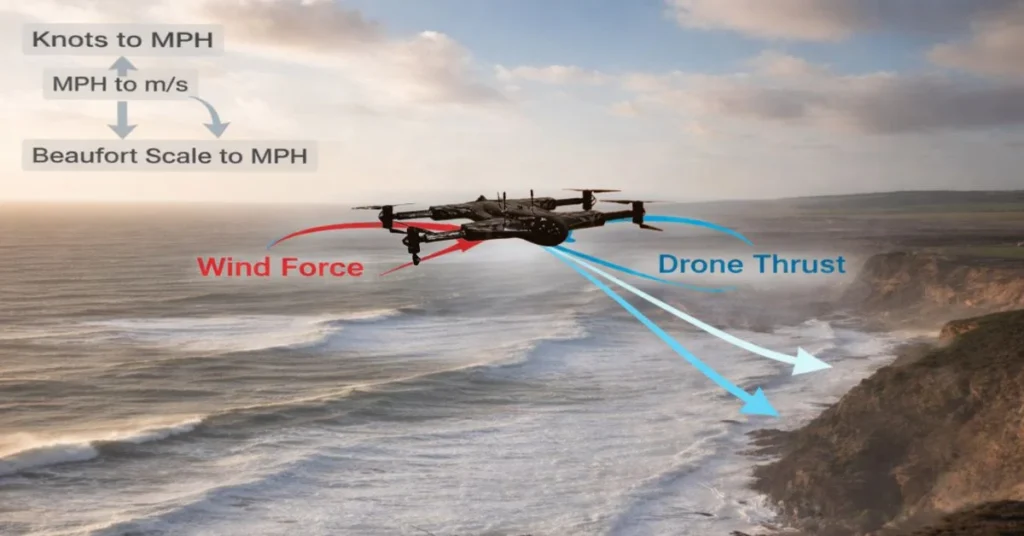
Drone wind resistance levels are associated with common wind measurements, as it is essential for safe drone operations. With that, pilots should interpret wind data accurately before flight.
When it comes to wind speed, it is often reported in units of speed. Thus, it’s practical for operators and pilots to possess this practical skill of wind speed conversion by using the following:
|
Meters per second to Kilometers per hour |
Multiply by 3.6 |
|
Miles per hour |
Multiply meters per second by 2.24 |
These wind values can help with drone stability as lower wind speeds can support smooth flight nd consistent positioning, while higher wind speeds involve gusts that affect navigation and battery efficiency.
Linking wind values to the Beaufort scale drone wind levels helps operators to estimate turbulence and surface conditions visually. To add, a quick wind resistance reference chart aligns the wind speed units with drone wind resistance levels, which can help with decision-making.
What Can Real-World Flights Teach About Drone Wind Resistance?
Real-world flights give pilots a better analysis and understanding of drone wind resistance levels. It can further improve workflow by providing valuable insights, such as:
- Global Positioning System (GPS) Drift
The GPS drift is a common observation, as it can cause changes in drone performance in windy conditions. - Battery Drain
Additionally, high winds require motors to work harder. This results in an earlier low-battery experience and a decrease in flight time. - Video Shake & Gimbal Stress
This case is also an example of when drones encounter challenging winds. Although gimbals can compensate for sudden movements, mechanical stress will be increased. - Emergency Return-to-Home Failures
Facing strong headwinds causes drones to be unable to return safely. Automated systems often underestimate wind resistance during flight, which can lead to drones failing during return-to-home emergencies.
All the mentioned situations emphasize the need for operators and firms to be prepared for flight missions and possess the necessary situational awareness.
How Is Drone Wind Resistance Measured and Tested?
Measuring and testing drone wind resistance helps define reliable wind resistance levels. Drones can operate efficiently through the following:
- Wind Tunnel Testing
This controlled approach exposes drones to variable airflow, enabling them to achieve stability and enhanced control accuracy. - Field Testing
Another method is field testing in the natural environment, which reveals how external factors such as turbulence, terrain, and altitude can affect drone control. - Measuring Gust Resilience
Known as an essential process, measuring gust resistance in drones involves exposing them to gusts. Engineers can evaluate recovery time, positional accuracy, and system response. - Wind Load and Payload Interaction
Wind load and payload can affect the drone’s flight. Other additional mounts, like sensors and cameras, can also increase the surface area and drag.
How Does Wind Affect Drone Performance and Stability?
Wind is a factor that operators must consider when operating drones and taking them into flight. During flight, drones are affected by wind and impact the following:
- Hover Stability and Yaw Control
Reduced drone stability in high winds can increase the pilot workload. - Increased Battery Consumption
Since motors draw more power to counter wind forces, drones consume more battery. This results in shorter flight times than expected. - Reduced Quality of Images and Videos
Wind can cause drones to vibrate and have sudden movements, straining the gimbals and stabilization systems in the process. Drone drift in the wind can also affect image and video quality, resulting in blurry footage. - Sensor and GPS Interference
Turbulence degrades the performance of the drone’s sensors and GPS, affecting its performance and purpose. - Payload Lift Limitations
Another limitation is that added weight can cause drones to drag. Heavy payloads reduce the overall control in gusty conditions.
What Types of Wind Most Commonly Impact Drone Flights?
Understanding how wind can affect drone performance and stability encourages pilots to recognize how different wind conditions can have varying influences on drone wind resistance levels. UAVs and drones may encounter different types of winds, such as:
- Constant Wind
The most predictable condition is characterized by steady airflow. This allows a smooth flight for operating drones. - Sudden Gusts
There are more challenges when drones encounter sudden wind gusts, since it cause rapid changes in direction and speed. - Wind Shear
Another risk is when wind shear effects on drones since wind speed changes abruptly with height. This can disrupt the accuracy of ascent, descent, and hovering. - Microbursts and Downdrafts
It’s less common, yet highly dangerous. These downward airflows force drones to glide toward the ground, making it difficult for the operator, even with advanced flight controls. - Turbulent Airflow
When operating near buildings and terrain, turbulence drone flight can create irregular airflow patterns, which challenge the stabilization system and pilot awareness.
Recognizing these different wind types and how they impact drones can improve flight planning and the pilots’ risk awareness. Additionally, understanding the above-mentioned winds also strengthens decision-making.
Which Factors Influence Drone Wind Resistance?
Various engineering factors determine how well a drone can perform in extreme weather. Specifically, drones can fulfill tasks better when operators comprehend the following elements:
- Aerodynamic Frame and Body Shape
A balanced body shape can help the drone have smoother airflow and improved flight stability. - Drone Size and Weight
Heavier drones resist displacement better; hence, drone size and weight indeed have an impact on flight performance. - Motor Power and Torque
High-torque motors make drones respond efficiently to sudden wind changes. - Propeller Size and Efficiency
Drones that are built with larger and more efficient propellers can generate consistent flight during missions. - Flight Controller Algorithms
This algorithm ties all components together, as advanced software can adjust the motor output in real time. Wind compensation technology maintains position and heading. - GPS, Inertial Measure Unit (IMU), and Wind Compensation Systems
GPS, IMU, and wind compensation systems can utilize data to detect changes and correct flight paths in real-time.
What Are the Best Practices for Flying Drones Safely in Wind?
Wind is a natural factor, making it unpredictable, yet good habits and practices improve drone flight in windy conditions. Fly drones safely by implementing practices, such as:
- Pre-Flight Wind Assessment
Before taking flight, pilots must review forecasts, gust speeds, and on-site conditions. - Two-Thirds Wind Rule
It is a safety margin where operators should only fly drones when the current wind speeds are below two-thirds of the drone’s rated capability. - Flying into the Wind on Takeoff and Landing
Drones that fly into the wind can experience improved lift and control during missions. - Battery and Return-to-Home Planning
Encountering headwinds can cause drones to use more power on return flights, in which pilots should consider the drone’s battery and shortening the mission. - Emergency Landing Strategies
This practice ensures safe planning by identifying a clear landing zone.
Learning about the mentioned wind-resistant drone tips can help operators and firms to make better decisions before, during, and after missions. These practices provide an opportunity to be efficient when it comes to drone flights and UAVs.
Can Flying Above Rated Drone Wind Resistance Levels Cause Damage?
Flying beyond the rated limits puts drones under significant stress; hence, understanding the risks helps protect equipment, data, and personnel. Otherwise, there will be damages such as:
- Motor Overheating
There are cases where wind exceeds published ratings, forcing motors to work hard so the position can be maintained. This constant effort from the drone’s motors will eventually increase heat buildup and accelerate wear. - Structural Stress on Arms and Frame
When there are strong winds, the drone’s arms and frame can be affected. Moreso when the drone used is beyond intended tolerances, which can lead to repeated structural stress and cracks. - GPS and Compass Errors
Turbulence and other atmospheric instabilities can disrupt the drone’s GPS positioning, which can cause errors in its compass accuracy. This issue results in the drone drifting. - Increased Crash Probability
Crash probability is increased when there is a lack of control. This occurs when drones operate above the wind speed limit.
Operators who fly drones above rated limits will not accomplish their goal and will rarely improve mission success. Therefore, safe operating practices must be established to be efficient.
How Do Payloads and Altitude Affect Drone Wind Resistance?
The payload and the altitude can significantly influence drone performance. Drone wind resistance is also influenced by the following:
- Payload Weight VS Wind Tolerance
Heavier payloads require more thrust in order to maintain flight position. This payload effect on drone wind resistance reduces the margin available that can counter wind gusts - Increased Drag
Mounted sensors and equipment increase the drone’s drag. External mounts also make it difficult to maintain control in crosswinds. - Stronger Winds at Higher Altitude
Another challenge is when winds become stronger at higher elevations, which makes altitude wind tolerance drones necessary for particular missions. - Reduced Flight Time
Since motors consume more power when fighting strong winds, there is less flight time, and the mission duration is limited.
FAQ About Drone Wind Resistance Levels
Can drones fly in winds stronger than their rating?
Drones can withstand winds above their rating, but sustained exposure to strong winds can increase flight failure. Operating beyond rated limits raises risks and issues, as it can cause damage to the drone’s motors and frames.
Do wind gusts matter more than average wind speed?
Yes, wind gusts are regarded as a greater risk than steady winds. When drones encounter sudden changes like wind conditions, their flight controllers can rapidly drift.
Are heavier drones always more wind-resistant?
Although heavier drones resist displacement better, the drone’s weight cannot decide everything. There are other factors to consider, like motor power, aerodynamic design, and control systems.
How accurate are manufacturer wind ratings?
Manufacturer ratings are generally accurate under controlled test conditions. Nevertheless, operators must also regard issues such as real-world turbulence, payloads, and altitude, which can reduce practical performance.
What happens if the return-to-home fails in high winds?
Return-to-home may be stalled if headwinds exceed available thrust. Pilots must reduce altitude and manually fly toward shelter or a controlled landing in similar situations.
Contact Us

Thank you for your message. It has been sent.