



How Fixed-Wing Drones Are Changing the Way Businesses Work
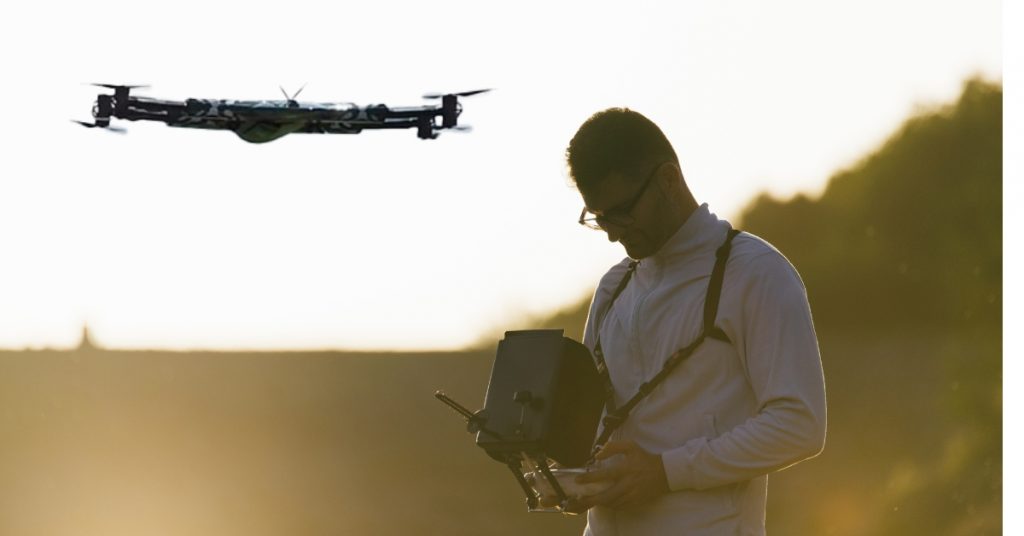
Fixed-wing drones are now very useful for businesses all around the world. There are a lot of different types of drones on the market, and each one is made for a certain job. For example, multi-rotor drones are great at moving around but have a short range, whereas fixed-wing drones are great at covering big regions quickly.
What Is a Fixed-Wing Drone?
A fixed wing drone is a kind of UAV that looks and flies like an airplane. Fixed wing drones don’t need propellers to lift off, their wings stay still, which makes for smoother and more energy efficient flying.
Basic Aerodynamics: Fixed-wing UAVs use aerodynamic lift to glide through the air. This saves battery power and lets them fly longer and cover more ground on each mission.
Main Differences:
- Fixed-Wing Drones: Built for long flights and long ranges; great for surveying and mapping big areas.
- Multirotor drones are better at hovering and moving around, but they don’t fly as long.
- Hybrid VTOL drones can do both vertical takeoff and landing and fly long distances efficiently.
Key Parts: Fixed-wing drones have wide wingspans that help them lift, a propulsion system (such an electric motor or engine) that helps them go forward, and control surfaces like ailerons and rudders that help them stay stable and change direction.
How Fixed-Wing Drones Work
The Principles of Lift, Thrust, and Glide
Like regular airplanes, fixed-wing drones stay in the air with very little energy use because their wings don’t move. Fixed wing UAVs only need to push ahead and glide on wind currents for long periods of time, but multirotor drones always need propellers to lift them.
Control and stability of flight
These drones employ ailerons, elevators, and rudders to steer, change altitude, and keep their balance. This design makes the plane more stable and lets it glide to safety when the power goes off, so it can land safely even without propulsion.
Strength and Endurance
Fixed-wing UAVs can be driven by batteries or gasoline. Electric models are quieter and better for the environment, while fuel-powered models can fly farther. Fixes Wing drones fly up to 90 minutes or longer and reach greater altitudes with little noise thanks to their efficient aerodynamics. This makes them perfect for mapping, surveillance, and industrial operations on a big scale.
How Fixed Wing UAVs Operate Different Industries
A fixed-wing UAV functions much like a conventional airplane, relying on four forces lift, weight, thrust, and drag to stay airborne. To maintain flight, lift must exceed weight, and thrust must overcome drag. This aerodynamic efficiency allows fixed-wing drones to fly higher, faster, and farther than multirotor models, though they must keep moving forward to remain aloft.
Because of their range and stability, commercial fixed-wing drones with camera systems are ideal for large-scale or long-distance operations such as:
- RC Racing: Used in competitive first-person-view drone racing.
- Military Operations: For long-range surveillance and tactical mapping.
- Cargo & Medical Delivery: Transporting lightweight packages or medical supplies across remote areas.
- Agriculture: Efficiently spraying crops or mapping large farmlands.
- Reforestation: Covering vast areas for seed dispersal and forest monitoring.
- Wildfire Tracking: Providing real time aerial imaging for faster emergency response.
How to Choose the Best Fixed Wing Drone
While most drones come with built-in cameras, not all are designed for the same purpose. Some excel in high-definition aerial photography, while others are built for industrial surveying, mapping, or delivery missions.
Here are five essential features to evaluate when choosing a fixed-wing drone:
- Camera Selection: Choose a model based on your goal. FPV fixed-wing drones are great for racing, while professional versions include high-resolution or multispectral cameras for mapping and inspection.
- Wind Stability: High-end fixed-wing UAVs can reach altitudes over 110 meters and must be engineered to handle strong wind conditions for stable flight.
- Flight Time: Fixed-wing drones offer exceptional endurance, flying up to 60–90 minutes, far longer than most multirotor models.
- Survey Area Coverage: Designed for large-scale mapping and monitoring, these drones efficiently cover wide terrains in a single flight.
- Budget: Prices vary widely: entry-level models may cost under US$1,000, while advanced commercial units with specialized sensors can exceed US$10,000.
Fixed-Wing vs. Multirotor Drones
When choosing between fixed-wing and multirotor drones, it’s important to understand their distinct strengths. Fixed-wing UAVs excel in range, speed, and endurance, while multirotors offer precision, flexibility, and control for close-up operations.
| Feature | Fixed-Wing Drone | Multirotor Drone |
|---|---|---|
| Flight Time | 60–180 minutes | 20–45 minutes |
| Payload Capacity | Heavier | Lighter |
| Maneuverability | Moderate (requires forward motion) | High (can hover) |
| Coverage Area | Large-scale mapping & surveying | Small, detailed inspection zones |
| Best For | Mapping, surveying, delivery | Filming, inspection, short-range missions |
Advantages of Fixed-Wing UAVs
Fixed-wing UAVs offer several key benefits that make them ideal for large-scale and long-range aerial missions:
- Extended Flight Range: Their aerodynamic design enables flights lasting up to several hours, perfect for mapping and surveying vast areas.
- Energy Efficiency: Fixed wings generate lift naturally, consuming less power than multirotor UAV that rely on continuous propeller thrust.
- Higher Wind Tolerance: Built for stability, they perform reliably even in strong wind conditions and higher altitudes.
- Quiet Cruise Flight: These drones glide smoothly, producing minimal noise, which is ideal for surveillance and environmental monitoring.
- Cost-Effectiveness: Their longer flight times and wider coverage make them more efficient and economical for industrial and agricultural operations.
Types of Fixed-Wing Drones
Fixed-wing UAVs come in various designs, each suited for specific missions and environments:
- Traditional Fixed-Wing: Requires a runway or catapult launch and is ideal for long, steady flights over wide areas.
- VTOL Fixed-Wing (Hybrid): Combines airplane-like wings with vertical takeoff and landing ability—no runway needed, perfect for versatile operations.
- Mini Fixed-Wing UAVs: Compact and lightweight drones built for short-range mapping, research, and training purposes.
- Long-Range Fixed-Wing Drones: Designed for BVLOS (Beyond Visual Line of Sight) missions, enabling cross-border or large-scale industrial and surveillance operations.
Top Applications of Fixed-Wing Drones
Fixed-wing drones are used across multiple industries for their range, efficiency, and endurance. Here are the most common applications:
- Agriculture: Used for crop mapping, fertilizer spraying, and monitoring field health over large areas.
- Surveillance & Security: Ideal for border patrol, traffic control, and wildfire monitoring due to their long flight range.
- Environmental Conservation: Assist in forest assessment, reforestation projects, and wildlife tracking.
- Logistics: Enable long-distance parcel and cargo delivery across remote or hard-to-reach locations.
- Disaster Response: Provide aerial scanning and emergency supply drops in disaster-stricken areas.
- Mining & Construction: Used for terrain mapping, volumetric analysis, and stockpile measurement.
Future Trends in Fixed-Wing Drone Technology
The future of fixed-wing drones is rapidly evolving, driven by advancements in AI, automation, and sustainable energy. Key developments shaping next-generation UAVs include:
- AI-Powered Flight Control Systems: Artificial intelligence enables smarter route planning, adaptive flight adjustments, and predictive maintenance.
- Hybrid Power Systems: Integration of solar panels and hydrogen fuel cells extends flight endurance while reducing environmental impact.
- Autonomous Navigation & Collision Avoidance: Advanced sensors and onboard computing allow fully autonomous missions with improved safety and precision.
- Cloud-Based Mapping Integration: Real-time data transmission and cloud analytics enhance collaboration and post-flight insights for industries like agriculture, mining, and surveying.
The Takeaway
In recent years, drones have expanded from military to commercial and personal. Their increased accessibility means that hobbyists and professionals can quickly gather images and data. This also means there are now different types of commercially available drones for various projects. Certain drones are meant for smaller-scale operations, while others are best suited for bigger ones.
Fixed-wing drones are especially suited for the latter. Despite their size and frame, their design makes them capable of prolonged flight, letting them take more images per flight.
Contact Us

Thank you for your message. It has been sent.