



Difference Between Relative and Absolute Location Guide
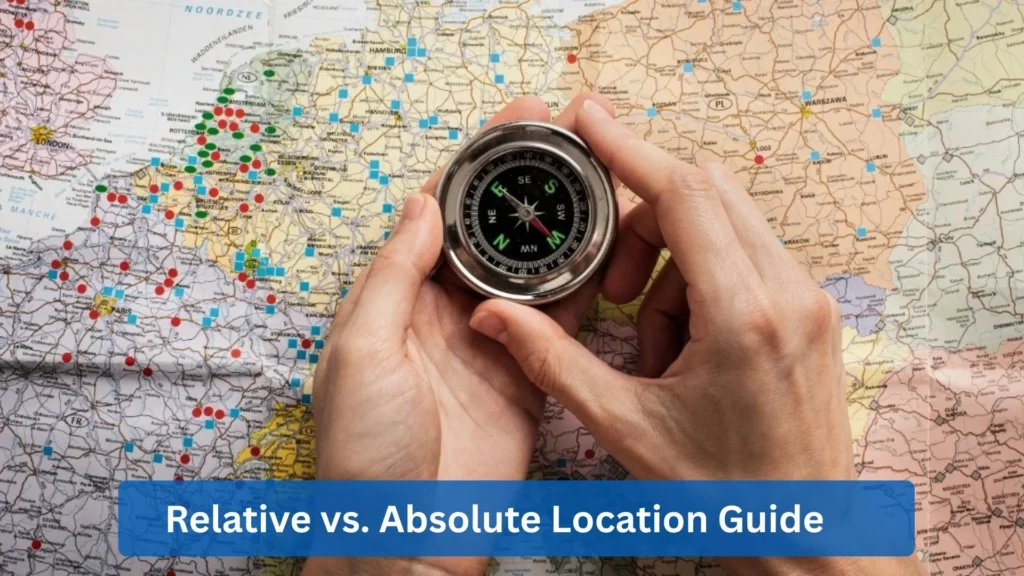
In geography a spot is the exact position of something on the surface of the Earth. Knowledge of a place is critical for activities such as mapping, navigation, city planning, travel, and recent technologies like drones or autonomous vehicles. It enables us to identify locations, draw effective routes, and provide direction.
In this blog, we’ll examine the difference between relative and absolute location, describe how each one works, give real‑world examples, and discuss practical applications. At the end, you will realize how the two concepts are complementary to each other and why they are essential in precision, clarity, and spatial awareness in education, travel, and professional life.
Knowing the difference between absolute and relative location is crucial, especially if you’re venturing into unknown neighborhoods, tackling urban design, or working with GPS and mapping gadgets. Absolute location nails down fixed markers that never change; relative location, on the other hand, gives you more detail by describing where something sits next to other spots, streets, or landmarks.
You really need both types of knowledge so your directions, maps, and tech-powered navigation actually stay accurate and meaningful.
What are Absolute Locations?
Absolute location means an exact and stable spot that identifies where a certain location can be found on the planet. This locks in a steady spot for the reference, remaining in place even if everything nearby shuffles or shifts. On most days, you’d say where it is in a straightforward fashion, something like this:
Latitude and Longitude: These coordinates nail down spots anywhere on the globe. For instance, the Eiffel Tower sits at 48.8584° N, 2.2945° E.
GPS (Global Positioning System): Looks like today’s navigation systems use GPS, giving cars, drones, and phones super sharp location accuracy down to the centimeter.
Street Addresses: Exact addresses are crucial for tasks such as deliveries, accessing emergency help quickly, or ensuring accurate city planning.
Example of an Absolute Location
- Mount Everest: 27.9881° N, 86.9250° E — remains constant despite geological shifts.
- Empire State Building, New York: 40.7484° N, 73.9857° W — a fixed point for mapping and navigation.
Why Absolute Location Matters
- Navigation: Absolute coordinates are essential for the drivers, pilots or the shipping companies to arrive at the exact location.
- Mapping & GIS (Geographic Information Systems): Accurate maps and spatial data are created by researchers and planners through the use of absolute locations.
- Weather Tracking: Meteorologists are using fixed coordinates that help in predicting storms and making alerts.
- Urban Planning: Construction, zoning, or infrastructure projects are managed with an absolute location by city planners.
The accuracy of the location of these fields helps in many applications. Even slight errors can cause problems in outcomes.
What Is Relative Location and What Does Relative Location Mean?
Absolute location is used for telling the exact spot, but the relative location is mentioned for showing where an object or a place is compared to other places nearby. You’ll find its flexible, shifts with context, and in most cases simpler for folks to figure out when they’re getting around each day.
Defining Relative Location
Ask, “How does this spot stack up against landmarks, roads, or big cities nearby?” Then you’re getting at relative location. Instead of sticking with exact coordinates, it uses direction, how far you have to go, and how the two places connect.
For example, instead of using latitude and longitude, one might say:
- “North of Central Park” — that nails down a place in Manhattan, New York.
- “Next to the railway station” — which is how lots of people flag an urban location.
Using words like these helps people understand the lay of the land and find their way in unfamiliar places.
How Relative Location Differs From Absolute
Feature | Absolute Location | Relative Location |
Precision | Very elevated | Average or not much |
Stability | Nothing changes at all. | Can be changed, depending on the surroundings or some landmarks |
Usage | GPS, science analyses, and mapping research | Travel guidance, everyday use and geography learning. |
Tools Needed | GPS, mapping points, and maps | Human context, landmark points for reference |
Key Points:
- The position of something can shift when new buildings pop up, the environment changes, or landmarks get added.
- Describing places this way is actually easier for most people compared with rattling off latitude and longitude.
- It really helps when you are trying to teach a concept, plan a trip, or help someone work their way through a neighborhood.
Relative Location Example
- Picture a coffee shop that’s “two blocks north of Times Square” in New York—relatively easy for locals.
- Or think about a school “right next to the town library” in a more laid-back place.
Using relative location is especially helpful if you don’t need exact coordinates, or if you just want to give someone directions they’ll actually follow.
Summary of Relative Location:
- You get a location that changes over time, shaped by the features that surround it.
- The place itself can change as streets, structures, or landmarks are rebuilt or relocated.
- This matches absolute spots by layering in the kinds of markers folks mention every day.
What Is the Difference Between Relative and Absolute Location?
Understanding the difference between relative location and absolute location is crucial for navigation, map creation, teaching, and working with technology. Both terms indicate where something is, but they differ in terms of accuracy, stability, and the context in which they’re used.
Core Differences
Feature / Aspect | Absolute Location | Relative Location |
Definition | Exact, measurable position (latitude/longitude or address) | Position described in relation to another place |
Example | “40.7484° N, 73.9857° W” (Empire State Building) | “Two blocks north of Times Square” |
Precision | Very high | Moderate to low |
Changes Over Time | Never changes | Can change with the environment or landmarks |
Used In | GPS, mapping, navigation | Everyday directions, travel, and geography teaching |
Tools Required | Maps, GPS, coordinates | Reference points, landmarks, context |
Key Insights
- Absolute location stays specific and correct. People rely on this whenever the exact locations really count, such as when planes are flying, boats are heading to a port, making city maps, and places where scientific work happens.
- The relative location is kind of considered less strict and gives an image-like idea about position. You’ll use it all the time for showing someone the way, teaching what’s where in geography, or talking places with folks who don’t speak in coordinates.
- While absolute location nails down details, relative location hands you the backstory, turning instructions and explanations into something people actually get.
When Each Type Is Useful
- Absolute location
Use it for GPS, maps, weather tracking, drones, or surveying when pinpoint positioning totally matters.
- Relative location
You’d turn to it for chatting with others, easygoing directions, or teaching—nothing too intense.
Example in Practice:
- For example, the taxi driver is driving: they lock onto the Empire State Building’s exact position with GPS.
- Someone giving directions might just say, “It’s two blocks north of Times Square,” leaning on relative location.
Mixing the two means you get clear info and real accuracy, which really matters for traveling, learning, planning cities, and powering modern tech.
Why Is It Important to Know the Difference Between Absolute and Relative Location?
Understanding the difference between relative and absolute location is not just academic; it has practical significance in everyday life, professional work, and technology. Using both types appropriately enhances spatial awareness, navigation accuracy, and communication clarity.
Practical Applications
- Education and Geography
- Students learn about how places are connected both globally and locally.
- Absolute coordinates give the students more accuracy, while relative coordinates give students increased context in the environment.
- For instance, an educator points to “Mount Everest: 27.9881° N, 86.9250° E” (absolute) and mentions that it can be found north of Kathmandu.
- Travel and Navigation
- GPS depends on absolute position to give correct directions.
- When traveling, people use relative location so that they know what landmarks are near.
- For instance: “You will find your hotel at a distance of 3 blocks going east from a metro station.”
- Urban Planning
- For zoning and making buildings, city planners need absolute locations.
- Talking about roads, planners benefit from relative location for designing neighborhoods and transit systems.
- Drone Mapping and Technology
- Delivery drones, agricultural drones, and also autonomous vehicles depend on both types of location.
- Absolute location is necessary when it comes to using programmed routes and mapping.
- Relative location is used, for example, for obstacle prevention and positioning in the context.
- Delivery drones, agricultural drones, and also autonomous vehicles depend on both types of location.
By mastering both, professionals and students can avoid confusion, improve directions, and communicate locations effectively
How Are Absolute and Relative Locations Used Together?
Absolute and relative locations usually work hand in hand, supplying clear-cut details and background at the same time.
Take the Eiffel Tower: its absolute location is nailed down at 48.8584° N, 2.2945° E, while in more everyday terms, it’s kind of “right by the Seine River.” If you use both types together, it makes getting places way simpler—coordinates zero in, but verbal hints clue people in on the scene.
Most days, you’ll notice a mix of gadgets that blend these two styles. GPS and digital maps throw out pinpoint coordinates and drop in nearby roads or hot spots. Travel guides use readable, relevant words for flow alongside hard facts for accuracy. On top of that, drones and self-driving vehicles count on precise spots for mapping a route, yet need relative clues to steer clear of trouble.
Put all that together, and you get directions that are spot-on and easy to pick up—which, some may say, is absolutely important for areas like surveying, emergency work, schooling, and today’s tech.
Can Absolute and Relative Locations Change Over Time?
While both discuss a place’s location, there’s a significant difference between absolute and relative location in terms of stability over time. Absolute location essentially remains constant, as factors such as latitude and longitude keep it in place.
For instance, Mount Everest maintains its position at 27.9881° N, 86.9250° E, regardless of whether its summit is slightly altered by shifting geology. We guess GPS tweaks can make our pinpointing sharper, but honestly, that main spot stays unmoved.
On the flip side, relative location keeps changing because it’s determined by whatever’s nearby—roads, landmarks, or those ever-shifting buildings. Imagine a café folks used to call “next to the old library,” now suddenly becoming “beside the new museum” thanks to changes in the area.
And another thing, new city projects, infrastructure overhauls, or even shifts in the environment can totally remake how we describe places. Getting this difference down is important for giving directions, teaching, city design, and tech, so that places make sense and stay spot-on as everything around them morphs.
Real-World Examples of Absolute and Relative Locations
The Sydney Opera House in Australia stands at *33.8568° S, 151.2153° E*, serving as a fixed reference point for GPS systems, mapping, and international navigation. Like clockwork, the Statue of Liberty in the United States, located at *40.6892° N, 74.0445° W*, serves as a landmark and reference point for anyone tracking their location.
On the flipside, relative locations kind of point to places by what’s around them. For instance, saying something is “across the street from the Lincoln Memorial” in Washington, D.C., is a directional hint visitors usually use, and “three miles west of downtown Chicago” most often shows travelers where to go.
Results? These examples make it crystal clear that absolute location provides unmatched accuracy and consistency, while relative location offers helpful context and clarity. Pairing both together provides a more comprehensive picture for navigation, communication, and education.
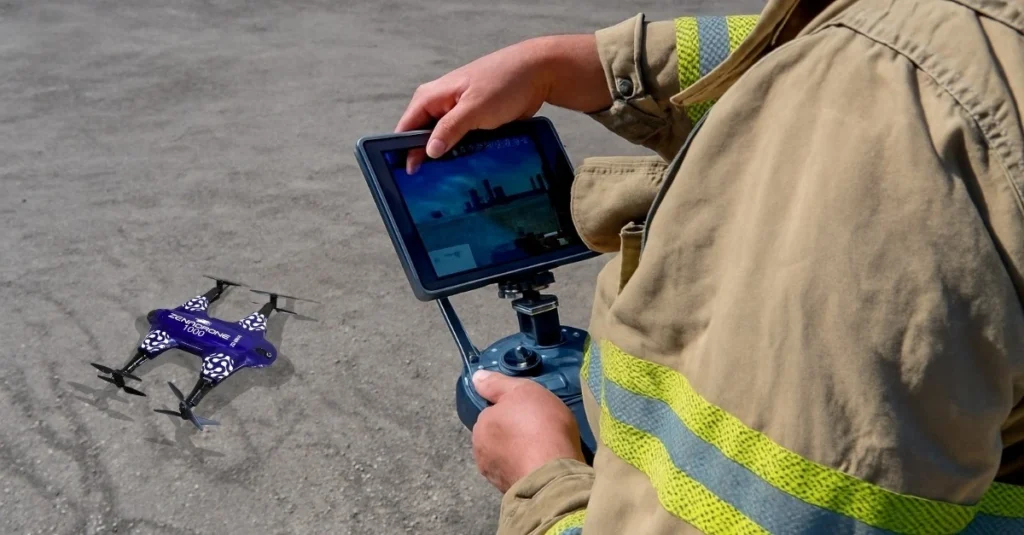
How the ZenaDrone 1000 Uses Absolute and Relative Location for Precision Flight
Modern technology really nails down how absolute and relative location join forces. The ZenaDrone 1000 smart drone used for farming and industry, takes advantage of AI, GPS, and sharp machine vision to run precise tasks.
Absolute Location in ZenaDrone 1000
- The drone finds pinpoint locations by tapping into GPS coordinates.
- Automated Flight Routes: Pre-made routes count on absolute location, making sure fields, warehouses, or job sites get full coverage.
- Mapping and Inspection Accuracy: Geotagging exact points lets this drone pull off thorough surveys and inspections.
Relative Location in ZenaDrone 1000
- Obstacle Avoidance: It works out spots in relation to close things like trees, towers, or even other drones.
- Dynamic Positioning: Stays put or shifts according to objects that move around it.
- Contextual Navigation: Tweaks its flight pattern in real time, based on where it flies.
Example: The ZenaDrone 1000 can spot a crop field using its absolute coordinates, then hang out two meters north of a marker—showing off exactly how absolute and relative location pull together.
Using both methods, the ZenaDrone 1000 achieves safe, efficient, and intelligent performance, really proving why knowing these concepts matters in today’s tech world.
Common Misunderstandings about Relative vs Absolute Location
- “Relative location is less accurate” – Partially true. It actually depends on the situation, but often helps a lot for day-to-day traveling and makes talking with people easier about places.
- “Absolute location only means coordinates” – False. It refers to the exact address on a road or the places marked with a geo tag, too.
- “Relative and absolute locations can’t be used together” – False GPS, travel books, drones, and maps use both side by side.
Many travelers and students mix them up, so knowing the difference gives better map skills, leads to improved communication, and makes moving around safer.
Takeaway
The combination of absolute and relative locations when teaching pupils about places such as the Empire State Building or arranging the ZenaDrone 1000 for an accurate flying helps improve spatial understanding, better interaction, and decision making.
Becoming skilled in such subjects helps someone move around well, understand the environment, and describe locations in a more proper manner.
Frequently Asked Questions (FAQs)
Why do geographers use both relative and absolute locations together?
Geographers combine absolute and relative location because absolute coordinates provide precise measurement, while relative descriptions give useful context. The combination of them makes places easier to find and comprehend.
How does GPS technology determine a location’s exact position?
The GPS uses the signal of satellites to determine the exact position of a device. These signals are sent to the device, and they are then used to determine the latitude and the longitude.
Can two places have the same relative location?
Yes. Two locations may be described relatively in the same way. An example would be two cafes that can be referred to as being next to the city library, but these may be in different cities.
How do maps represent absolute and relative positions differently?
Absolute locations are indicated on a map using coordinates that identify precise points. Relative locations, in contrast, are established using nearby landmarks, hints about directions, or the distance to a particular point.
What factors can cause a relative location to change?
A place’s relative location might shift due to various factors, such as urban development, new roads being constructed, buildings being demolished, or even rivers shifting after a storm.
How do drones or autonomous vehicles use location data to navigate safely?
Drones and autonomous vehicles rely heavily on pinpointing their exact position and following preset paths. But they also rely on local location info so they can spot obstacles and tweak their routes as things change.
What are the limitations of using only relative location in real-world navigation?
If all you have is relative location, getting around feels bewildering when you’re somewhere new, in emergency situations, or for tasks where having exact coordinates actually matters.
How do students learn to identify absolute vs. relative location in geography classes?
In geography lessons, educators can assist pupils to know the difference between absolute location and relative location through coordinate drills, reading maps, and outdoor work using descriptive features of the land.
Why is understanding location important for disaster response and rescue missions?
Knowledge of place is essential in disaster management. Absolute coordinates enable the responders to locate the precise points, whereas the relative description enables them to find their way when the routes are obstructed or changed.
How is artificial intelligence improving accuracy in modern mapping systems?
Modern mapping is enhanced with artificial intelligence that is able to combine absolute and relative data. It compares the change in terrain and the most efficient path of drones, vehicles, and other map-making applications.
Contact Us

Thank you for your message. It has been sent.