



Wind Turbine Inspection Drone Services for Faster, Safer Maintenance
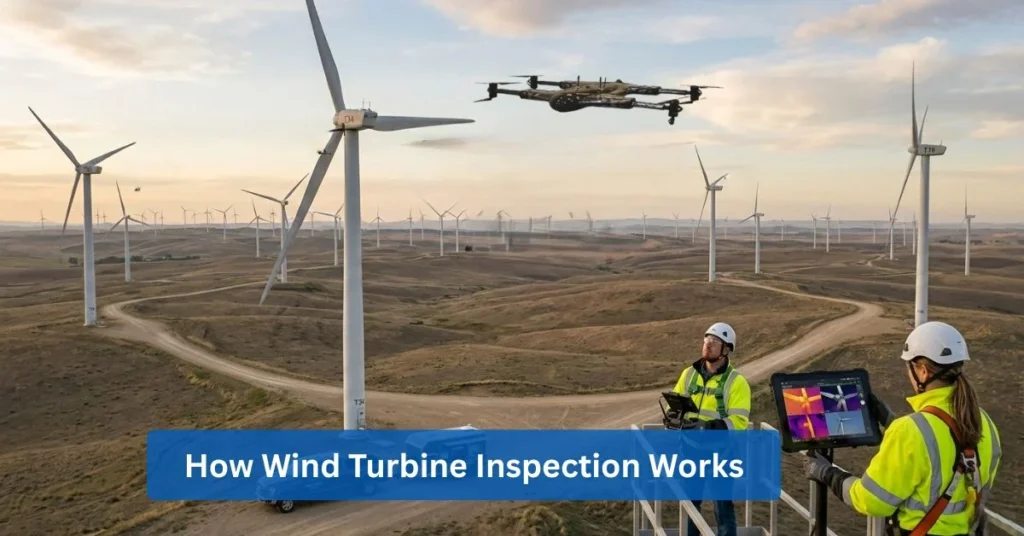
Wind turbines are an important part of modern energy systems. They work every day in harsh weather like strong winds, dust, rain, and lightning. Because of this, regular inspection is necessary to keep them running safely and efficiently. In the past method, inspecting wind turbines was slow, expensive, and risky. Workers had to climb tall towers and use rope systems to check blades and parts. This process time taking and often caused downtime.
Today, drone technology has changed everything. With drone wind turbine inspection, operators can quickly scan turbines, collect accurate data, and detect problems early. This approach improves safety, reduces costs, and keeps energy production stable.
Why Wind Turbine Inspection Is Important
Wind turbines operate under constant stress. Their blades rotate at high speeds, and components face environmental damage over time. Even small defects can lead to major failures if ignored.
Regular inspection plays a key role in:
- Maintaining consistent energy production
- Preventing unexpected breakdowns
- Extending equipment lifespan
- Reducing repair and maintenance costs
For example, a small crack in a blade can grow into a serious structural problem if not detected early. Similarly, erosion caused by rain and dust can reduce aerodynamic efficiency, lowering energy output.
By inspecting turbines regularly, operators can fix issues early and avoid expensive repairs later.
Challenges with Traditional Wind Turbine Inspection Methods
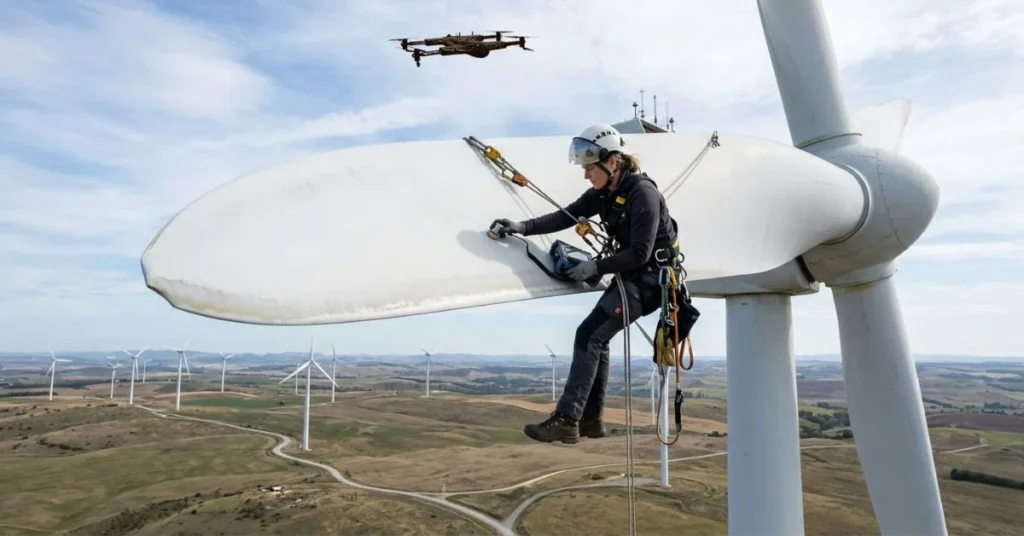
Traditional inspection methods rely heavily on manual labor. Technicians must physically access turbines using climbing gear or rope systems.
This approach creates several challenges:
- Safety Risks: Working at heights is dangerous. Technicians face risks from falls, strong winds, and unstable conditions.
- Time-Consuming Process: Manual inspections can take several days per turbine. This slows down maintenance operations.
- High Operational Costs: Labor, equipment, and downtime increase overall costs.
- Weather Dependency: Inspections can only happen in safe weather conditions, causing delays.
- Limited Data Accuracy: Manual inspections depend on human observation, which can miss small defects. Because of these challenges, traditional methods are becoming less practical, especially for large wind farms.
How Drone Wind Turbine Inspection Works
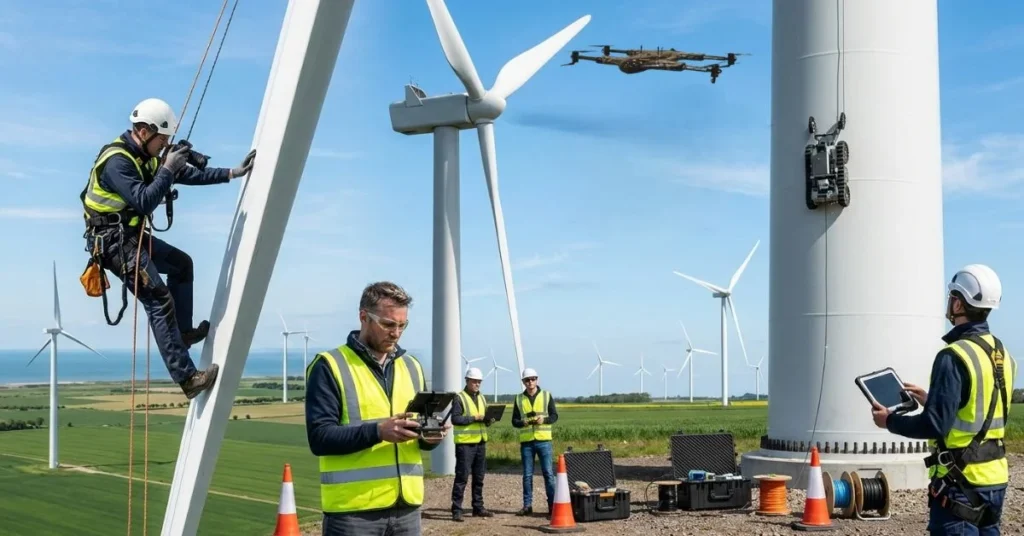
Drone inspection uses UAVs (Unmanned Aerial Vehicles) equipped with advanced sensors and cameras to inspect turbines.
The process is simple but highly effective:
- Pre-Inspection Planning: Operators plan flight paths and review turbine data.
- Drone Deployment: The drone is launched and navigates around the turbine.
- Data Collection: High-resolution images, videos, and thermal data are captured.
- Data Analysis: AI tools analyze the data to identify defects.
- Reporting: A detailed report is created with findings and recommendations.
This method allows operators to inspect turbines quickly without physical contact, reducing risk and improving accuracy.
What Parts of a Wind Turbine Are Inspected
A wind turbine has several key components that require regular inspection:
- Wind Turbine Blades: Blades are the most exposed parts. They are checked for cracks, erosion, and lightning damage.
- Nacelle: The nacelle houses important components like the gearbox and generator. Inspections focus on overheating, wear, and alignment issues.
- Tower: The tower provides structural support. It is inspected for corrosion, fatigue, and damage.
- Hub and Rotor: These parts connect the blades and transfer energy. They are checked for mechanical performance and stability. By inspecting all these components, operators ensure the turbine works efficiently.
Common Problems Found in Wind Turbine Inspections
Drone inspections help detect many types of defects:
- Leading Edge Erosion: Caused by rain, dust, and particles hitting the blade surface. This reduces efficiency.
- Cracks and Fractures: Small cracks can grow over time and cause serious damage.
- Delamination: Layers inside the blade separate, weakening the structure.
- Lightning Damage: Lightning strikes can cause burns or internal damage.
- Coating Damage: Surface coatings wear out, exposing materials to environmental damage. Early detection of these issues helps prevent major failures.
Drone vs Manual Wind Turbine Inspection: Key Differences
Drone inspections offer clear advantages over manual methods:
Feature | Drone Inspection | Manual Inspection |
Safety | No climbing required | High risk |
Speed | Fast (hours) | Slow (days) |
Cost | Lower long-term | Higher |
Data Accuracy | High-resolution | Limited |
Downtime | Minimal | High |
Drones improve both efficiency and safety while providing better data.
Benefits of Using Drones for Wind Turbine Inspection
Drone inspections provide several key benefits:
- Improved Safety: No need for technicians to work at dangerous heights.
- Faster Inspections: Multiple turbines can be inspected in a single day.
- Reduced Costs: Lower labor costs and less downtime.
- Better Data Quality: High-resolution imaging captures fine details.
- Predictive Maintenance: Operators can fix problems before they become serious. These benefits make drones the preferred choice for modern wind farms.
Offshore Wind Turbine Inspection Using Drones
Offshore wind turbines are harder to inspect due to:
- Strong winds
- Saltwater corrosion
- Remote locations
- High transportation costs
Drone inspections solve these problems by providing:
- Safe, remote inspections
- Fast data collection
- Reduced need for boats and crews
With technologies like BVLOS, drones can inspect large offshore wind farms efficiently.
Why Choose ZenaDrone for Wind Turbine Inspection
ZenaDrone is designed for industrial use and performs well in challenging environments.
Key Advantages:
- Stable flight in high winds
- Reliable performance offshore
- Automated inspection routes
- Accurate data collection
ZenaDrone helps operators inspect turbines safely and efficiently while reducing downtime.
Advanced Drone Technology for Wind Turbine Inspection
Modern drones use advanced technologies to improve inspection quality:
- High-Resolution Cameras: Capture detailed images of turbine surfaces.
- Thermal Imaging: Detect hidden problems like overheating or internal defects.
- AI-Based Analysis: Automatically identifies defects and generates reports. These technologies make inspections faster and more accurate.
How Drone Inspections Work for Large Wind Farms
Large wind farms require efficient inspection methods.
Drones help by:
- Inspecting multiple turbines quickly
- Following automated flight paths
- Collecting consistent data
AI systems analyze this data and provide insights for maintenance planning.
Step-by-Step Wind Turbine Inspection Process
A typical inspection follows these steps:
- Planning and preparation
- Drone deployment
- Data capture
- Data analysis
- Reporting and recommendations
This structured process ensures accurate results and effective maintenance planning.
Cost of Wind Turbine Inspection and Key Factors
Inspection cost depends on several factors:
- Turbine height
- Location (onshore or offshore)
- Number of turbines
- Technology used
Drone inspections are usually more cost-effective because they reduce labor and downtime.
Return on Investment of Regular Wind Turbine Inspection
Regular inspections provide strong ROI by:
- Preventing major failures
- Reducing repair costs
- Extending turbine lifespan
- Improving energy production
Early detection of issues saves money and improves performance.
How to Choose the Right Wind Turbine Inspection Provider
Choosing the right provider is important for reliable results.
Look for:
- Industrial-grade drone systems
- Certified and experienced operators
- Advanced imaging and AI tools
- Offshore inspection capability
A good provider ensures accurate data and safe operations.
Case Study: Drone Inspection at an Offshore Wind Farm
Project Overview
In late 2017, Siemens commissioned Cyberhawk to inspect 27 turbines in a drone wind turbine of an offshore wind farm. The project was aimed at the acquisition of overlapping high-resolution images of blades and structural elements, which could be used in conducting in-depth condition evaluation and maintenance planning. Custom-made software allowed no missing blade surface and allowed uploading data quickly to ensure data analysis can proceed as fast as possible.
Challenges Before Drone Wind Turbine Inspection
The wind farm, prior to the implementation of the UAV technology, depended on outdated visual inspections and rope access methods, which were both time-consuming and expensive and very unsafe. The manual processes could not offer a good cover of the blades, especially in rough weather conditions offshore. The industry was also not aware of how UAVs would provide detailed inspection results and, thus, was reluctant to expand its use. These shortcomings rendered it cumbersome and ineffective to detect damage to blades in time and monitor the long-term conditions.
Wind Turbine Drone Inspection Solution Implemented
To enhance the quality and efficiency of inspection, Cyberhawk introduced enhanced drone wind turbine inspections using drones fitted with high-resolution imaging systems. The UAVs were programmed by operators to have an overlap of at least 25 percent of the image to provide full coverage of the blade. An individual application was created to standardize the flight pattern and ensure that the full data was captured on each turbine. Images were processed and uploaded on the same day as they were inspected, which allowed quick analysis and faster plans of wind turbine maintenance without the long delays.
Defects Identified During Wind Turbine Blade Inspection
In the UAV inspections, the surface wear and small defects that encompassed erosions and slight surface irregularities were observed in various wind turbine blades, which were not visible to the traditional inspections because of high-resolution imagery. Such exquisite data facilitated the accurate recording of areas requiring subsequent examination or care, thereby enhancing the quality of condition measurements and informing the prioritization of repair teams.
Results and Measurable Improvements
The drone inspection method also greatly reduced inspection turnaround time, so the inspector could gather and process much more data in a shorter time than in the traditional mode of inspection. The project showed improved image quality and full coverage of the blades, increasing confidence in the inspection results. The speed of reporting and improved visual reporting enhanced decision-making and reduced the need for rope access during regular check-ups.
Long‑Term Impact on Wind Farm Maintenance Strategy
After the campaign, the operator incorporated into regular practices of monitoring the health of wind turbines the use of UAV-based inspections. Periodic drone inspections enhanced the scheduling of preventive maintenance, reduced the total risk of operations, and led to a transition to proactive condition-based management. This enhanced the long-term reliability and assisted in optimizing the maintenance budgets throughout the offshore wind farm.
FAQ's
How long does a wind turbine inspection typically take?
It is based on the turbine and technique; however, over an hour, a single turbine can be inspected by drone, whereas a complete inspection of a wind farm might require a few days.
Can wind turbines be inspected while they are still operating?
Yes! Some remote sensors and drones can conduct safe inspections of a running turbine without stopping its operation and interrupting of electricity supply.
What weather conditions affect wind turbine inspection accuracy?
Inspections can be more difficult in strong winds, heavy rains, fog or poor visibility. Clearly, sunny days yield optimally.
What is Wind Turbine Inspection Certifications and Qualifications Required
The providers require certified UAV pilots, training in industrial inspection, and usually offshore safety certification of the marine sites.
What happens if wind turbine damage is not detected early?
Tiny problems may result in huge breakdowns in terms of wasted time, money on maintenance, and even fatalities. Early intervention helps in lengthening the safe lifespan of turbines.
What technologies are used to improve accuracy in wind turbine inspection?
High-resolution cameras, thermal sensors, AI-driven defect detection, and automated flight systems make inspections faster, safer, and more precise.
Contact Us

Thank you for your message. It has been sent.