



How Drone Spraying Is Changing Farming Forever
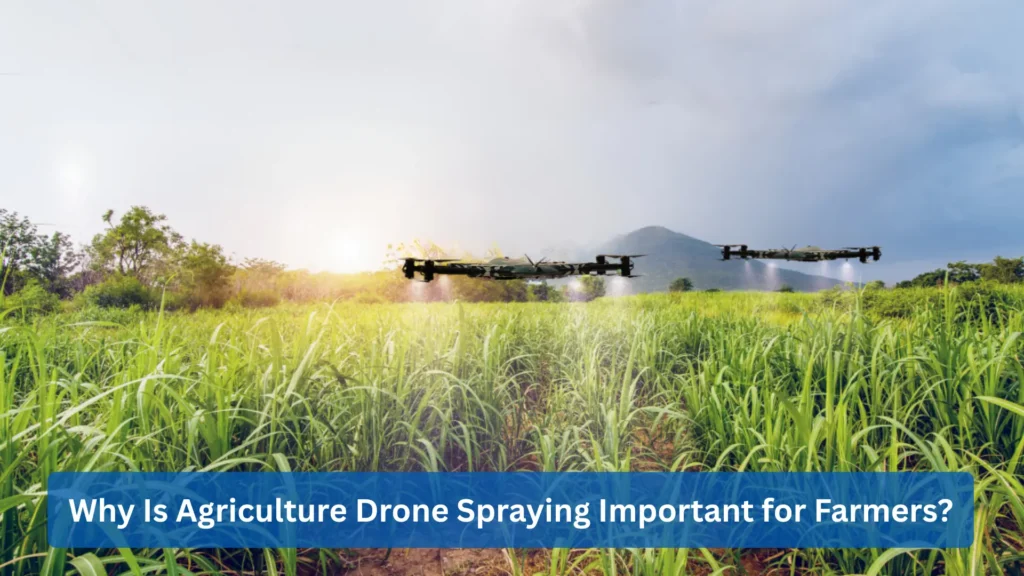
Nowadays, farmers fly drones that work independently to spray crop protection chemicals. These drones replace the old, labor-intensive techniques. This may sound like something in the future, but it is now a reality and is being used by many farms. In the modern agricultural sector, farmers’ spraying methods are changing. Agricultural drone spraying is transforming labor practices by applying precise applications to their crops.
The agricultural drone sprayer can dispense chemicals, such as pesticides and fertilizers, from the air. This technology has come a long way. What started as simple remote-controlled toys has turned into advanced tools that are essential for drone pesticide application and precision agriculture.
The drones are a high-tech version of a sky sprinkler. They operate through GPS to pursue a set route with very precise accuracy. When they arrive at a point, pumps and nozzles spray a fine mist, allowing the chemicals to reach the required location.
Zenadrone 1000 is one good example of such technology. It plans its route so that it doesn’t hit the same place or spray the same area twice, since people make mistakes. It also keeps an eye on the field in real-time with several sensors, which can help farmers monitor the health of their crops and take better care of the land. In this article, we will discuss the technology that enables drones to spray pesticides, describe its functionality, and outline the key benefits of this technology for farmers. It provides a complete overview of the actions and advantages that are transforming modern agriculture.
Why Is Agriculture Drone Spraying Important for Farmers?
The primary reason for using agricultural drones for spraying is the control and precision they offer. The farmers now have complete control over their spraying. It is both time-saving and cost-effective, yet energy-consuming. These drones are not merely fancy devices; they represent a modern and . They are safer and quicker than ever to spray crops.
Key Benefits to Modern Farmers
Agriculture is labor-intensive, and there is a shortage of workers. According to some farmers, crop-spraying drones have allowed them to restore their weekends during busy seasons. The advantages are obvious: the spray is spread evenly across the field, the amount of chemicals used is reduced, and, most importantly, the farmers are not exposed to harmful chemicals. Everyone wins.
Environmental and Economic Advantages
The advantages extend outside of the farm. Precision agriculture drones are highly accurate, resulting in minimal pesticide drift and soil pollution. They are very precise, which means they consume fewer chemicals, resulting in savings and a positive impact on the environment. It demonstrates that what is beneficial from a business perspective may also be environmentally valuable.
What Types of Agriculture Drone Sprayers Are Available?
You might not think that the world of agricultural spraying drones is as broad as it is. All models are designed to suit specific jobs and farm sizes, ranging from small family orchards to large commercial grain farms.
The first step in ensuring you have the right types of agriculture drones in your fields is knowing the various types of farming drones.
Below are the different types of drones and their uses:
Drone Type | Description | Ideal Use Case | Example Model |
Multi-Rotor Drone | Hover-based, high precision spraying | Small to medium farms | DJI Agras T40 |
Fixed-Wing Drone | Long-range, high coverage | Large farms | SenseFly eBee Ag |
Hybrid Drone | Combines hover + range | Versatile farm types | Zenadrone 1000 |
Manual vs Autonomous Spraying Systems
There are various methods of controlling the crop spraying drone model. Older or basic models require a trained operator to fly them manually. Manual drones are less expensive and can be highly accurate on small farms; however, they need more time and effort to operate.
While autonomous drones can fly unsupervised with the power of AI and GPS, they can cover large areas quickly and reduce labor costs. However, they are often expensive initially and require someone with technical skills to set up and maintain.
Such factors should be considered by farmers when selecting the most suitable type of farm.
What Technologies Power Agriculture Drone Spraying Systems?
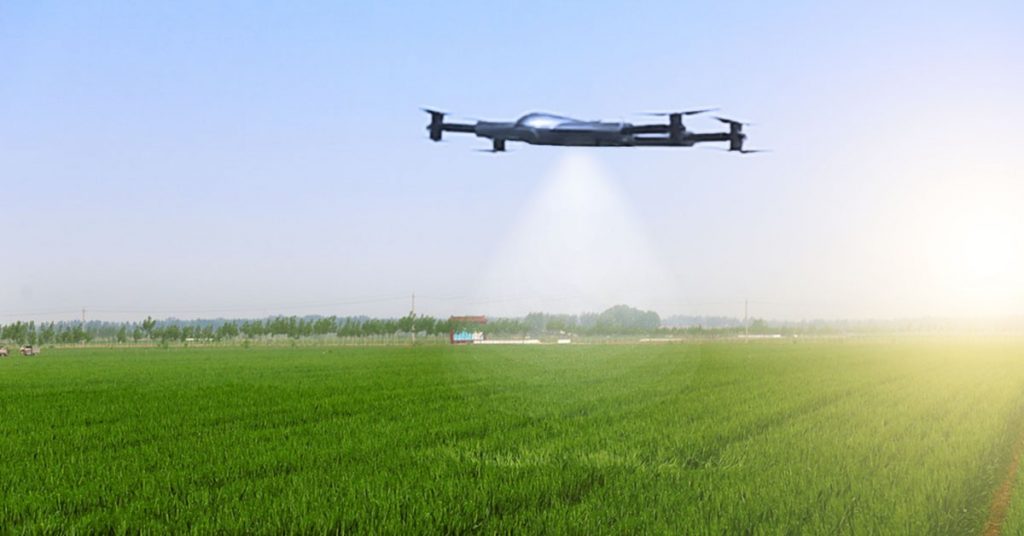
Modern agriculture drone technology relies on the seamless integration of multiple advanced systems. The system uses intelligent drone spraying system components rather than simply placing a tank on a drone. Every element of the drone equipment used by farmers, including navigation systems and spray nozzles, is designed to be highly precise.
Core Components
- GPS/RTK Navigation: This segment assists the system in operating. It will ensure that the sprayer is functioning and that it covers all the points uniformly.
- Smart Nozzle and Pump System: These components determine the large size of the spray dots during the flight of the drone. It implies that every crop receives the appropriate quantity of chemicals, and thus they are sprayed all over and are able to absorb the chemicals.
- Battery and Payload System: The size of the drone and the quantity of energy in the battery determine the distance it can cover in a single trip.
Such information is extremely significant when selecting agricultural drone equipment.
AI and IoT in Spraying Drones
This is when things start to get really interesting. The latest agricultural drone spraying technology utilizes AI and the Internet of Things (IoT) for precision spraying. They can gather information on the ground instantly, navigate around trees or power lines automatically, and identify issues such as disease or malnutrition before they manifest even the Zenadrone 1000 features special sensors that detect such problems.
How Is Drone Spraying Performed on Crops?
The agricultural drone spraying process follows a set of orders designed to make it as safe and effective as possible. The drone spraying operation significantly reduces the time it takes to spray crops. What used to take a whole day can now be done in just a few hours.
Here is the Step-by-Step Spraying Process
- Field Mapping: Drawing the field boundaries. First, apply a GIS application to a tablet. The operator sketches the lines that divide the fields.
- Chemical Mixing and Calibration: Add the corresponding right chemicals and adjust the spray nozzles in the following step to adjust the size of droplets.
- Route Definition: The application is able to generate the spray routes and suggest the most optimal route to use.
- Autonomous Flight: The application transmits the spray paths to the drone and proposes the path that is most effective.
- Post-Spray Review: Once the spraying is done, the operator looks at the information about the job, such as coverage maps and flight logs, to ensure that the job has been performed in the correct manner.
Suggested Software Tools
To get the most out of drone spraying, you need good software. DroneDeploy and Pix4D Fields are two examples of tools widely used in the industry. The Zenadrone Cloud Dashboard is an all-in-one platform for managing fleets and data.
Which Crops Benefit Most from Agriculture Drone Spraying?
The obvious advantages of using agricultural drones to spray crops are the high-value crops that are cultivated in challenging zones. In the case of drone spraying of cotton and rice, it is an example of waste reduction and increased output.
Cereal and Grain Crops
In large fields of drones spraying rice, wheat, and maize, drones have the advantage of covering large areas quickly and evenly. Drones can also work well in flooded paddies, where heavy machinery would have trouble.
Horticulture and Specialty Crops
Drones are being used in fragile environments such as vineyards, tea gardens, and orchards. They do not compact soil and can target the crop canopy.
Smart Crop Analysis
The actual advantage is that one knows exactly what to spray. The Zenadrone 1000 is at the forefront. It has better sensors that scan the field first and detect early signs of disease or nutrient problems that you might otherwise miss. This selective spraying will conserve chemicals and prevent soil and crops from becoming unhealthy in the long run.
Is Agriculture Drone Spraying Legal? What Are the Regulations?
Yes, it’s legal, but specific rules must be followed when operating drones, as outlined in drone spraying regulations. Before you take to the skies, you need to know the rules for getting an agriculture drone license and other agricultural UAV rules.
Drone Licensing and Registration
Most countries require you to get a special agriculture drone license from the aviation authority, such as the FAA in the US. This often requires obtaining certification and training to handle chemicals, ensuring you are knowledgeable about the risks involved.
Safety Guidelines
There are also rules for agricultural UAVs that make sense. You can’t fly when it’s very windy or rainy, and you have to stay away from no-fly zones. Operators are also expected to wear Personal Protective Equipment (PPE) when they handle chemicals.
How Much Does Agriculture Drone Spraying Cost?
Here is the cost overview table:
Cost Component | Average Range (USD) | Notes |
Drone Purchase | $5,000 – $25,000 | Varies by payload & features |
Maintenance & Batteries | $500 – $2,000/year | Replacement and servicing |
Chemicals & Operation | $3 – $8/acre | Depends on crop and region |
ROI Period | 1–2 years | Faster with commercial-scale use |
The drone spraying price per acre decreases significantly when using a model like the Zenadrone 1000. It is able to cover a greater number of acres per hour due to its ability to carry a great weight and its use of advanced mapping technology.
Additionally, since it can be used for both spraying and scouting, you can achieve a faster return on investment (ROI) for your drone spraying, as you won’t need to pay for a separate scouting service.
What Are the Challenges of Using Drone Sprayers in Agriculture?
Let’s be honest: not every flight goes smoothly. Considering the challenges of agricultural drone spraying, it is crucial for any farmer, as it is also a form of investment.
The technology is powerful, but it’s not like anything else. The main problems with the limitations of spraying drones are dealing with the weather and navigating the numerous new rules and skills required.
Operational Challenges
Natural forces are still in charge. The weather remains a significant factor. High winds can easily cancel a flight, which can be very annoying when you need to spray. A sudden downpour right after application can wash away an expensive treatment, wasting both time and chemicals.
Next is the battery life. Although it’s improving, most drone spraying operations can currently only last 20 to 40 minutes at a time. This means that to cover big areas, you need to plan out how to land, change batteries, and take off again. This constant cycle means that proactive drone maintenance and a small fleet of spare batteries are not just nice to have, but necessary to keep your work going smoothly.
Regulatory and Training Issues
The problems don’t stop once you’re out of the field. Obtaining certification can be challenging because it requires completing a substantial amount of paperwork for the aviation authority, obtaining a specific agricultural drone license, and sometimes undergoing chemical handling certification.
It requires a significant amount of time upfront. Additionally, in many rural areas, access to education is challenging, and a considerable knowledge gap exists among some individuals. We need more hands-on training programs that are easily accessible, so that farmers can not only use this complex agricultural drone equipment but also repair and understand the data it provides.
How Does Drone Spraying Compare to Traditional Crop Spraying?
When analyzing real-world data, the difference between drone spraying and manual spraying is becoming increasingly noticeable. When it comes to almost every important standard for a modern farmer, it’s clear that drone vs tractor spraying is much more efficient and smart. It’s like using a scalpel instead of a sledgehammer.
When it comes to saving labor and working on rough terrain, drone efficiency in agriculture is one of the most effective ways to improve productivity. One person can do the work that used to take a whole team and a tractor. Drones can access steep hills, wet rice fields, and delicate orchard canopies without compacting the soil.
A tractor can cover 2 to 3 acres in an hour, but a drone can do 5 to 10 acres in the same amount of time. This speed is very useful when the weather is only good for a short time.
Below is the detailed comparison of drone spraying vs manual spraying:
Comparison Factor | Drone Spraying | Traditional Spraying |
Precision | High (GPS-based) | Moderate |
Labor Required | Low | High |
Chemical Usage | Optimized | Often excessive |
Environmental Impact | Low | High |
Speed | 5–10 acres/hour | 2–3 acres/hour |
Using drones in farming is a faster, more efficient, and environmentally friendly method for protecting crops.
What are the Real-World Success Stories of Agricultural Drones?
Farmers who are unsure about new technology often become interested after seeing a neighbor do well with it. The worldwide rise in agricultural drone adoption is supported by case studies of agricultural drone spraying, which yield evident results.
For example, a survey of drone users found that their yields increased by an average of 15% and their costs decreased by 10% per acre, representing a significant savings. These success stories are making farming more efficient, from the big fields of the Midwest to the terraced farms of Asia.
International Adoption: Quickly Gaining Ground on Three Continents
Asia
People all over the world can see the results. Drone use is growing quickly in Asia. China and India now use thousands of drones to spray rice and cotton. The effect is big. Studies in India have shown that spraying with drones significantly reduces the use of pesticides and water.
This supports the trend of using drones on a large scale for major crops, such as cotton. This isn’t just a small test; it’s a significant change that will benefit both the economy and the environment.
North America
The primary goal in North America is to achieve large-scale efficiency. The Zenadrone 1000 and other advanced systems help both large agribusinesses and family farms manage extensive fields of corn and soybeans. People like the technology because it can be used for multiple purposes.
Industry studies show that agricultural drones help farmers take better care of their fields by providing accurate spraying and real-time data, which enables them to identify and address problems before they occur, thereby protecting their crops.
One of the main reasons the technology has been so successful in North America is that it enables farmers to treat and monitor their crops simultaneously.
Europe
Quality and accuracy are important in Europe. Increasingly, vineyards in France and Italy are utilizing drones to apply organic pesticides gently. Studies in science have shown that drones are effective.
One study found that drone treatments for downy and powdery mildew in grapevines were as effective as, or even more effective than, traditional ground sprayers, and they also provided better coverage and accessibility.
Drones can get to steep slopes that tractors can’t, and they can apply treatments gently to protect the grape clusters. This method not only improves crop yields but also benefits the environment by making the soil less compact and reducing the carbon footprint of heavy machinery.
These examples demonstrate that drones can be beneficial for both large fields and delicate, high-value crops. The results are clear: agricultural drones are making a real difference, from Ohio to Punjab.
What Is the Future of Agriculture Drone Spraying?
The future of agricultural drone spraying crops largely depends on how artificial intelligence (AI) and the Internet of Things (IoT) are utilized in farming. The industry is transitioning toward fully automated agriculture, and smart farming drones play a significant role in this shift.
Upcoming Innovations
One of the new developments is the use of drone swarms, which are groups of drones that work together to manage fields more efficiently. Additional new ideas include solar-powered charging stations in fields and the use of advanced AI and IoT in agriculture, which can identify and treat specific plants as needed.
Zenadrone's Future Vision
Zenadrone wants its drones to work as data hubs that are all connected. Zenadrone’s agricultural drone spraying will include real-time crop analytics sent to users’ mobile devices and predictive systems that can autonomously schedule maintenance.
How to Choose the Right Agriculture Drone Sprayer for Your Farm?
It’s important to pick the best agriculture drone sprayer for farming. This guide will help you figure out what is most important for your farm. Find a drone that meets your needs, not just one with the best features.
Factors to Consider
Consider the tank’s size and its payload. How long can the drone stay airborne on a single charge? Is the software easy to use? Also, ensure that you can obtain help and spare parts in your area when needed. A grounded drone during a critical spray window can cause significant trouble.
The best choice for your farm will depend on its unique layout and your goals. This drone buying guide is a great starting point for finding the right drone for your operations. Consider the payload, flight time, and support carefully.
The farm drone selection is the one that fits seamlessly into your workflow, solves your problems, and provides a clear return on investment, making your farm more productive and sustainable for years to come.
Bottom line Drone Spraying
It is widely acknowledged that the application of drones to spray crops is not only a new trend but also a direction that will shape the future of agriculture. Although issues such as weather and regulations persist, the benefits of precision agriculture drones, including significant cost savings, improved working conditions, and enhanced environmental protection, make it a game-changer in technology.
Zenadrone 1000 is one of the products that demonstrates the effects of this technology in transforming the industry. It is an intelligent field management system that reflects the progress of sustainable farming technology. It enables the cultivation of more food using fewer resources by leveraging real-time data and accurate spraying.
Smart, environmentally friendly farming is increasingly regarded as significant by an increasing number of people. Utilizing this type of technology is now considered an ingenious approach to achieving higher crop yields and maintaining farm sustainability.
FAQs
Here are the most common drone pesticide spraying questions, direct and to the point, from our agriculture drone spraying FAQ.
- What is the lifespan of an agricultural spraying drone? With proper maintenance, most drones last between 3 and 5 years before their main parts need to be replaced.
- Can agricultural drones also be used for crop monitoring? Yes. Most new models, such as the Zenadrone 1000, come equipped with multispectral sensors that can measure crop health, allowing them to handle both tasks.
- How much area can a drone spray in one flight? Most drone sprayers can cover 5 to 15 acres per battery charge, depending on the tank size and the specific model.
- How much time does it take to recharge a spray drone battery? It usually takes 30 minutes to an hour. Having extra batteries lets you keep working without long breaks.
- Can drones be used safely to apply pesticides and fertilizers? Yes. These drones are built to handle both liquid pesticides and granular fertilizers. They apply them accurately, which reduces overspray and helps keep people safe.
- Do drones harm crops or soil? No. In fact, drones help by preventing soil compaction and applying chemicals gently to crops.
- Do I need a license to fly an agricultural spray drone? Yes. Most countries require a special permit, like the FAA Part 107 in the US, and often a certificate for applying chemicals.
- How much does drone spraying cost per acre? On average, chemicals and power cost between $3 and $8 per acre, not including the price of the drone itself.
- How long does it take to learn drone spraying? You can learn the basics of flying in a few days, but it usually takes a few weeks of practice to get comfortable with flight management, data analysis, and maintenance.
- Can I start a drone-spraying business with one drone? Yes, many successful companies start with just one reliable drone and add more as they gain customers.
Contact Us

Thank you for your message. It has been sent.