



Can You Fly a Drone Over Private Property
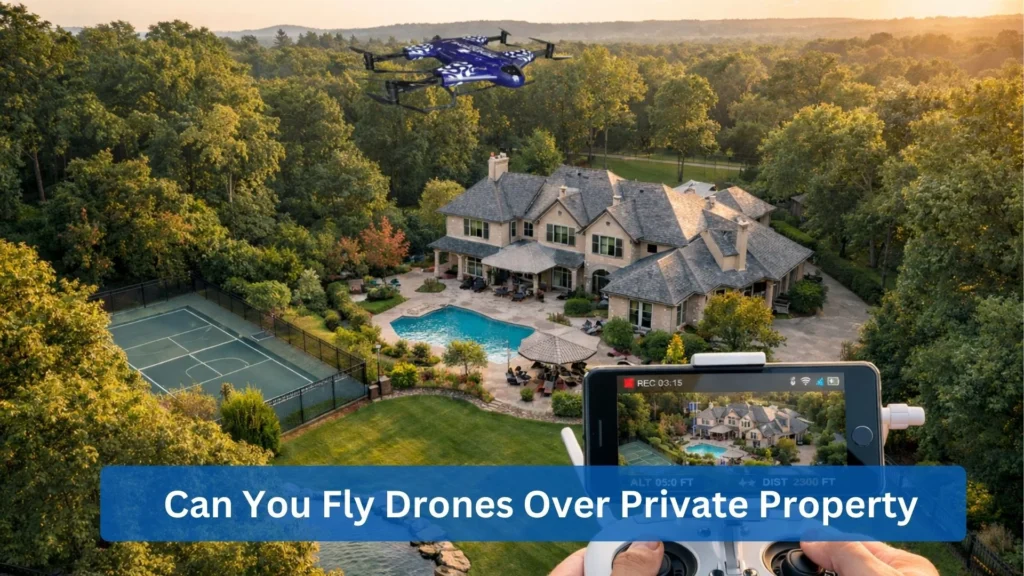
From capturing images to exploring landscapes, conducting surveys, or simply for excitement, drones are now widely used for various purposes. It’s no longer uncommon to see one flying above, as more and more people get interested in these aerial innovations.
However, this surge of drone ownership presents issues in safety, privacy, and security, highlighting the need for stringent airspace control. In line with this, one question consistently comes up: can you fly a drone over a private property?
The short answer? Technically, yes. But there are various nuances in federal, state, and local laws regarding flying drones over private land. In 2026, understanding this concern is even more relevant due to evolving privacy technologies and stricter FAA enforcement.
As such, this article explores the key rules, risks, and best practices of drone privacy laws. This helps you distinguish between legal flight operations and drone trespassing that violates property and homeowner rights.
Is It Legal to Fly a Drone Over Private Property?
Several online and community discussions debate whether it is legal to fly a drone over private property or not. This simple question is actually more complicated than it seems, and a “yes” or “no” wouldn’t be the complete answer.
Starting from the basics, who owns the sky above your home? Is it part of your private property? The Federal Aviation Administration (FAA), holds jurisdiction over all the national airspace in the US, including the immediate airspace above your land.
Through Part 107, they’ve set safety and registration guidelines, but no specific restrictions on drone operations above private property. This means that flying drones over privately owned lands is legal.
However, these federal regulations do not erase the property owner’s right to privacy and security. The immediate airspace above private land, which can also be categorized as low-altitude airspace, sits in a grey legal zone. So, although generally permitted by the FAA, drone flights over private land aren’t always welcome or legal.
Stricter state and local drone airspace laws also apply to flying drones above private property. This makes things even more complicated, as each area has different restrictions. Some states focus on proximity while others consider intent and purpose.
Nevertheless, drone operations become illegal when they infringe on the property owner’s privacy, cause a nuisance, or instigate harassment. Understanding where FAA airspace rules end and property rights begin is key to staying compliant. This helps you avoid the growing wave of drone-related legal disputes in 2026.
Federal Aviation Administration (FAA) Regulations
As the ultimate authority in the skies, the Federal Aviation Administration (FAA) oversees all drone operations in the US. Every flight, whether recreational or commercial, must comply with FAA drone laws to ensure safety, security, and privacy.
- Drone pilots are only allowed to fly below 400 feet.
- Maintain visual line of sight.
- Avoid controlled and restricted airspace, such as sensitive sites and critical infrastructure.
- Drones weighing over 0.55 lbs should be registered with the FAA before flying.
The FAA has also set a clear distinction between recreational and commercial drone use.
- Recreational drone use involves flying a drone for personal fun, as a hobby, or for educational purposes. Recreational pilots only need to pass the Aeronautical Knowledge and Safety Test and adhere to Community-Based Organizations safety guidelines.
- Commercial drone use, on the other hand, pertains to any drone operation that’s not meant for recreation, hobby, or educational applications. Commercial pilots are required to pass the FAA Part 107 certification, which tests their understanding of airspace rules, weather, and flight safety.
Violating FAA drone laws not only risks harm to you, the drone, and the public but can also incur you significant penalties. This includes fines, drone confiscation, or even having your drone pilot license revoked. But more importantly, failure to follow established rules undermine public trust and reputation.
State and Local Drone Laws
The federal laws from the FAA regulate the national airspace, but they lack explicit restrictions regarding privacy and property rights. That’s why many regions have also imposed stricter state-specific policies and local drone regulations to address this concern.
These laws are usually divided into two primary distinctions: privacy and nuisance regulations.
- Privacy Regulations: This safeguards the individual’s private space and personal information, such as image, sound, and location from unauthorized collection.
- Nuisance Regulations: This deals with the unreasonable interference with the owner’s use and enjoyment of their private property, even when no personal data is collected.
While the goal of protecting safety, privacy, and security remain the same, state drone laws vary greatly from one place to another. What’s legal in California might get you fined in Texas or in Florida.
For example, drone photography on a private property in Texas without the owner’s consent, regardless of intent, might get you penalized. In California, capturing footage and intrusive flight operations is illegal. Meanwhile, Florida adds criminal penalties to drone pilots who record individuals where their privacy should be respected.
While the FAA controls where you can fly, most states question the how and why you are flying. This is especially true when it comes to flying over private properties where privacy and security matters most. Several cities even enforce drone zoning laws that ban drones in specific parks, crowded neighborhoods, and government facilities.
There’s a huge difference in drone regulations across states. Even if you’re fully complying with FAA standards, you still might violate local ordinances. So, it’s always best to check the local regulations before doing any drone flying over private property.
Privacy Considerations for Drone Pilots
If there’s one topic that can turn a friendly neighborhood flight into a heated argument, it’s privacy. As drones become more advanced with 4k and high-quality zoom cameras, the risk of personal intrusion becomes a bigger issue.
It’s exactly for this reason that drone privacy laws were established. It’s your duty as a responsible drone pilot to respect the personal space and information of everybody.
Here are some things you’ll have to consider, so you don’t cross the line between a fun drone operation and invasion of privacy.
- Ask for consent. Although technically permissible under federal regulations of the FAA, owners still retain rights to privacy and security to their property. Always make sure to ask for recording consent, whether verbally or in writing, before filming private spaces.
- Never record people without drone filming permission. Most US states now recognize a person’s reasonable expectation of privacy. This means that homeowners, especially in the comfort of their home, shouldn’t be recorded or photographed without permission, no matter what.
More and more cases of privacy-related lawsuits due to drone misuse are emerging as of recent. This includes drone trespassing, nuisance complaints, and invasion of privacy. To avoid these, disable your drone’s camera or adjust its angle, so that it doesn’t accidentally film private properties unconsented.
Consequences of Flying a Drone on Someone Else’s Property
Flying a drone over someone else’s property might seem harmless. But the opposite is true, as things can quickly take a legal turn. One moment you’re having fun and the next you’re facing penalties of flying a drone over private property.
Worse, FAA and local enforcement restrictions often overlap, which worsens the penalties. Paying fines is the usual remedy but some property owners might file civil lawsuits a situation no one wants. From legal to financial and social repercussions, there are various consequences to drone operations over private property that you need to know.
Legal and Financial Penalties
Drone violation fines can be steep, possibly adding up to several thousand dollars depending on severity of the offense. Other factors such as registration, breaking altitude limits, and endangerment to public safety and property also add to the cost.
But that’s just for the FAA. Local authorities can also opt to confiscate or ground the drone during investigations. And if they find out you used it for unauthorized surveillance and capturing photos without consent, you’ll be in danger of civil lawsuits. That’s yet another expense.
Even worse, the insurance company may deny coverage and reimbursement of losses if they determine irresponsible drone operation. When that happens, you’re left covering legal bills and settlements out of your pocket.
Liability for Property Damage or Injury
Accidents happen, even to careful pilots. And when they do, like crashing into someone’s roof, window, or yard, you’ll likely be held responsible for the damage. These property damage due to drone incidents are typically treated like any other form of personal property harm.
For some homeowners, their insurance might cover drone-related accidents. But this can’t be said for everyone. There have been several cases where pilots are made to pay for property damage and medical costs for sustained injuries.
Impact on Neighborhood and Community Relations
Not all consequences are financial or legal, some are social. Repeated drone flights over private areas might make your neighbors feel watched and unsafe. This causes complaints and calls to authorities, which strains the community relationship, resulting in a hostile environment.
This usually happens when your flight plans and intentions are unclear, as it makes your neighbors overthink. So, practice transparency and ask for consent. Let your neighbors know when and why you might be flying over or near their private property. Reassure them that their privacy is fully respected.
Better yet, you can also join community-based flying clubs and shared zones. It’s a welcoming community for drone enthusiasts, so that they can operate safely and legally without causing disturbance to anyone.
How Low Can You Legally Fly a Drone Over Private Property?
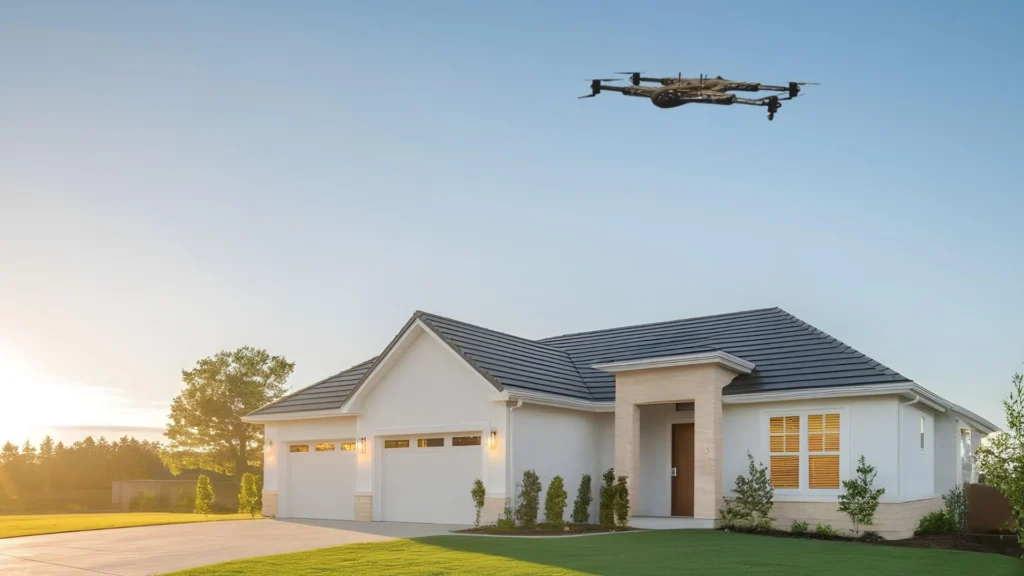
How low can you fly a drone over someone’s property without breaking the law? This is a common question that many drone pilots ask. The answer isn’t as simple as the question. The drone altitude limits over private property depends on where you live and your purpose.
The FAA technically controls all the national airspace at the surface level and up. However, they’ve set a standard maximum altitude limit at 400 feet for recreational and commercial drones. Flying drones are generally legal within this range.
Nevertheless, there are some grey zones, especially when it involves flying close over private property. That’s because owners legally have limited rights to the immediate airspace above their land for their privacy and peaceful enjoyment. This means that drones hovering, say 30 or 40 feet above private property, can be charged with trespassing and harassment.
That said, there’s no single nationwide number on low-altitude flying in FAA’s airspace boundary rules. Drone experts, however, advise having a buffer zone not less than 90 to 100 feet above private property to avoid complaints and legal disputes. If you do need to fly lower, acquire explicit permission from the owner.
Best Practices for Flying Near Private Property
Flying a drone near private property isn’t just about fun, safety, and efficiency, as they can be loud, distracting, and intrusive. Even when complying with FAA regulations, you can still face legal complaints and conflicts due to invasion of privacy and nuisance. Responsible drone flying respects the privacy and peaceful life of property owners by maintaining safety and courtesy.
Check out these drone flying etiquettes to ensure your flights stay professional, ethical, and neighbor-friendly.
Always Ask for Permission
If your flight plan includes flying over someone else’s property, take a moment to communicate. A quick heads-up to ask for their permission whether verbally or in writing prevents any misunderstandings. Talk to them about the purpose and specific details of your drone operation. You can even offer showing them the footage after the flight.
Most property owners welcome this transparency as it shows professionalism and goodwill. Politely requesting permission also builds trust, and this trust creates a healthy and sustainable community for drone pilots.
Avoid Recording Without Consent
No one wants to be filmed without their consent, even if it’s accidental. For this, make sure to turn off your drone’s camera or adjust its angle to avoid homes unless you’ve been given explicit permission. Capturing unauthorized footage results in legal penalties due to privacy violations. Always observe professional ethical filming practices.
Use Geo-Fencing and Altitude Limits
Modern drones include geo-fencing and altitude limit settings. Geo-fencing uses GPS and sensors to automatically prevent your drone from intruding restricted zones. Altitude control ensures you don’t fly too low or too high over private property. These features help you stay within safe boundaries, especially in residential areas.
USA State-by-State Overview of Drone Property Laws (2026)
While the FAA sets the national baseline for drone regulations, individual states may impose additional laws around flying over private property.
State restrictions address specific issues and priorities within that area. This usually covers privacy protection, trespassing laws, and penalties depending on the severity of the offense.
As such, it’s important to understand drone laws by state this 2026 to remain compliant with the FAA and state regulations.
Here’s a quick summary of state drone rules concerning flying above private property, so that it’s easier to understand.
State | Permission Needed? | Privacy Law? | Penalty for Violation |
California | Yes | Strong privacy law | Fine up to $10,000 |
Texas | Yes | Moderate | Civil lawsuit possible |
Florida | Yes | Strong | Criminal charges possible |
New York | No (local rules apply) | Weak | Local enforcement only |
Illinois | Yes | Moderate | FAA referral and fines |
Arizona | No | Weak | Warning or fine |
Washington | Yes | Strong | Legal action allowed |
Ohio | No | Weak | FAA enforcement only |
What To Do If a Drone Flies Over Your Property
In this generation where drones have become increasingly common, you’ll likely see a drone flying over your house. Or you might already have. In this situation, what do you do? First, always remember that there is a proper and legal way to report drone violations.
Identify and document the drone flying above your property. Memorize its design, color, shape, and if visible, the registration number. Collect photos and videos for legal proof that you can show to the authorities for easier verification later on.
After that, try contacting local authorities or the FAA if you believe they violated privacy and safety laws. The last thing you want to do when spotting a drone is to destroy, confiscate, or shoot it down. This only spells legal trouble for you since drones are considered protected aircraft.
Additionally, consider personally talking to your neighbors or known drone groups in your locality to find the pilot. Many drones flying over private properties are simply passing by and mean no harm or any kind of intrusion. A simple communication might be what you need.
Final Thoughts
As more drones fly through the skies and over private properties, understanding drone property laws have become increasingly important. This is especially true for pilots and businesses that work with drones in residential areas.
The federal law established by the Federal Aviation Administration (FAA) permits flying drones over private properties. However, state and local authorities emphasize the significance of responsible drone flying.
In line with this, here’s a recap of helpful drone safety reminders:
- Ask for consent before flying near private property.
- Respect privacy and observe ethical drone flying, even when it’s not legally required.
- Use smart tools like geo-fencing and altitude limits to stay safe.
- Check state and local drone regulations around flying over private property.
So, the answer to the question “Can you fly a drone over private property?” isn’t exclusively about whether it’s legal or not. It’s also about being ethical and respectful, following a privacy-safe and nuisance-free drone operation.
FAQ
Can police fly drones over private property?
Yes, but only for official law enforcement purposes, such as search and rescue, traffic monitoring, public event surveillance, and criminal investigations. In addition, many states require a warrant for drone surveillance where there’s a reasonable expectation of privacy. Make sure to check your local’s public safety drone laws.
What if my drone crashes in someone’s backyard?
If your drone crashes in someone’s backyard, politely contact the property owner, explain the situation, and request to retrieve your drone. If any damage or injury is sustained through the accident, you’ll be legally liable for repairs and compensation.
Is it legal to record someone’s property with a drone?
If you have an explicit verbal and written consent, then it is completely legal. Otherwise, it’s a clear violation of privacy and security laws under state regulations.
Can a homeowner keep and destroy a drone that lands on their property?
No. As a drone is officially recognized by the FAA as a type of aircraft, it’s legally protected by law. This means that you might face legal penalties when you keep or intentionally damage or destroy it. You should instead contact local authorities or the FAA and ask for compensation if it caused harm to your property.
Who pays for damage if a drone hits private property?
The drone operator is typically responsible for any property damage or injuries caused during a flight. While the homeowners’ insurance might cover part of the loss, the operator’s liability insurance and personal payment will usually be required.
Is it legal to shoot down a drone?
No. Drones are protected aircraft, so shooting them down even when they’re flying over your private property is a federal offense under the US law. Never resort to any harmful action. Instead, document the incident and report it to relevant authorities.
What should I do if a drone invades my privacy?
First, document and identify the drone. Take clear photos and videos, as well as the time and location of the incident. Then, file a complaint with local law enforcement or the FAA. In some states, you can file a lawsuit for invasion of privacy.
How low can I legally fly near residential zones?
Right now, there isn’t a specific height limit for how low you can fly near homes. Still, it’s a good idea to stay at least 90 to 100 feet above private property to lower the risk of drones invading people’s privacy and trespassing. You can usually only fly lower than this if the owner says it’s okay.
Contact Us

Thank you for your message. It has been sent.