


 Deutsch
 Português

Drone Resupply Networks: How Autonomous UAVs Extend Logistics beyond Roads
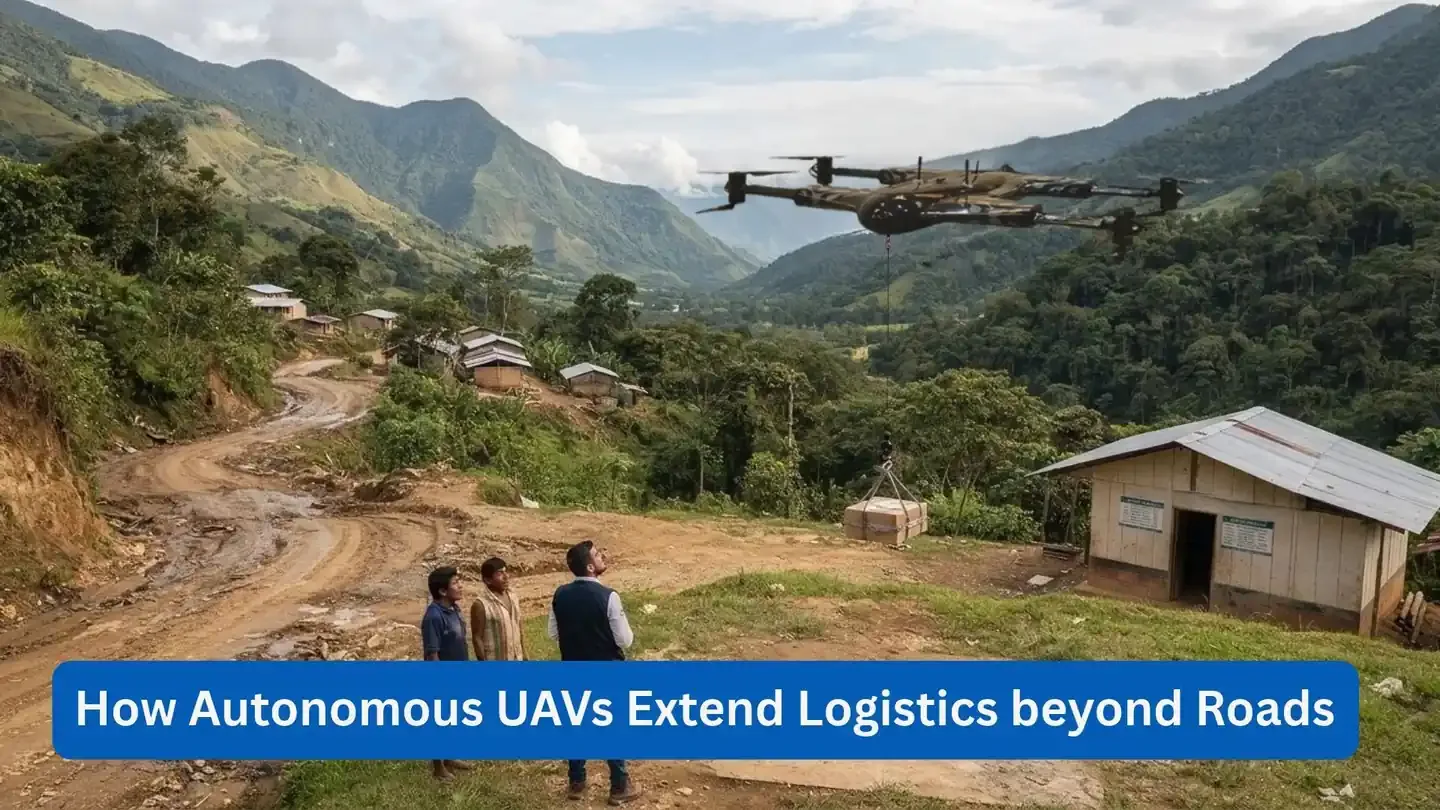
Road transportation is still essential to logistics, but roads that are already damaged, difficult terrain, and isolated locations can delay essential supplies. In order to reach these destinations, drone resupply offers in another way. Organizations can support faster deliveries to difficult areas, especially those that are difficult to access by road. This blog will explore how autonomous drone resupply, UAV resupply, and aerial resupply can connect the distribution hubs with destinations that are considered remote. Additionally, this blog will also discuss how these systems can support emergency response, healthcare, industrial operations, government services, and defense logistics.
What Is Drone Resupply?
Drone resupply involves using unmanned aerial vehicles (UAVs) to restock/transport supplies at facilities, field locations, work sites, and other destinations. These supplies may include medical equipment, food, water, spare parts, communication devices, and other items that are essential to be used in maintaining operations. The drone resupply system links the aircraft to the wider preparing process, dispatching, tracking, and receiving cargo. It also considers where’s the storage of the supplies, which destinations they are needed, how quickly they must arrive, and whether the aircraft can safely complete the mission. A drone resupply system connects aircraft operations with supply preparation, dispatch, tracking, and cargo receipt. It also accounts for where supplies are stored, which destinations need them, how quickly they must arrive, and whether an aircraft can safely complete the mission.
Drone Delivery vs. Drone Resupply
Drone delivery is more focused on transporting items from one location to another, usually to the recipient. On the other hand, drone resupply focuses more on replenishing the supplies that a person, team, and facility needs to operate again and continuously. One example of drone delivery is delivering a package to a customer. For drone resupply’s example, is sending batteries, medical supplies, and equipment to an isolated field team. Resupply also needs inventory management, delivery prioritizations, and coordination with existing logistics systems which makes it different from regular delivery.
Where UAVs Fit into a Modern Logistics Network
A typical network may connect several levels of distribution:
Central distribution center → Regional hub → forward supply point → Remote destination
The central facility both stores and prepares supplies. A regional hub brings them closer to their destinations, while a forward supply point allows an aircraft to operate from a location that’s suitable enough. For the final flight, it covers the route that may either be difficult and inefficient for ground vehicles. This structure creates a drone logistics network in which aircraft serve specific routes rather than operating as isolated delivery tools. The same drone logistics network can also use trucks and other transport options when they are more suitable.
Why the Last Miles of a Supply Route Can Be the Hardest
Difficult and Inaccessible Terrain
Roads do not reach every community, industrial site, and a field location. Mountains, forests, rivers, and steep terrain can make ground transportation either slow and impractical. Aerial routes are useful, as they may offer a more direct connection, although there are conditions that still need to be considered, such as the weather, obstacles, airspace restrictions, and safe landing. Reaching a destination simply isn't the main challenge for remote logistics. It’s important for the operators to determine whether the aircraft can carry the required cargo, complete the trip, and either return and continue to another approved location with enough remaining energy.
Damaged or Limited Infrastructure
Both roads and bridges can be damaged by disasters such as floods, earthquakes, landslides, and other emergencies. Congestion and debris may prevent vehicles from reaching the final destination even when a route remains open. When ground access is limited, the aerial resupply can provide an alternative route. However, launch sites, landing areas, communications, and personnel must still be available. Additionally, every infrastructure problem can’t be solved by an aircraft, especially when the destination is lacking a safe place to receive cargo.
Time-Critical Supply Requirements
Some supplies lose value when they arrive late. Medical items, replacement components, and emergency equipment may immediately be needed to either support and prevent operational downtime. Critical supply delivery depends on identifying which items are prioritized, selecting a route that’s appropriate to take, and confirming that the aircraft can meet the deadline. Fast arrival flights are not useful if they carry the wrong item and deliver it to the wrong location.
Risk and Resource Constraints
Ground transportation may require long detours, additional personnel, and access to hazardous areas. UAVs can reduce the need for some ground journeys, but they introduce their own operational requirements, including trained operators, maintenance, battery management, and regulatory compliance.
From Point-to-Point Delivery to Connected Resupply Networks
One flight can solve an immediate transportation problem. A coordinated network addresses recurring supply needs in multiple different locations.
Hub-to-Remote-Site Resupply
Supplies move from a central warehouse to a regional facility or forward operating point before a UAV transports them to the destination. This approach needs coordination among the supply points, the inventory teams, the dispatch personnel, and the receiving teams to ensure that there are right items available, prepared, and delivered when needed. Aside from these, it also reduces the It also reduces flight distances while keeping bulk storage and inventory management on the ground.
Scheduled vs. On-Demand Missions
Scheduled Missions and On-demand Missions are different from each other. Scheduled missions handle routine deliveries, while on-demand missions do address either urgent requests and if there are unexpected shortages. Dispatch systems consider the urgency, the availability of aircraft, payload limits, and the conditions of a route. Autonomous drone resupply can support repeatable routes with both proper supervision and approval.
Single-Destination vs. Multi-Stop Missions
Direct flights or single-destination flights deliver supplies to one location, while multi-stop missions serve several destinations along a planned route. Each additional stop affects the allocation of cargo, the planning of routes, which deliveries should be prioritized, and how much energy stays for the next leg.
Return Logistics
Drones may carry samples, documents, and small equipment on return flights. Operators must access the cargo weight, the packaging, the handling requirements, and the aircraft's compatibility before the departure.
What Can Drones Carry in Resupply Operations?
The suitable cargo really depends on the mission, the aircraft, the payload system, and operating conditions. For organizations, the smartest thing for them to do is to select supplies according to their actual needs rather than assuming that every UAV can carry every type of item.
Medical and Emergency Supplies
Medical supply drones can deliver first-aid materials, selected medicines, and diagnostic equipment to isolated areas. Sensitive cargo really needs proper packaging, temperature control, and handling procedures.
Tools, Components, and Spare Parts
Cargo UAVs are capable of transporting small tools, sensors, batteries, and spare parts to remote work sites. It’s important for the operators to check the weight of the cargo, its dimensions, and the packaging before the dispatch.
Food, Water, and Essential Supplies
Drones are capable of delivering selected quantities of sustenance when conventional transport is delayed. Payload limits as well as distance may make trucks, boats, and crewed aircraft more suitable for larger shipments.
Mission-Specific Cargo
Logistics UAVs can carry specialized equipment, communication devices, and testing materials for specific operations. It’s important that cargo must be properly secured and it should stay inside of the operating limits of an aircraft.
Designing a Drone Resupply Mission
Step 1: Define the Cargo
· Identify the type of cargo, the quantity, its weight, dimensions, and handling requirements.
· It’s also important to check whether the special packaging and the transport rules apply.
Step 2: Determine Distance and Route
· Measure the route along with the return journey as well as the possible detours.
· Check the airspace restrictions and the alternative landing locations.
Step 3: Evaluate Takeoff and Landing Conditions
· Check for a space that can be suitable, the obstacles, the weather, and the people nearby.
· Always ensure that the receiving team can collect the cargo safely.
Step 4: Match Payload With Range and Endurance
· Confirm if the aircraft is capable of carrying load over the planned distance.
· Account for the weather, the terrain, and the energy reserves.
Step 5: Plan Communications and Mission Oversight
· Establish the monitoring of aircraft as well as the communication procedures.
· Prepare contingencies for the unexpected conditions.
Step 6: Plan Turnaround and Recharging
· Account for loading, unloading, inspections, maintenance, and charging.
· Set the schedules of the delivery according to the actual fleet capacity.
The Payload-Distance-Time Triangle
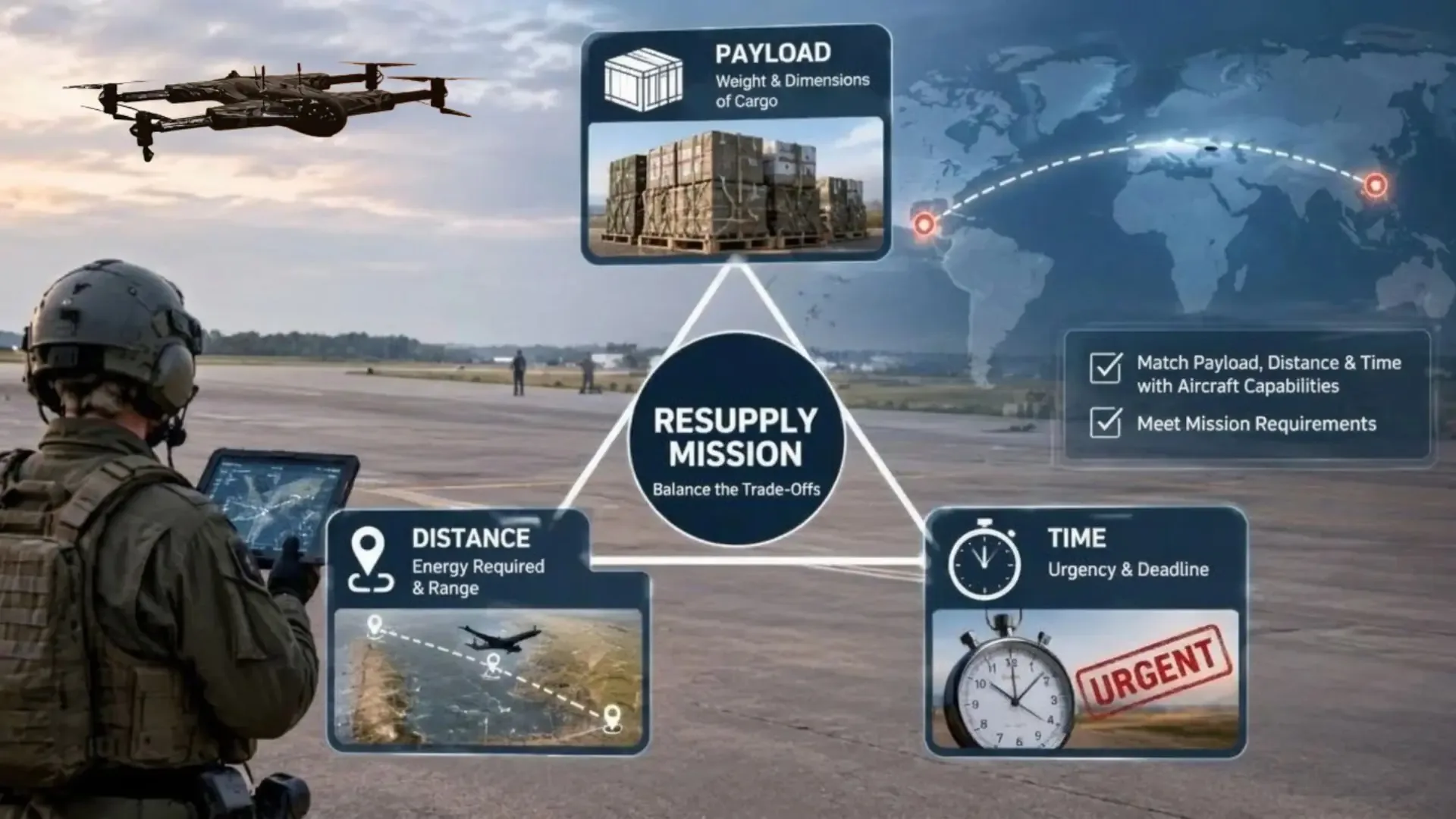
Every resupply mission involves balancing three connected factors: payload, distance, and time. Payload determines the weight and dimensions of the cargo, which can affect how much an aircraft can carry and how far it can travel. Distance affects the energy required to complete the route, including any return journey, and may determine whether an aircraft has sufficient range and endurance for the mission. Time determines how quickly the supplies must reach their destination. An urgent delivery may require a different route, aircraft, or transport method to meet the deadline. Organizations must evaluate all three factors against the aircraft's verified capabilities and the mission's requirements.
Why Payload Alone Does Not Define Capability
An aircraft with a high payload rating may not be suitable for a long-distance mission carrying its maximum load. The operator must consider the verified performance of aircraft across the planned route.
Why Distance Changes Aircraft Requirements
A single type of aircraft may be suited for short trips between nearby hubs. On the other hand, longer routes need different range, endurance, and energy reserves. Vertical takeoff and landing capability can be used where there’s no available runways, but it doesn’t remove range and payload limitations.
Why Delivery Urgency Changes Mission Planning
Shipments deemed as urgent may need to be prioritized over routine deliveries. However, it’s important to remember that urgency shouldn’t override either safety checks and the operating limits. The most appropriate route is one that equalizes the delivery time with cargo needs, aircraft capability, and mission risk.
Where Resupply Networks Can Be Used
Disaster and Emergency Response
A drone resupply system can deliver emergency equipment, communication devices, and essential supplies when roads are blocked. Aerial resupply depends on weather, airspace coordination, and safe delivery points.
Remote Industrial Operations
UAV resupply is capable of transporting tools, spare parts, and equipment for an inspection to remote mining, energy, and construction sites. Its value depends on the cargo’s needs, travel distance, and the delivery costs.
Healthcare and Medical Logistics
Medical drones can transport approved supplies, samples, and medical items between healthcare facilities. Drone resupply needs a proper packaging, a temperature control, and handling procedures for sensitive cargo.
Government and Public-Sector Operations
Government agencies can use a drone logistics network to deliver supplies across rural areas, islands, and disaster-prone regions. Effective operations require clear procedures, maintenance, data controls, and accountability.
Humanitarian and Remote Community Support
Drone resupply can help deliver essential goods to isolated communities with limited transport access. Programs should consider local needs, affordability, and reliable access to other delivery options.
Defense and Field Logistics
For defense units, they can use autonomous drone resupply to transport batteries, tools, and medical equipment to field locations that are rather remote. Autonomous aerial resupply needs mission planning, communications, and a proper oversight, while, at the same time, complementing existing military transport systems.
How Drones Work Alongside Existing Logistics Systems
Drones are most practical when they connect with other transportation methods instead of operating separately from them.
Multimodal Logistics
A truck can transport bulk cargo to a regional hub, while an aircraft handles a smaller shipment to a hard-to-reach destination. Boats, helicopters, and other vehicles may serve different parts of the same route. This arrangement allows each transport method to handle the part of the journey for which it is best suited.
Extending Ground Transportation
There is a simple pattern for a drone supply chain to follow: a truck brings supplies to an accessible hub, an operator prepares the shipment, and a UAV carries selected items to the final destination. The drone supply chain should also include the inventory records, the delivery confirmation, the maintenance schedules, and a process for handling failed and delayed missions. These links make the transportation service more easy to depend on. When the final section of a journey is difficult for ground vehicles, it’s important to use last-mile aerial delivery. Even if it’s useful, the receiving location must still be accessible to authorized personnel and suitable for the planned delivery method.
When Conventional Transportation Makes More Sense
Generally, trucks are capable of staying suitable for bulk cargo on accessible roads. Boats may be more practical for heavy shipments on the ocean, while crewed aircraft are capable of carrying larger loads and serve missions that surpasses a drone’s capabilities. A logistics UAV should be selected when the advantages justify both the cost and operational requirements. The goal is to improve the overall transportation network, not to replace every existing vehicle.
What Makes a UAV Suitable for Resupply Missions?
Several characteristics do determine whether an aircraft can support a specific delivery requirement.
· Useful payload capacity carries cargo, the packaging, and the attachments inside of verified limits.
· Range and endurance completes the route with enough energy reserves.
· VTOL capability enables the takeoff as well as landing without runways at suitable sites.
· Autonomous flight supports the repeatable missions along with proper supervision.
· Modular cargo integration both secures the cargo and also simplifies loading and unloading.
· Operational reliability depends on the maintenance, inspections, and the failure procedures.
· Rapid turnaround relies on the efficient charging, inspections, and the cargo handling.
An autonomous logistics UAV must be evaluated as part of a complete operating system. The performance of the aircraft alone can’t guarantee a reliable service if the organization is lacking suitable infrastructure, trained personnel, and effective coordination of mission.
Challenges of Building Scalable Networks
Airspace and Regulatory Requirements
Operators must identify the rules that apply to the aircraft, route, operating environment, and type of mission. Depending on the jurisdiction, requirements may cover registration, pilot qualifications, visual-line-of-sight restrictions, flights over people, and permissions for more complex operations. Autonomy does not automatically grant permission to conduct a flight.
Weather and Environmental Conditions
Environmental factors such as wind, rain, temperature, visibility, and others can affect the performance of aircraft. Routes that work under favorable conditions may not be suitable during severe weather. An operating plan that’s reliable enough needs weather limits, monitoring procedures, and alternatives when flights must be delayed and canceled.
Communications Coverage
Some routes pass through areas with weak and unreliable communication. Operators must understand how the aircraft behaves if a connection is lost and whether the navigation system can support the mission safely. Communications and navigation requirements should be tested under representative conditions rather than assumed to work everywhere.
Landing and Transfer Infrastructure
A network needs suitable locations for loading, launching, receiving cargo, charging, and maintenance. Remote sites may need secure storage or a designated personnel in order to handle the deliveries. Even a capable aircraft may be unable to provide a dependable service without these arrangements.
Fleet and Mission Coordination
Multiple aircraft introduce additional scheduling, maintenance, battery, and route-management requirements. Operators need to know which aircraft are available, which missions have priority, and whether routes can be completed without creating conflicts. Fleet coordination becomes more important as delivery frequency and the number of destinations increases.
Integration with Existing Supply Systems
The network should connect with procurement, warehouse inventory, order tracking, and delivery records. Without this integration, operators may dispatch cargo that is unavailable, send duplicate shipments, and fail to identify urgent shortages. A consistent process helps the organization coordinate the aircraft with the wider supply operation.
Economics at Scale
The cost of a mission includes more than fuel and electricity. It may include aircraft acquisition, maintenance, personnel, software, insurance, infrastructure, communications, and regulatory compliance. It’s essential for the organizations to measure the delivery time, the successful completion rates, the cost per shipment, the maintenance needs, and the effect on existing transport operations. Such measures provide a useful basis for decisions rather than flight speed alone.
From Individual Aircraft to Autonomous Logistics Networks
A network can become easier to coordinate when mission planning and inventory processes share reliable information. Automation may help schedule deliveries, assign available aircraft, and flag supply requests that need attention.
Automated Mission Scheduling
An integrated logistics system can organize recurring shipments based on delivery windows, cargo readiness, aircraft availability, and route requirements. Operators should still review schedules, approve missions, and address unexpected changes and delays.
Multi-Drone Fleet Coordination
A system properly that's properly integrated may coordinate with a lot of aircraft that serve different destinations and routes. This needs a communication that's reliable along with fleet monitoring, planning missions, and coordination with aircraft status, delivery priorities, and possible delays. Remember that m ulti-drone coordination depends on the capabilities of the overall system and is not automatically available on every UAV platform.
Dynamic Resupply Prioritization
A system may help rank requests according to urgency, stock levels, and delivery deadlines. Critical shipments should still be reviewed against safety, feasibility, and mission requirements.
Integration with Inventory and Logistics Systems
Autonomous supply delivery turns into something useful when dispatch decisions reflect the current inventory as well as the confirmed requests. A connected system can assist the teams to track cargo from the preparation through receipt as well as identify where additional supplies are needed. However, automation depends on its data quality as well as the reliability of its supporting systems. Remember that human review, clear responsibilities, and fallback procedures remain necessary.
ZenaDrone 1000 in Autonomous Resupply Operations
The ZenaDrone 1000 is one platform organization that may evaluate when considering UAVs for industrial and logistics applications. Its suitability depends on the requirements of the intended mission and the capabilities verified in current product documentation.
VTOL for Flexible Deployment
Vertical takeoff and landing can be useful at locations without conventional runway infrastructure. For a resupply mission, the relevant questions include whether the aircraft can operate safely at the proposed site and whether its verified range and payload meet the delivery requirements.
Autonomous Flight for Repeatable Missions
Autonomous flight capabilities may support planned routes and repeatable tasks when the system and operating conditions permit. Organizations should verify the available automation, navigation performance, monitoring requirements, and approved operating procedures before relying on the platform for recurring deliveries.
From Individual Missions to Scalable Operations
A platform can form part of a wider logistics service when its operation is coordinated with hubs that are suitable enough, with trained personnel, with inventory processes, and with delivery records. The aircraft is only one component of that system. When considering ZenaDrone 1000, organizations should verify current specifications as well as approved claims before making decisions regarding the payload, range, autonomy, regulatory status, or operational performance. No aircraft should be assumed to meet every resupply requirement without an evaluation specifically for the mission.
Conclusion:
Building a More Connected Supply Network Drones are helpful in terms of delivering essential supplies to remote areas when the roads are neither reliable nor accessible. Successful operations depend on the route planning, cargo selection, inventory coordination, and integration with existing transportation systems. A well-planned drone resupply network complements trucks, boats, crewed aircraft, and local delivery teams. Considering the payloads, distance, urgency, costs, and risks can enable the organizations to build a more flexible logistics system that reaches locations deemed as underserved and keeps the supplies moving.
Frequently Asked Questions
What Is Drone Resupply?
Drone resupply uses unmanned aircraft to transport supplies to remote locations, facilities, and teams when ground transport is difficult.
How Is Drone Resupply Different from Drone Delivery?
Delivery moves items between locations, while resupply focuses on replenishing supplies and equipment for ongoing operations.
What Supplies Can Cargo Drones Transport to Remote Locations?
Cargo drones may carry medical items, tools, spare parts, food, water, and communication equipment, depending on payload limits and operating conditions.
Can Cargo Drones Replace Trucks in Remote Logistics?
No. Trucks handle bulk shipments on accessible roads, while drones can deliver smaller loads to hard-to-reach areas. Using both can be more practical.
What Determines Whether a Resupply Mission Can Be Completed?
Key factors include payload, distance, weather, battery capacity, landing conditions, communications, airspace rules, and delivery deadlines.
Can Multiple Drones Operate as Part of One Logistics Network?
Yes. Coordinated drone operations require suitable software, communications, scheduling, fleet monitoring, maintenance, and inventory management.
Contact Us
This site is protected by reCAPTCHA and the Google Privacy Policy and Terms of Service apply.