


 Deutsch
 Português

The Legal and Ethical Implications of Drone Warfare
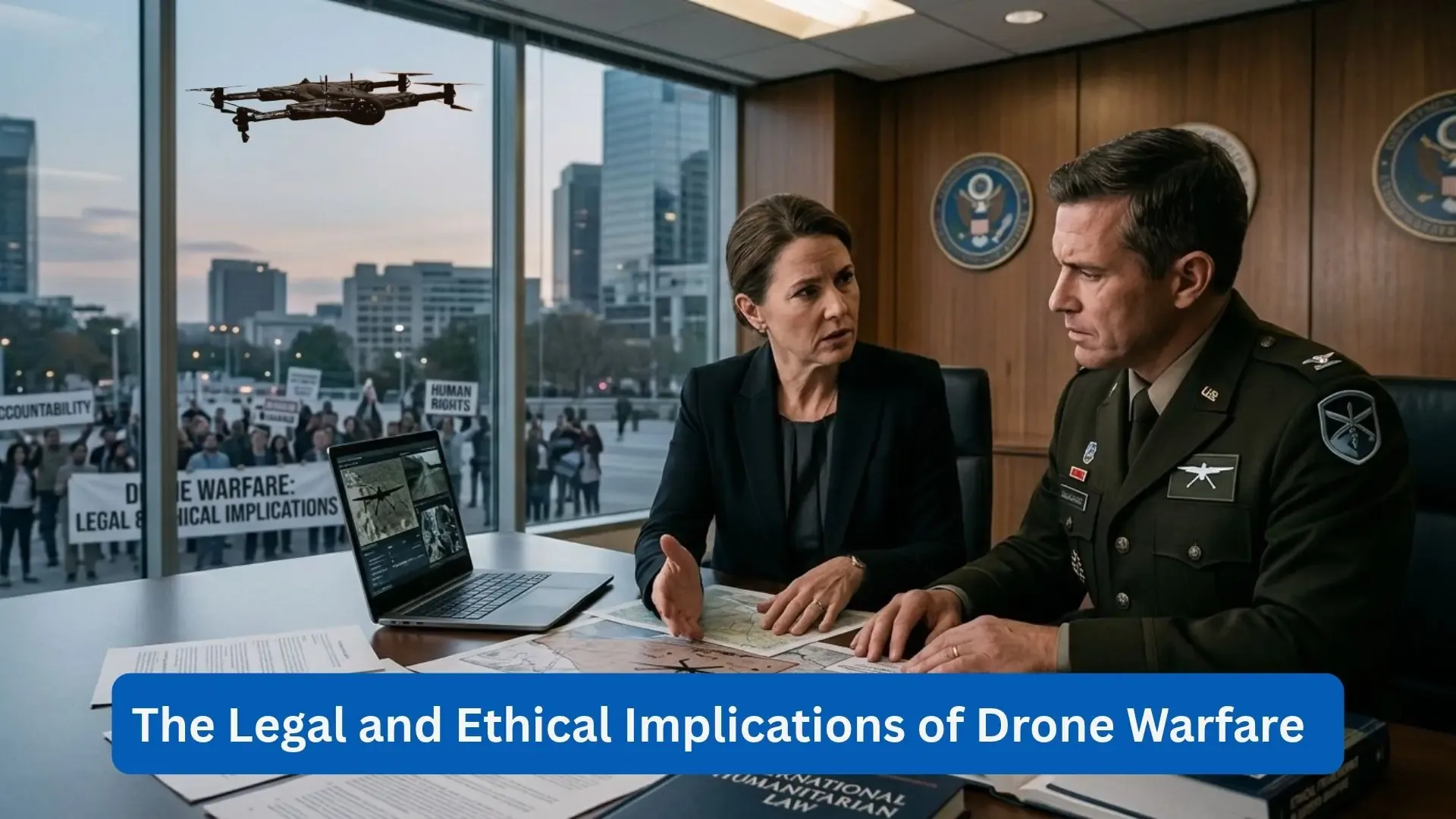
As we know, warfare raises both legal and ethical questions beyond technical accuracy. Operational transparency helps ensure that military decisions undergo review and accountability. A precise weapon doesn’t really guarantee a lawful operation. Legal authority, reliable intelligence, human judgment, and civilian protection all matter throughout the decision process.
Drone Warfare as a Chain of Decisions
A drone operation involves connected decisions, from establishing legal authority and assessing intelligence to target identification, authorization, execution, and post-operation review.
Why Technical Precision Is Only One Part of the Assessment
Technical precision does not guarantee correct targeting or legal authority. You will know that an indication of responsible drone operations is that it will need useful and reliable intelligence, lawful decisions, and a careful assessment of civilian harm, as well as the foreseeable consequences.
Stage One: Establishing Legal Authority
Before intelligence becomes an operational target, it’s important to begin legal review first. The one who should be making the decisions must establish whether the proposed use of force is justified legally and whether the operation falls within the relevant limits.
State Sovereignty and Territorial Consent
State sovereignty allows a country to have authority over its territory. In terms of flying a drone, cross-border drone strikes raise separate questions about territorial consent and the legal justification for using force, including self-defense. However, the self-defense claim’s legality still remains disputed in some circumstances. Furthermore, the legal implications of drone warfare are dependent on the location, the circumstances, and the legal justification for the operation.
Self-Defense and the Imminent Threat Standard
Article 51 of the UN Charter allows states to invoke self-defense under applicable conditions. However, anticipatory self-defense remains disputed when force is used bef;ore an attack occurs. The imminent threat standard is useful as it helps assess whether a threat justifies action. It’s important for the government to explain its legal criteria without revealing sensitive intelligence.
Armed-Conflict Rules or Law-Enforcement Standards
International humanitarian law is applied during an armed conflict. International human rights law and domestic law generally govern the use of force outside armed conflict. Both drone warfare and international law need an assessment that’s specifically based on context, including whether capture or less harmful alternatives are possible.
Stage Two: Turning Intelligence into a Targeting Decision
Identity, Behavior, and Evidentiary Uncertainty
Identifying a target is important and shouldn’t be based on mere suspicion. A decision-maker must distinguish a confirmed identity from an inference based on behavior, associations, or patterns of activity. Such indicators may be incomplete, outdated, or interpreted incorrectly. Confirmation bias is also deemed an influence on the analysts who focus on information supporting an existing belief while overlooking contradictory evidence. The legal issues of drone strikes start well before authorization when uncertain intelligence is treated as conclusive.
The Duty to Verify
Before approving an operation, responsible personnel should assess the reliability of intelligence sources, seek independent corroboration, and consider whether the information remains current. It’s also important that they should both examine the possibility of civilian presence and identify the gaps that could change the decision. Furthermore, verification must be an active process instead of a procedural formality. When there's insufficient evidence, decision-makers should be able to request further information, delay approval, or reject the proposed operation.
The Limits of AI-Assisted Analysis
Analysis that’s AI-assisted may support assessments, but algorithmic outputs can contain errors along with hidden assumptions. A classification or recommendation should not be deemed or treated as unquestionable evidence. Algorithmic targeting accountability requires reviewers to understand relevant system limitations, challenge uncertain results, and preserve records of both automated outputs and human decisions. Responsible military AI depends on clear responsibility for how information is interpreted and used.
Stage Three: Protecting Civilians before Authorization
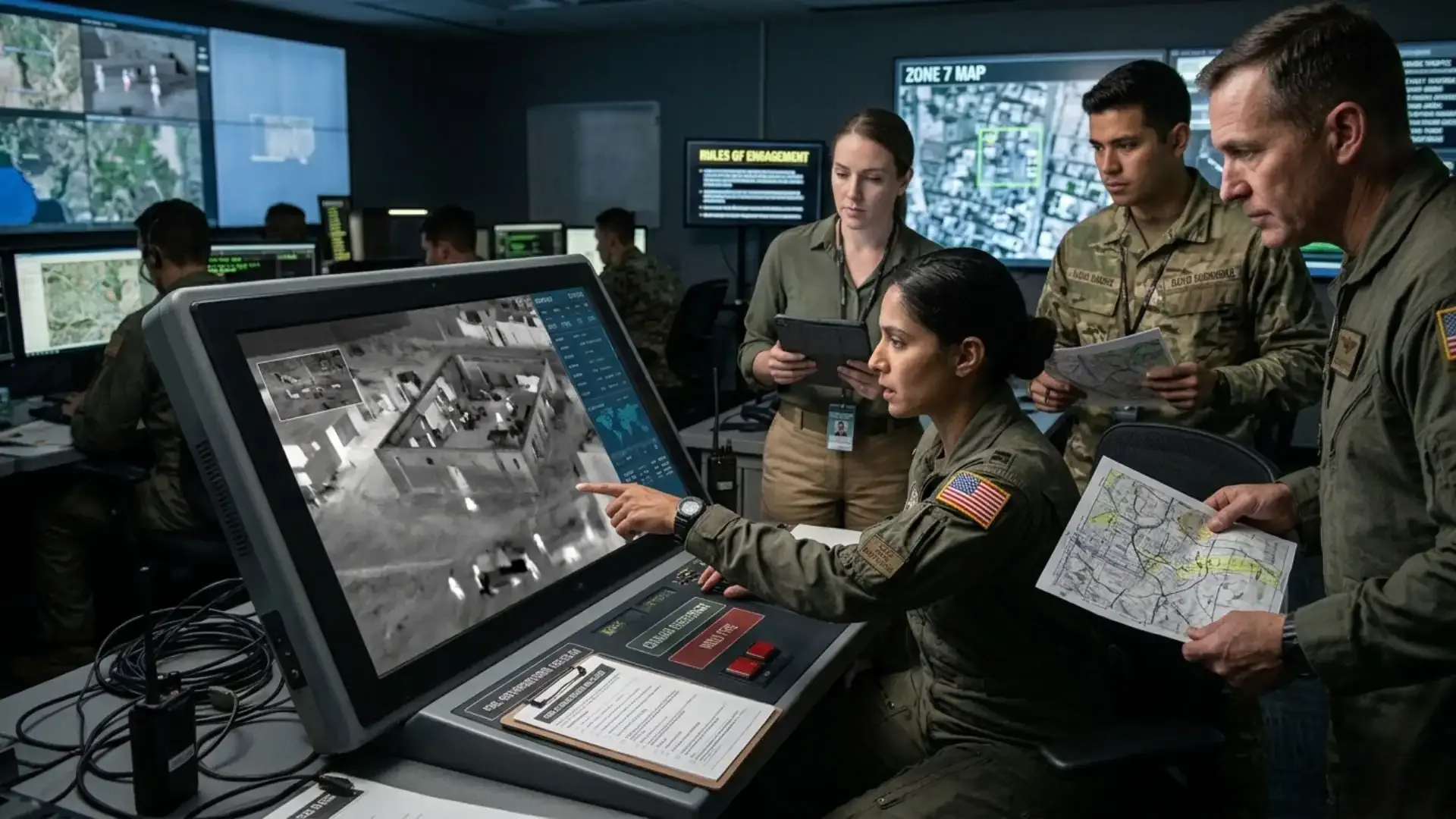
Civilian protection in drone warfare must shape the decision before a weapon is released, not merely the investigation afterward.
Distinction and Target Verification
International humanitarian law requires parties to distinguish civilians from combatants and civilian objects from military objectives. The attacks may be directed only at lawful military objectives. It’s important for the decision-makers to take all the feasible steps to verify a proposed target. This obligation becomes especially important in areas that are populated by civilians, where they may be close to the intended target. Updated information should be reviewed immediately before authorization whenever feasible.
Proportionality and Expected Civilian Harm
The principle of proportionality prohibits an attack when the expected incidental civilian harm would be excessive in relation to the concrete and direct military advantage anticipated. It doesn’t need equal harm on both sides. Assessments should consider foreseeable indirect effects and immediate risks. These effects include damage to nearby civilian infrastructure and disruptions to essential services, such as electricity, water, and healthcare. State of uncertainty drives the decision-makers to evaluate what they reasonably expect at the time. If the assumptions no longer hold, the operation should be reconsidered.
Feasible Precautions and the Option to Cancel
Feasible precautions may include selecting a time when fewer civilians are present, changing the planned approach, or choosing a less harmful alternative. If new information changes the assessment, personnel must be prepared to suspend or cancel the operation when required by applicable law. A sound drone strike authorization process makes cancellation a genuine option rather than treating approval as irreversible.
Stage Four: Meaningful Human Control during the Operation
What Makes Human Control Meaningful?
Meaningful human control needs reliable information, enough time, and the authority to question, delay, redirect, or cancel the operations. It’s important to remember that human oversight is nothing but merely symbolic without these being present.
Avoiding Automation Bias
Automation bias occurs when people over-rely on the results generated by a computer. Both the training and procedures should encourage independent judgment as well as careful review, especially when either the target identity or civilian risk is uncertain.
Preserving a Clear Chain of Accountability
Analysts, legal advisers, commanders, operators, and agencies have distinct responsibilities. Records should document key decisions and their supporting information. Software cannot replace human and institutional accountability.
Operational Transparency without Exposing Sensitive Missions
Operational transparency is the disclosure of legal standards, approval procedures, civilian-harm assessments, and appropriate operational outcomes needed to evaluate military decisions, while protecting any sensitive information.
Information That Can Be Disclosed Responsibly
Governments can publish legal grounds, verification standards, civilian-harm assessments, investigation policies, and aggregate casualty data. They can also report corrective actions without exposing sensitive details.
Information That May Require Protection
Live mission locations, intelligence sources, personnel identities, active plans, and security vulnerabilities may require protection. However, secrecy should not prevent meaningful scrutiny of an operation's legality.
Practical Ways to Balance Transparency and Security
Operational transparency can balance public accountability along with security through practical measures, which include:
· Delayed disclosures to protect the missions that are active.
· Redacted investigation summaries that share the findings without having the sensitive details exposed.
· Consistent public reporting standards.
· Periodic civilian-harm assessments.
· Confidential legislative or judicial reviews.
· Independent inspections by the authorized personnel.
Remember that these measures are important as they strengthen military oversight, while protecting the personnel, information that is sensitive to share, and ongoing operations.
Stage Five: Reviewing What Happened After the Operation
Conducting a Credible Post-Strike Assessment
Investigations should verify the intended target and the accuracy of intelligence. Civilian harm, and compliance with authorization procedures. Findings may lead to revised targeting procedures, improved training, system repairs, changes to authorization protocols, or accountability measures when violations are identified. They should also examine the communication failures, system malfunctions, and conflicting evidence.
Investigating Credible Allegations of Harm
It’s important to be timely, independent, and evidence-based when investigating. Always remember that an effective and safe investigation is considerate of the communities that are affected, distinguishes confirmed findings from the claims that are unresolved, and identifies both the individual or institutional failures.
Learning from Errors
Findings may lead to improved targeting procedures, corrected intelligence, better training, and system changes. Public summaries can share the lessons while, at the same time, protecting sensitive information, strengthening accountability, and helping in preventing future harm.
Responsibility, Acknowledgment, and Remedies
Who Should Answer for a Wrongful Strike?
Responsibility may fall on approving officials, commanders, agencies, or governments, depending on the evidence and applicable law. Contractors or developers may also bear responsibility for the proven technical failures. State responsibility, criminal liability, and administrative accountability are different from each other, making them in need of proper assessment.
What Meaningful Remedy Can Include
Civilian remedies may include formal acknowledgment, correction of the public record, explanations of investigative findings, and financial compensation where it is appropriate. Depending on the circumstances, the medical assistance, reconstruction support, disciplinary measures, or institutional reforms may also be warranted.
Why Remedy Supports Future Prevention
Remedies exist to reveal weaknesses in making decisions, encourage accurate reporting, and strengthen civilian-protection procedures. Addressing wrongful harm is a sign that the institutions take their obligations seriously.
A Governance Checklist for Responsible Drone Operations
A practical framework for responsible drone operations should include:
· A documented legal basis and defined operational limits.
· Reliable intelligence subject to independent review.
· Civilian-risk assessments before authorization.
· Meaningful human control and authority to cancel.
· Records of consequential decisions and relevant system outputs.
· Post-operation of civilian-harm assessments.
· Credible, independent investigation procedures.
· Proportionate public disclosure and appropriate remedies.
· Corrective action when individual or institutional failures are identified.
No single safeguard is sufficient. Drone warfare ethics depend on connected controls that remain effective from the initial legal review through post-operation investigation and remedy.
ZenaDrone and the Importance of Responsible Technology Use
Responsible drone use requires more than technical performance. ZenaDrone supports aerial data collection, mapping, monitoring, and modular sensing. These ZeanDrone capabilities do not establish a role in lethal targeting or autonomous strikes. Clear policies, human oversight, and accountability remain essential.
Conclusion: Accountability Must Develop Alongside Capability
Both precision and efficiency are important, but they aren’t enough; drone warfare needs more. Technology should be used and established with accountability. Being accountable includes considering the legal responsibility and civilian protection. Additionally, it’s important to have meaningful human control guiding every stage, from authorization to investigation. It’s also important to have operational transparency, as this helps ensure public accountability while protecting sensitive information. As drone technology advances, the safeguards that govern its use must advance with it.
Frequently Asked Questions
What are the main legal issues associated with drone warfare?
Key issues include sovereignty, legal authority, target verification, proportionality, civilian protection, and compliance with international law.
What does operational transparency mean in drone operations?
It means disclosing legal standards, approval processes, oversight, and outcomes while protecting sensitive information.
Does the use of a precise drone automatically make a strike lawful?
No. Precision does not guarantee lawful authority, correct targeting, or civilian protection.
Who is accountable for an unlawful drone strike?
Responsibility depends on the evidence and may involve states, commanders, or other decision-makers.
Why is meaningful human control important?
It allows people to question recommendations and intervene when operations pose legal or ethical risks.
How can civilian harm from drone operations be investigated?
Investigators review intelligence, mission records, physical evidence, and witness accounts to identify failures and recommend remedies.
Contact Us
This site is protected by reCAPTCHA and the Google Privacy Policy and Terms of Service apply.