



ZenaDrone Innovation in Drone Swarm Systems
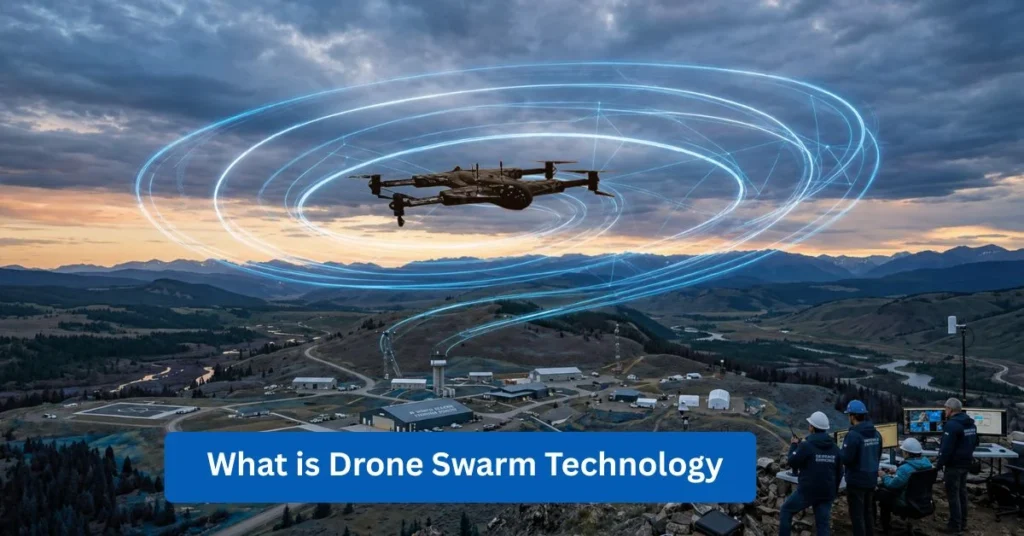
The military drone sector has evolved rapidly over the past decade, marked by two major shifts: the transition from pilot-operated systems to increasingly autonomous platforms and the rise of advanced, AI-driven UAV technologies.
The current state of unmanned aerial vehicle (UAV) operations in defense environments is undergoing transformation through three technological advancements: artificial intelligence development, sensor system integration, and network communication improvements. In addition, the most important technological achievement of our time is drone swarm technology, which enables multiple drones to operate as a coordinated unit.
Among these developments, drone swarm technology stands out as a transformative breakthrough, allowing multiple UAVs to operate as a coordinated, intelligent unit for enhanced mission effectiveness.
The transition to the drone swarm system delivers operational improvements that exceed those of regular system updates. In this period of military strategy development, the distribution of intelligent systems has proven to be more effective than traditional military strategies, which rely on single-platform systems. AI military drones and autonomous swarm systems are an essential component of the future of defense unmanned aerial vehicle systems, considering that defense organizations search for better ways to optimize their operations.
In this blog, we will discuss the importance of military drone technology, especially in how it is transforming modern military operations using drone swarm technology.
What is Drone Swarm Technology?
Drone swarm technology enables UAVs to communicate and collaborate autonomously to perform complex and unified mission objectives. This approach is different from traditional drones that require human piloting because swarm systems shift control from the individual operator to the collective network. Each drone acts as part of a larger network, continuously exchanging data with other units.
This technology is inspired by biological ‘swarm intelligence’ observed in nature, where simple individual behaviors produce complex, coordinated group dynamics. In military drone applications, this technology translates into significant operational advantages.
Here are the advantages:
- Swarms can range from a few units to hundreds, depending on the requirements of the mission.
- The network remains mission-capable even if individual units are lost to attrition or technical failure.
- Multiple drones can monitor wide areas simultaneously.
- Swarms can adjust their behavior dynamically according to the conditions of the environment.
Drone swarms are effective in some cases that need real-time coordination, such as reconnaissance, target tracking, and area surveillance. Through distributing the tasks across multiple units, swarm systems lessen reliance on single points of failure and enhance the resilience of missions.
Role of AI in Military Drones
Artificial intelligence is considered a foundation that allows modern drone systems to operate with greater autonomy and efficiency. AI military drones use machine learning algorithms, computer vision, and data analytics to interpret sensor data, decide, and execute tasks with little human intervention.
Key capabilities in military drone technology include the following:
- Autonomous Navigation: AI technology can work without the need for an operator. The drone system uses its sensors and real-time data processing capabilities to avoid crashes and choose the best path.
- Target Recognition and Tracking: Computer vision models that operate on drones enable them to recognize objects while they track moving targets under various environmental conditions.
- Swarm Coordination: AI facilitates communication and coordination between drones in swarm systems. The algorithms, which execute task allocation and formation management together with group decision-making processes, ensure that the swarm maintains its operational efficiency as a unified organization.
- Data Processing and Analysis: AI-powered drones can analyze extensive data streams while they extract useful information from visual data, sensor measurements, and environmental data. AI integration in defense UAV systems makes operations more effective and flexible. It allows drones to carry out complex missions on their own while still staying aligned with overall objectives and control.
ZenaDrone’s Proprietary Camera Innovation
Advanced military surveillance drones depend on their sensor systems to determine their operational capabilities for advanced military surveillance operations.
The intelligence-gathering process requires both high-resolution imaging and multispectral sensing capabilities, together with real-time data transmission systems.
ZenaDrone’s proprietary camera technology addresses these needs by integrating multiple sensing functions into a single, comprehensive system. This method improves mission data accuracy while enabling a better understanding of the operational situation.
Key features of advanced drone camera systems include the following:
- High-Resolution Imaging: This captures detailed visuals for precise analysis.
- Multispectral Sensors: These sensors detect variations in light beyond the visible spectrum. This is useful for identifying objects or conditions that are not visible to the human eye.
- Real-Time Transmission: This allows quick access to data for faster decision-making.
- Stabilization Systems: These systems ensure a consistent quality of the image even in dynamic flight conditions.
ZenaDrone has developed its technology to function as proof of concept for both surveillance operations and operational intelligence activities. The military drone industry currently follows a trend that links sensor development to the need for high-quality data and the requirement for optimal flight capabilities.
Applications in Defense and Surveillance
Defense organizations are beginning to use drone swarm technology and AI-powered UAVs for their various defense applications. The systems demonstrate their usefulness for situations that traditional methods cannot address because of their high expenses, dangerous nature, or inability to scale.
- Military Surveillance Drones: Swarm-enabled military drone systems can monitor large geographic areas, track movement, and provide continuous intelligence coverage. This provides an effective border security solution.
- Reconnaissance Missions: Drone swarms can conduct reconnaissance operations in complex or hazardous environments. The system achieves better intelligence results by using multiple units to collect data from various angles and depths.
- Target Acquisition and Tracking: AI-powered drones can identify and track targets over time, even in dynamic or crowded environments. Swarm systems enhance this capability by coordinating multiple drones to maintain continuous coverage.
- Search and Rescue Support: Military drone technology is also used in humanitarian missions. Swarms perform rapid scanning of disaster areas to find survivors while they assess damage, which delivers vital information to response teams.
- Electronic Warfare and Counter-UAS: Advanced drone systems can be used in electronic warfare, including signal disruption and counter-drone operations. Swarms create strategic benefits by using synchronized actions to either overwhelm or disorient enemy systems.
Future of Autonomous Military Systems
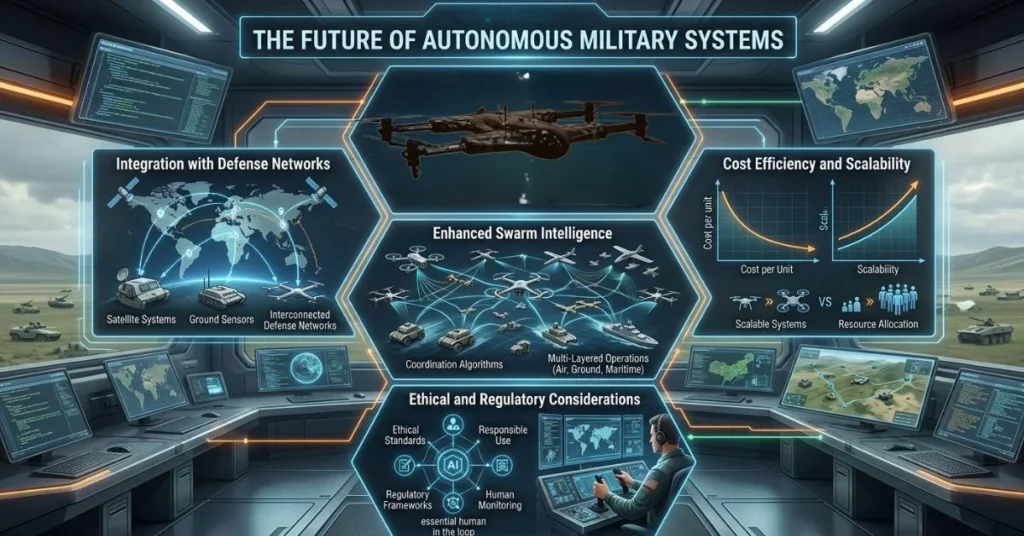
Military drone technology will develop its future through ongoing progress in artificial intelligence, communication systems, and system integration. The development of autonomous drone swarms will reach higher levels of complexity and operational capacity as these technologies mature.
- Increased Autonomy: Drones will operate through automated systems because future systems require less human control, and drones can make independent decisions based on their mission needs and their environmental assessments. This also includes adaptive learning, where drone performance improves over time.
- Enhanced Swarm Intelligence: There will be an evolution of swarm systems to handle more complex tasks, including multi-layered operations involving air, ground, and potentially maritime units. Improving coordination algorithms will enable more effective deployment solutions through enhanced operational flexibility.
- Integration with Defense Networks: Drones will serve as components of defense systems that operate through interconnected defense networks. This intelligence network implementation will connect satellite systems with ground-based sensors and command centers.
- Cost Efficiency and Scalability: The cost of deploying drone swarms will decrease with technological progress which will enable more organizations to use drone swarms for various purposes. Defense organizations will use scalable systems to modify resource allocation according to their mission requirements.
- Ethical and Regulatory Considerations: The development of autonomous systems creates multiple difficulties, which include determining ethical standards, establishing who should be held responsible, and developing regulatory frameworks. The responsible use of these technologies requires human monitoring to remain essential throughout their development.
Conclusion
Military drone technology is rapidly evolving because AI-powered drone swarms and advanced sensor technologies have become essential components of modern military operations. The latest advancements in defense UAV systems have increased operational effectiveness, expanded deployment options, and enabled greater operational capacity.
AI military drones enable autonomous navigation, real-time data analysis, and intelligent decision-making, while swarm systems provide coordinated capabilities that enhance mission effectiveness. ZenaDrone’s proprietary camera technology makes drones vital tools for surveillance and intelligence gathering.
Lastly, the combination of innovative solutions with dependable and effective operational systems establishes modern drone technology as an essential element for upcoming military missions.
Contact Us

Thank you for your message. It has been sent.