


 Deutsch
 Português
Fire Suppression Drones for Faster Fire Detection and Response
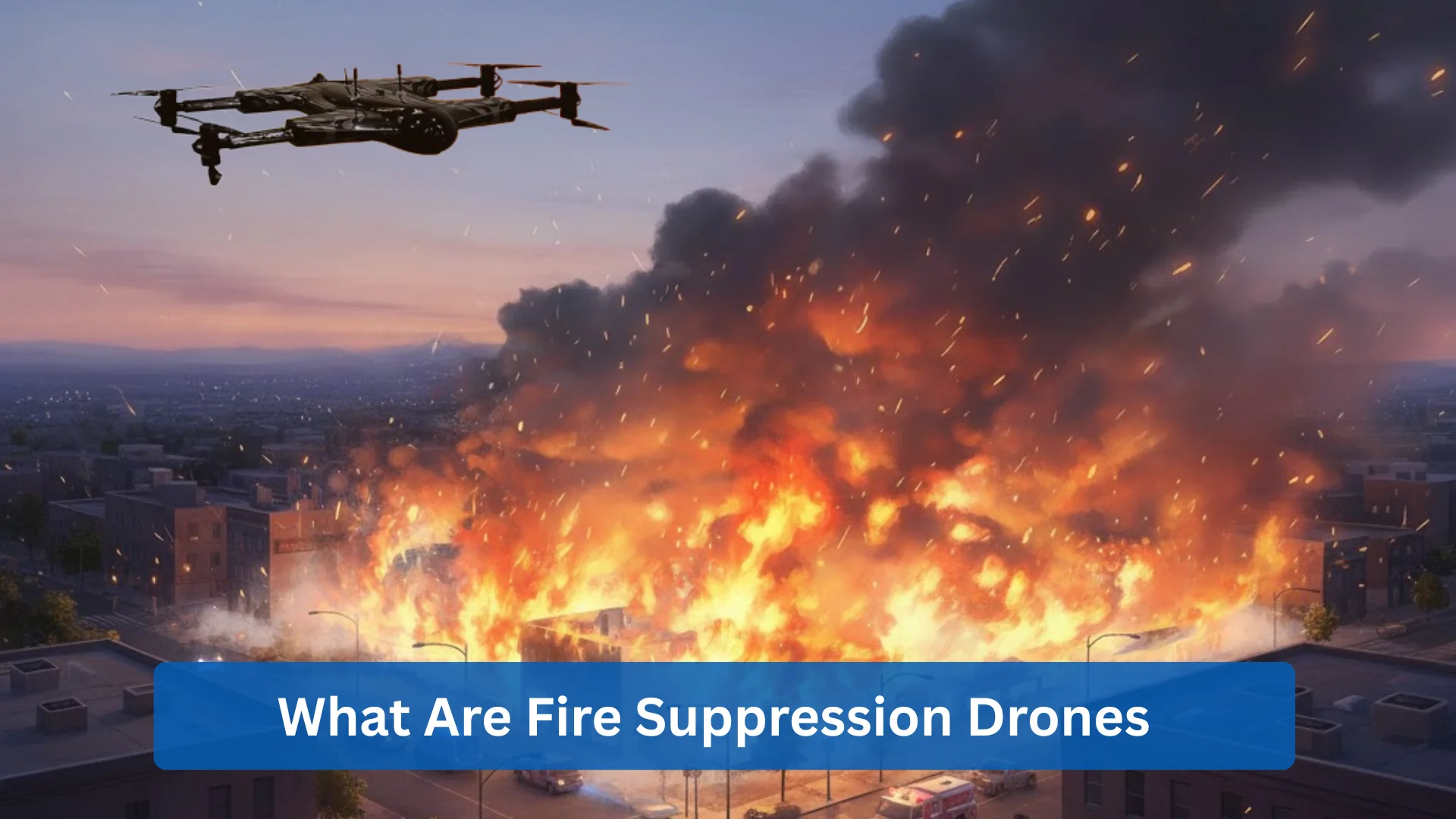
Fire suppression drones are transforming how emergency responders detect, contain, and combat fires across industrial facilities, commercial buildings, utilities, and wildfire-prone regions. Equipped with AI-powered navigation, thermal imaging cameras, precision payload systems, and real-time data transmission, these advanced UAVs provide firefighters with faster situational awareness while reducing the risks associated with traditional firefighting operations.
Unlike conventional methods that rely solely on ground crews or manned aircraft, fire suppression drones can rapidly reach hazardous or inaccessible locations, assess fire behavior from above, and support emergency teams with targeted fire suppression and continuous aerial intelligence. Whether responding to high-rise building fires, industrial incidents, or rapidly spreading wildfires, these drones improve operational efficiency while helping protect personnel and surrounding infrastructure.
In this guide, you'll learn what fire suppression drones are, how they work, their key benefits, how they compare with fire detection drones, and the technologies driving the next generation of intelligent firefighting solutions.
What Are Fire Suppression Drones?
Fire suppression drones are specialized unmanned aerial vehicles (UAVs) designed to assist emergency responders by detecting, monitoring, and suppressing fires with greater speed, precision, and safety. Unlike standard inspection drones, these aircraft combine advanced sensors with payload delivery systems capable of deploying water, fire retardants, foam, or fire extinguishing agents directly onto targeted areas.
Modern firefighting drones typically integrate multiple technologies, including:
- Thermal imaging cameras for hotspot detection
- AI-powered fire recognition
- GPS and RTK navigation for precision flight
- Autonomous mission planning
- Live HD video streaming
- Heavy-lift payload systems
- Obstacle avoidance sensors
- Cloud-based command integration
These capabilities allow emergency teams to gather real-time intelligence while supporting suppression efforts in environments that may be too dangerous or difficult for firefighters to access immediately.
Depending on the mission, fire suppression UAVs can assist with:
- Initial fire assessment
- Wildfire hotspot monitoring
- High-rise firefighting support
- Industrial fire response
- Chemical facility incidents
- Electrical infrastructure fires
- Warehouse and logistics center emergencies
- Search and rescue coordination during fire events
Rather than replacing firefighters, fire suppression drones serve as force multipliers that provide critical aerial intelligence, improve decision-making, and help reduce operational risks throughout an emergency response.
How Do Fire Suppression Drones Work?
Fire suppression drones operate through a coordinated combination of onboard sensors, artificial intelligence, autonomous flight systems, and precision payload deployment. Instead of simply capturing aerial footage, these drones continuously analyze environmental conditions and provide emergency teams with actionable intelligence before, during, and after fire suppression operations.
A typical fire suppression mission follows several stages.
Early Fire Detection
The process begins with thermal imaging cameras, optical sensors, or AI-powered vision systems that continuously monitor an area for abnormal heat signatures, smoke patterns, or visible flames.
Unlike conventional cameras, thermal sensors can identify hotspots hidden behind smoke, vegetation, rooftops, or structural materials, allowing responders to detect fires earlier.
AI-Powered Fire Analysis
Once a potential fire is detected, onboard artificial intelligence analyzes the collected data to determine:
- Fire location
- Fire intensity
- Heat distribution
- Spread direction
- Risk to nearby assets
- Safe approach routes
This information is transmitted to command centers in real time, allowing responders to make informed decisions before deploying ground crews.
Autonomous Flight Navigation
Using GPS, RTK positioning, obstacle avoidance sensors, and autonomous flight software, the drone safely navigates toward the incident while maintaining stable flight, even in complex environments.
Modern firefighting drones can automatically adjust their flight paths to avoid:
- Buildings
- Utility poles
- Trees
- Power lines
- Smoke-obscured obstacles
- Other aircraft
This autonomous capability enables faster deployment while reducing pilot workload during emergency operations.
Precision Fire Suppression
Once positioned above the target, the drone deploys its firefighting payload with high accuracy.
Depending on the mission requirements, a drone with a fire extinguisher may release:
- Water
- Fire suppression foam
- Fire retardants
- Dry chemical agents
- Fire extinguisher balls
- Specialized suppression materials
This targeted approach helps contain fires during their early stages or suppress hotspots that are difficult for firefighters to reach safely.
Continuous Aerial Monitoring
Even after suppression begins, the mission continues.
Fire suppression drones provide continuous aerial surveillance by monitoring:
- Remaining hotspots
- Re-ignition risks
- Fire spread
- Structural damage
- Crew safety
- Environmental conditions
Live video feeds and thermal maps allow incident commanders to adjust firefighting strategies as conditions change.
Post-Incident Assessment
Following suppression efforts, drones perform post-fire inspections to identify hidden hotspots, evaluate structural damage, and document affected areas for insurance, compliance, and recovery planning.
This digital assessment significantly reduces inspection time while improving reporting accuracy.
Why Fire Suppression Drones Are Critical in 2026
Fires aren’t the same as they used to be. Wildfires spread faster. Cities are denser. Industrial areas are packed with flammable materials. A fire that might’ve been manageable ten years ago can now spiral out of control in minutes. That’s where drones come in. They give a rapid response and reduce risks to humans. And it’s not just forests, think industrial fires, chemical plants, high-rise buildings. Drones bring firefighter safety and risk reduction to places humans might never reach.
Here’s a thought: a fire breaks out miles from a road. Ground crews would spend hours just getting there. Helicopters might take even longer. But a drone? It can launch immediately, reach the fire, and start fire suppression while feeding live video back to commanders. That split-second advantage? That’s huge.
What do you think firefighting will look like in ten years with drones everywhere? Speed, Reach & Safety Advantages over Traditional Methods
Drones are fast. They can get to hotspots humans can’t. They can drop fire retardant, foam, or water in places ladders don’t reach. And the crew stays safe. That’s the game-changer. In a wildfire, drones can reach remote areas, scan for search and rescue (SAR), and deliver suppression payloads without anyone risking life or limb.
Picture this: a swarm of drones, each one assigned a hotspot. They fly in sync, dropping Class A or Class B foam, water capsules, or fire extinguisher balls. The fire spreads slower. Humans can focus on rescue and containment. Sounds amazing, right? Makes you ask: how fast could a fire be stopped if every department had a fleet of these?
Key Technologies behind Fire Suppression Drones
High-Payload Systems (Water, Foam, Retardants):
Payload is what makes drones useful. Some carry water, others foam or chemical retardants, while some even deliver fire extinguisher balls that burst on contact with fire.
They’re designed to balance weight and stability, too heavy and the drone struggles, too light and it’s ineffective. Engineers have nailed it. These drones hit flames where they hurt, fast and precise.
It’s hard not to smile imagining that little drone dropping its payload on a fire you couldn’t touch safely. Makes you think how far could we push this tech? Bigger drones? Longer flight times? Swarms that cover miles at once?
Autonomy, Sensors & AI Integration:
AI and sensors are what make suppression drones smart. For instance, thermal imaging, infrared, and LiDAR help detect hotspots. AI helps avoid obstacles, coordinate swarms, and even predict where a fire will spread next. A key component of this intelligence is swarm technology. This allows drones to work together, knowing what the others are doing without bumping into each other, creating organized chaos.
Ever imagined what it’d be like to see ten drones swoop into a wildfire like a hive of bees? Each one knows where to drop water, foam, or chemical retardants, all while feeding damage assessment and mapping data to the ground team. You can’t help but think: what’s next?
Weather- and Environment-Resilient Drone Design:
Fires create their own conditions: heat, wind, and smoke. Drones are built to handle it. Heat-resistant materials, redundant motors, stable flight designs. Even heavy smoke and gusty wind can’t stop them. Humans? Not so much. Watching a drone hover through a firestorm must be something else. You can almost hear the motors whining as it maneuvers like it owns the sky.
Use-Cases for Fire Suppression Drones
Wildfire Suppression in Remote Terrain:
Wildfires are brutal. Ground crews risk cliffs, fallen trees, and smoke inhalation. Helicopters are limited by fuel and visibility. Drones? They just fly in. Drop fire retardants or water, map hotspots, or even help with search and rescue (SAR) for trapped hikers or animals. It’s almost poetic, small machines doing the work that would take teams hours.
And think about the data. Thermal imaging, live maps, real-time tracking. Commanders see the fire evolve and direct human teams safely. Imagine controlling that drone from miles away, seeing it put out a flare-up before humans even arrive. That’s power, right?
Industrial/Structural Fire Mitigation:
Industrial fires are tricky. Chemicals, machinery, high-rises. Firefighters face toxic smoke and collapsing structures. Drones fly in, drop foam dispensers, fire extinguisher balls, or water capsules, and provide live damage assessment and mapping. Humans don’t have to step foot inside until the fire is under control. It’s smart, safe, and efficient. Ever watch a drone drop a foam ball on a burning floor? That’s the future of urban firefighting.
Rapid Response & Containment Scenarios:
Time kills fires. Literally. Drones give rapid responses where seconds matter. They can coordinate in swarms, deliver fire retardants, and give commanders data to optimize team coordination and resource allocation. Fires that would rage for hours can be slowed in minutes. Makes you wonder: could drones eventually be first responders in every fire, every time?
ZenaDrone’s Approach to Fire Suppression Drones
Platform Overview (e.g., ZenaDrone 1000):
At ZenaDrone, the ZenaDrone 1000 isn’t just another UAV. It’s a full firefighting system. Water, foam, chemical retardants, thermal imaging, LiDAR, AI, and swarm capability. You can operate it manually or let it run autonomously. Imagine controlling a squad of drones fighting a wildfire while staying safe in your truck miles away. Feels good, right?
How ZenaDrone Integrates with Fire-Services / Operations:
Integration is key. ZenaDrone links to incident command systems, helping with team coordination, resource allocation, and rapid response. Firefighters don’t have to change how they work—they just get smarter support. Picture a high-rise fire: drones feeding live images, dropping foam and water while your team rescues people. Game-changer.
Case Studies or Pilot Deployments:
Field trials show it works. Drones helped contain wildfires and forest fires, supported urban firefighting, and assisted SAR operations. Swarms tackled multiple hotspots simultaneously. Seeing a drone drop fire extinguisher balls on a burning rooftop it’s a sight you’ll never forget. Makes you ask: Do you see yourself operating one of these?
Challenges & Considerations in Deploying Fire Suppression Drones
- Regulatory and Air-Space Issues: Permissions for remote operation can be tricky, and you’ve got to make sure they don’t clash with helicopters. Admittedly, this requires significant operational coordination. But the payoff? Totally worth it.
- Payload/Flight-Duration/Terrain Constraints: Even awesome drones have limits. Too much water or foam, and they struggle. Battery life restricts flight. Some terrain is hard to navigate. But smarter AI, better batteries, and swarm coordination help overcome this.
- Integration with Existing Emergency-Response Systems: It all starts with integration. Command centers have to use the drone data, operators need real training, and every single response strategy must sync up perfectly with what the drones can actually do.
That synchronization is the whole key. When the system works, these tools amplify human effort dramatically, instantly boosting both speed and overall safety across the board. If you miss the sync? You just get chaos.
How to Implement Fire Suppression Drones in Your Operation
Pre-Incident Planning & Mission Design: You can’t just launch drones blindly. Plan zones, mission types, and integrate them into fire management strategies. Decide when to drop water, foam, or fire extinguisher balls. Identify where rapid response drones can make the biggest impact.
Training, Maintenance & Operational Workflows: Even the best drones are useless without skilled operators. Training, maintenance, and clear workflows—all matter. Remote control, team coordination, and integration with incident command make it work. Think of it as having a new team member who never sleeps.
Metrics for Success & ROI: How do you measure impact? Track containment times, firefighter safety, SAR success rates, and cost savings. Seeing the results live fires under control, humans safe. It’s insanely satisfying. Makes you ask: why didn’t we have this sooner?
The Future of Fire Suppression Drones
Emerging Trends Swarms, Hybrid Platforms, Global Adoption: The future is swarms. Drones working together, bigger payloads, longer flight times. Hybrid drones. Global adoption. It’s easy to imagine a wildfire being tackled entirely by a swarm before humans even step in. Sounds nuts? It’s happening.
What Fire Departments and Industries Should Expect Next: Expect firefighter safety, team coordination, and rapid response to improve dramatically. Predictive AI, damage assessment and mapping, and smarter payload systems. Fires will be contained faster, safer, and more efficiently. Ever wonder how firefighting will look in 2030? Drones will lead the charge.
Conclusion:
Fire suppression drones aren’t just tech. They’re a revolution. They bring rapid response, firefighter safety, team coordination, and fire suppression together. Humans stay safe. Fires get contained faster. Damage is minimized.
If you’re in fire services, urban safety, or industrial operations, it’s time to look up. Drones are buzzing overhead, changing the rules. They’re real. They’re here. And you can be part of it. Imagine seeing a fire controlled from a drone’s perspective. Exciting, right? Are you ready to take flight?
Contact Us
This site is protected by reCAPTCHA and the Google Privacy Policy and Terms of Service apply.