



Wind Turbine Inspection: Drones vs Traditional

Keeping wind turbines running at peak performance used to be risky, slow, and expensive. That is changing. With UAV wind turbine inspection and wind turbine drone inspection, checking every inch of a turbine has never been easier. From wind turbine blade inspection to drone windmill inspection and even offshore wind inspection, drones give operators a bird’s-eye view of potential problems.
In this blog, we will explore how wind farm drone inspection lets teams spot cracks, leading edge erosion, or gearbox issues early that makes wind turbine maintenance smarter, safer, and far more efficient.
What Is Wind Turbine Inspection?
The inspection of wind turbines is the procedure of evaluating the status of the components of a wind turbine so as to provide the best performance, security, and durability. The contemporary wind farms use conventional and modern approaches to identify the problems at their earlier stages, avoid failures, and enhance the maintenance of wind turbines. With it, UAV wind turbine inspection and wind turbine drone inspection are becoming the industry standards, which enable quicker, safer, and more accurate inspections.
These inspections may be used to monitor the condition of wind turbines and identify early indicators of turbine blade damage, e.g., leading-edge erosion or damage from lightning strikes, to prevent downtime associated with expensive repairs. Critical areas such as wind turbine blades, nacelle, gearbox, rotor hub, and turbine tower are also checked, which makes the entire renewable energy infrastructure work efficiently. These inspections can also leverage UAVs (Unmanned Aerial Vehicles), UAS (Unmanned Aircraft Systems), and BVLOS (Beyond Visual Line of Sight) operations, while combining data with SCADA systems to make the best maintenance decisions.
Why Wind Turbine Inspection Is Critical for Asset Performance
Energy production is consistent due to regular checkups that also prevent equipment failure. When little problems such as turbine blade damage, composite material cracks, or leading edge erosion are noted in time, the cost of turbines is reduced and their life cycle is increased.
Key Components Inspected in a Wind Turbine
Wind turbines operate as sophisticated systems that depend on their essential components for operational assessment. The system requires evaluation of the following crucial components:
- Wind Turbine Blade Inspection: Wind turbine blade inspection checks for cracks, erosion, and wear from use or lightning. Drones with high-res cameras can spot damage even on blades hundreds of meters up or out at sea.
- Nacelle and Gearbox Inspection: The nacelle is a mechanical housing that has vital elements with the gearbox, generator, and control electronics. The inspections look for three conditions: wear, overheating, and misalignment of the testing equipment.
- Tower and Foundation Inspection: The turbine tower and foundation provide structural stability. Inspections check for corrosion, fatigue, and structural defects. UAVs help teams to inspect these locations without necessarily using scaffolding or a rope, enhancing safety and effectiveness.
- Hub and Rotor Assessment: The rotor hub is the one that joins the blades to the turbine shaft and conveys the energy to the gearbox. The hub, bearings, and pitch systems are inspected to be functioning properly.
What Are the Common Types of Wind Turbine Inspections?
Wind turbines need continuous operation maintenance work, which requires more than basic inspection. The maintenance crews of today use visual inspections together with thermal imaging, ultrasonic testing, and drone inspections to detect problems during challenging offshore operations.
The team uses advanced nondestructive testing equipment, which includes infrared thermography, to identify blade damage and hidden turbine faults without disassembling turbines, thus achieving minimal downtime and cost reductions while maintaining constant clean energy production.
Visual Wind Turbine Blade Inspection
Visual wind turbine inspection is the most basic but essential method for assessing the condition of wind turbine blades. Technicians or more UAVs are used to look at the blades to identify cracks, erosion, lightning strike marks, and surface defects. Frequent visual inspection enables the detection of early blade damage and contributes to the maintenance planning. Drone inspection of wind turbines is now commonplace to obtain views of high quality that are safely and cost-efficiently captured, particularly when the wind turbine blades are on a tall tower or are offshore.
Thermal and Infrared Inspection
Infrared thermography is applied in the inspection of thermal wind turbines; checkups of components such as the gearbox and nacelle are inspected using infrared thermography.
Problems with overheating, electrical issues, and friction can be diagnosed before they lead to major issues. The technique is used to complement visual inspections to expose issues that cannot be seen with the naked eye.
Non-Destructive Testing (NDT) Methods
Non-destructive testing (NDT) techniques assess the structural integrity and internal conditions of turbine components without causing damage.
Ultrasonic wind turbine
Inspection is a method of detecting internal cracks, delaminations, or other flaws in wind turbine blades and composite materials using high-frequency sound waves. UT gives accurate information on latent damages that might compromise performance or safety.
Structural Integrity Analysis.
The approach is a way of assessing the mechanical strength of the vital parts of the wind turbine, such as the wind turbine blades, nacelle, and gearbox, and finding out where the turbine might fail. Integrating NDT methods with UAV data will boost predictive maintenance and help to make sure that turbines work in a reliable manner.
Offshore Wind Turbine Inspection Requirements
The uniqueness of offshore wind turbine inspections is associated with the distance, adverse weather conditions, and the lack of accessibility. Drones used in wind turbine inspection and UAVs, as well as specialized equipment, are important in inspections to guarantee the safe inspection of offshore wind farms. The inspections are usually combined with the use of thermal, visual, and NDT to offer a combination of the effects in assessing the blade damages, condition of gears, and the structural integrity in general. Having safety and regulatory requirements is very important, particularly in BVLOS operations and large-scale renewable energy infrastructure.
How Does Drone Wind Turbine Inspection Compare to Traditional Methods?
As wind energy expands, inspection methods have evolved significantly. Conventional methods consume a lot of manual labor and physical access, whereas the recent approach adopts automation, accuracy, and safety. A comparison of the rope access inspection with the drone based inspection reveals the reasons why inspection drones are becoming the most preferred in all wind farms worldwide.
Rope Access and Manual Inspection Methods
In traditional inspections, technicians are required to climb the tower at the top of the turbine or access the turbine blades via a rope system. These are manual procedures, which would entail a direct physical evaluation of the blade surfaces, the nacelle, and occasionally, the gearbox.
Although it works, rope access inspections are weather-dependent and time-consuming. Wind turbines sometimes need to be turned off, which increases downtime and lowers power output. In offshore settings, moving crews to a wind farm offshore adds complexities and expenses. Safety risks are higher because crews work at extreme heights.
Wind Turbine Drone Inspection Explained
The process of inspecting the wind turbine drones is highly automated through the UAV (Unmanned Aerial Vehicle) technology, which will take high-resolution images and video of the turbine parts without the need to physically climb the turbine. The drones are capable of scanning the turbine blades of wind turbines in a short period of time and even surveying the exterior conditions of such gearboxes.
Those inspections are frequently combined with thermal sensors and AI-based phylogenetics to identify the presence of cracks, erosion, lightning strikes, and structural defects. Large-scale wind farms can also be supported by drone operations by launching automated flight paths and data integration into the maintenance systems.
Benefits of Wind Turbine Inspection Drones
Drone-based inspections provide measurable operational advantages over traditional methods.
- Improved Safety: Drones do not require the technicians to operate at hazardous heights. Companies can make workers safer without compromising the quality of inspection by minimizing physical exposure to risk.
- Reduced Downtime: In comparison to rope access, drone inspections are much faster. Turbines are checked within hours instead of days and reduce downtime by a significant margin and increase the energy output.
- Faster Data Collection: Drones capture large volumes of visual and thermal data quickly. Automated flight paths ensure consistent coverage of all blade surfaces and critical components.
- High-Resolution Imaging: New inspection drones offer very sharp views that can identify fine cracks and surface erosion, as well as early structural damage. Such a level of detail enhances decision-making and aids predictive maintenance strategy.
Drone Windmill Inspection vs. Traditional Methods
When comparing drone windmill inspection to manual approaches, the differences are clear. Traditional inspections rely on human access, which increases risk, cost, and downtime. Drone inspections prioritize speed, safety, and data accuracy.
Manual methods may still be required for hands-on repairs, but drones now handle the majority of routine inspections. By combining high-resolution imaging, thermal scanning, and efficient deployment, drone-based inspections deliver faster results while maintaining strong quality standards.
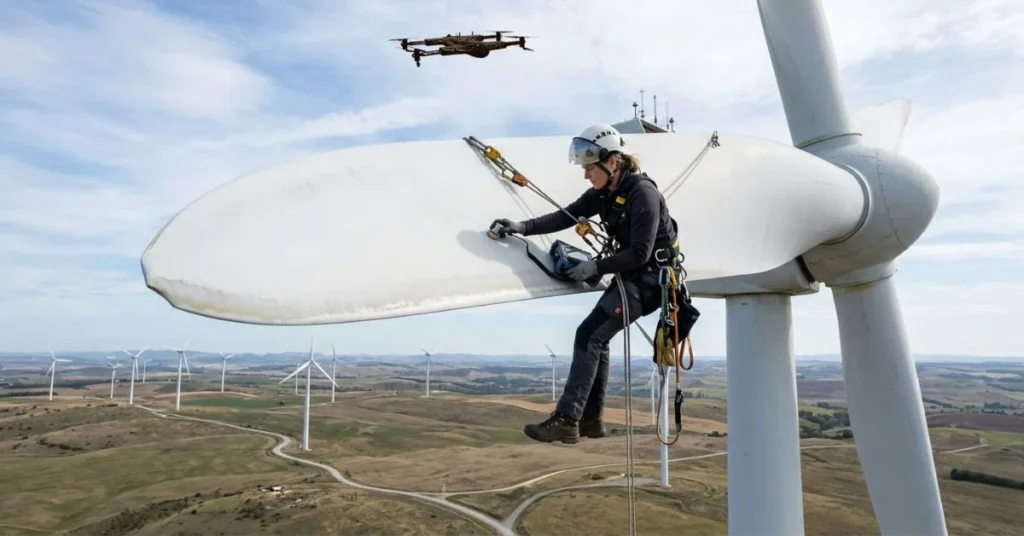
How Is Wind Turbine Blade Inspection Performed in Detail?
A detailed wind turbine blade inspection combines visual assessment, drone imaging, thermal analysis, and internal diagnostics to evaluate the overall health of the blades. Because blades are constantly exposed to wind loads, rain, salt, debris, and lightning, they are among the most vulnerable components of a wind turbine.
Today, most inspections begin with drone wind turbine inspection using advanced UAV (Unmanned Aerial Vehicle) systems. Drones follow programmed flight paths around the rotor to capture high-resolution images of blade surfaces from root to tip. This process supports accurate blade damage detection, reduces downtime, and strengthens overall structural integrity assessment.
Common Blade Defects Identified by Drones
Leading Edge Erosion
When rain, sand, and airborne particles erode against the blade front, leading edge erosion takes place. Otherwise, even a small erosion may lead to decreased aerodynamic performance and energy production. Drone inspections have the benefit of giving the operators close-up shots of the areas of erosion, giving time to institute timely repairs.
Delamination
Delamination refers to the separation of bonded layers within the blade’s composite structure. Modern wind turbines consist of layered composite materials in the construction of the turbine blades; thus, separation can undermine the blade, rendering it ineffective.
Cracks and Structural Fractures
Cracks may form due to fatigue stress, extreme wind loading, or manufacturing defects. Small surface cracks can quickly expand into deeper structural fractures if left untreated. Drone inspections enable precise documentation of crack size, location, and severity, improving maintenance planning.
Lightning Strike Damage
Because blades are elevated and exposed, lightning strikes are common. Lightning strike damage can result in burn marks, punctures, or internal electrical pathway damage. Drones allow rapid post-storm assessments, helping operators determine whether immediate repair or further internal inspection is necessary.
Internal Blade Inspection Technologies
Drones are great for checking the outside of blades, but to catch hidden cracks or voids inside, you need internal inspection tools. Non-destructive testing like ultrasonic and acoustic methods spots internal flaws without harming the blade.
These technologies will consider the whole structural integrity with analysis of the internal composition of the blade. In other instances, the inside of the blade can be accessed by the inspectors via the maintenance access openings to do a thorough internal blade inspection with special sensors.
Inspection Frequency Best Practices
Wind turbine blade inspection should be done at specific times because environmental factors, turbine operational age, and turbine operational activities define their required inspection schedule. The following inspection schedule serves as the basic standard, which requires annual drone visual inspections to be conducted as mandatory protocols:
- Annual drone-based visual inspections are standard practice.
- Additional inspections should follow severe storms or lightning events.
- Offshore turbines may require more frequent checks due to salt exposure and harsh weather conditions.
- Periodic internal inspections using NDT techniques help maintain long-term blade reliability.
How Is Offshore Wind Turbine Inspection Conducted Using Drones?
Checking turbines in an offshore wind farm is not as easy as it may sound. They fight saltwater, fierce winds, crashing waves, and inaccessible locations every single day and are out at sea. Due to this permanent pressure, the inspections require some additional attention, intelligent design, and specialized equipment to ensure the smooth and safe operation of everything.
In a bid to mitigate these issues, the use of sophisticated UAV (Unmanned Aerial Vehicle) drone systems to check wind turbines is becoming a common practice for their operators. Vessels or offshore platforms can fly drones to conduct rapid and precise inspections of the wind turbine blades, towers, and external nacelle elements without the need to have technicians access them. This will increase safety, minimize downtime, and increase the overall monitoring efficiency.
Challenges of Offshore Wind Inspection
Offshore inspections are more complex than land-based assessments. Some key challenges include:
- Hard to reach with the use of boats or helicopters.
- Severe maritime conditions of heavy wind and salt.
- Higher operational costs
- Reduced weather conditions for safe manual inspection.
Wear on turbine parts can be increased by saltwater corrosion and structural fatigue.
Why Drone Wind Farm Inspection Is Ideal Offshore
The drone wind farm inspection process operates at offshore locations because it protects crew members and provides swift access to detailed thermal and high-resolution data. The use of UAVs enables wind turbine blade inspection companies to complete their work at a faster rate while the technology assists them in identifying both surface erosion and structural damage.
Offshore Corrosion and Structural Monitoring
Offshore turbines face constant salt spray and humidity, so corrosion is a real threat. Drone inspections focus on spotting rust, coating damage, and surface wear on towers, blades, and the nacelle before they get worse.
With high resolution and thermal imaging, teams can catch early heat irregularities in components like the gearbox housing, helping protect structural integrity and extend the life of offshore assets.
BVLOS & Remote Offshore Inspection Technology
BVLOS enables UAVs to travel bigger distances throughout vast offshore wind farms without requiring the pilot to have direct visual contact. The sophisticated navigation systems, auto flight planning, and transmission of real-time data will allow inspecting the turbines remotely by centralized control sites. It is a technology that saves time and costs of operations and enhances uniformity during inspections.
Offshore drone inspections can be used to provide a safer, faster, and more data-driven method of maintaining wind energy infrastructure by integrating the BVLOS capabilities with high-resolution imaging and thermal sensors.
Why Is ZenaDrone the Best Drone for Wind Turbine Inspection?
ZenaDrone is an effective option for wind turbine inspection since it is designed to be used in harsh real-life environments. It can handle high altitude and strong winds, as well as large wind farms, without affecting its stability or the quality of the data it gathers. To both onshore and offshore turbines it provides clear and reliable inspection results and enhances safety and downtime.
The platform is an integration of high-quality inspection of wind turbine blades by thorough inspection, flight control smartness, and high-quality imaging to provide safer, more precise, and more efficient inspection of a wind farm.
Designed Specifically for Industrial Wind Turbine Inspection
ZenaDrone systems are industrial in nature, unlike consumer-grade drones. The turbines used in wind energy need to have stable operations in the difficult wind conditions and accurate control near the high buildings.
The drone platform provides automated flight paths to cover all the blades and perform a more in-depth evaluation of the towers. This provides unquestionable information gathering when regular inspections of wind turbines are conducted, eliminating the risk of human involvement and minimizing the time a turbine would otherwise spend.
Advanced Imaging for Wind Turbine Blade Inspection
Wind turbine blade inspection depends on the quality of the data. ZenaDrone incorporates modern image technologies that enable the operator to locate the slightest surface or internal irregularities.
Ultra-High Resolution Optical Cameras
The drone has ultra-high-resolution optical cameras that can capture finer surface details. This clarity aids prompt identification of cracks, leading-edge erosion, lightning strikes, and coat damage.
The zooming capabilities are high-resolution and enable the inspector to view the blades of wind turbines safely without compromising image quality, thereby enhancing the overall accuracy of blade damage detection.
Thermal Imaging for Internal Blade Defects
Thermal sensors are used to improve inspection, as they can detect temperature changes that may be caused by internal defects. These are used to identify delamination, moisture intrusion, or bond breakdowns in underground areas that cannot be observed during visual tests.
Thermal imaging enhances the general assessment of structural integrity and offers improved information on the blade health without any physical access.
AI-Powered Defect Detection System
The defect detection system of ZenaDrone is one of the most developed features and is based on AI. The system employs intelligent algorithms to examine captured images and identify possible defects, determine a type of damage, and create an inspection report.
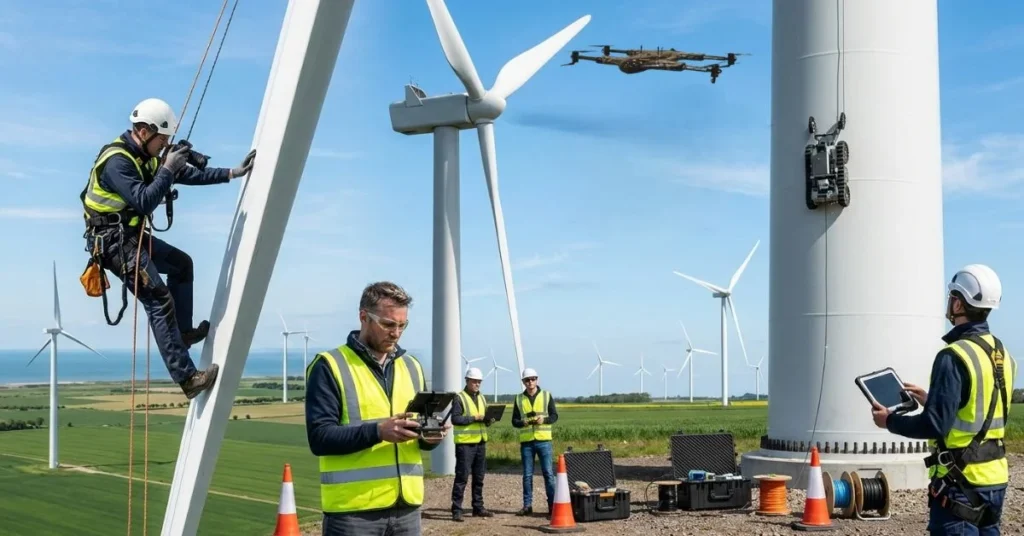
How Does Wind Farm Drone Inspection Work at Scale?
The inspection of wind farm drones is performed at scale: the UAVs fly hundreds or even dozens of turbines at pre-programmed routes. Drones are used to capture high-resolution images and data, which are then analyzed by AI and centralized systems in a few seconds, eliminating the need for manual checks of all turbines.
This is a scaled-up solution that enhances inspection consistency, minimizes operational costs, and optimizes overall wind turbine maintenance strategies.
Inspecting Multiple Turbines Efficiently
Scaling is all about efficiency. Industrial drones can survey multiple turbines in a single day using optimal paths through the wind farm.
Scanning is systematic, and on each turbine, the wind turbine blades, nacelle, and tower sections are scanned. Through several UAV teams, operators can cover larger areas at once to provide uniform coverage of the entire facility.
In the case of offshore wind farms, coordinated drones will save the ship time and substantially reduce logistics costs. This makes drone surveying of large wind farms much more viable than traditional rope-based surveying.
Automated Flight Planning and Data Capture
Scalable inspections rely on automation. Drones are given pre-programmed flight paths so they can repeat the inspection pattern for each turbine.
Automated positioning systems provide a safe distance around the blades but provide high-resolution pictures between the root and the tip. This guarantees the identicality in data collection to make correct comparisons in the long run.
Operators minimize human error and enhance repeatability by automating flight plans and capturing images. It’s important to make sure the wind turbine is monitored reliably as well as the assets can be managed over time.
AI-Powered Wind Turbine Inspection Reporting
The gathering of inspection data is not all. High-tech AI systems help process raw photos and turn them into actionable information faster, allowing for quicker decisions in the field and predictive maintenance planning.
Automated Defect Detection
With the help of AI-based software, the analysis of multiple thousand images is performed, and cracking, erosion, lightning strike damage, and wearing of coating are detected.
Rather than inspecting each image manually, the inspector is given a report of categorized defects that point to areas that need to be looked into. This significantly lowers the time of reporting and improves the accuracy of blade damage detectors.
Predictive Maintenance Insights
The AI systems can be used to identify patterns and trends by comparing past inspection data. The defects that are in the initial stages can be traced through time, and this assists the operators in determining when the repairs will be required.
Predictive insights reduce sudden failures, minimize downtimes, and also optimize maintenance spending in the wind farm.
Digital Twin Modeling
Newer inspection systems can create digital twin representations of turbines using high-resolution cameras and 3D mapping.
Such digital copies enable operators to see the structural condition, follow the course of defects, and plan repair methods. Digital twin modeling will improve the assessment of structural integrity and give an overall picture of the performance of assets on a large scale.
Case Study: Drone Wind Turbine Inspection at a Large Wind Farm
Project Overview
In late 2017, Siemens commissioned Cyberhawk to inspect 27 turbines in a drone wind turbine of an offshore wind farm. The project was aimed at the acquisition of overlapping high-resolution images of blades and structural elements, which could be used in conducting in-depth condition evaluation and maintenance planning. Custom-made software allowed no missing blade surface and allowed uploading data quickly to ensure data analysis can proceed as fast as possible.
Challenges Before Drone Wind Turbine Inspection
The wind farm, prior to the implementation of the UAV technology, depended on outdated visual inspections and rope access methods, which were both time-consuming and expensive and very unsafe. The manual processes could not offer a good cover of the blades, especially in rough weather conditions offshore. The industry was also not aware of how UAVs would provide detailed inspection results and, thus, was reluctant to expand its use. These shortcomings rendered it cumbersome and ineffective to detect damage to blades in time and monitor the long-term conditions.
Wind Turbine Drone Inspection Solution Implemented
To enhance the quality and efficiency of inspection, Cyberhawk introduced enhanced drone wind turbine inspections using drones fitted with high-resolution imaging systems. The UAVs were programmed by operators to have an overlap of at least 25 percent of the image to provide full coverage of the blade. An individual application was created to standardize the flight pattern and ensure that the full data was captured on each turbine. Images were processed and uploaded on the same day as they were inspected, which allowed quick analysis and faster plans of wind turbine maintenance without the long delays.
Defects Identified During Wind Turbine Blade Inspection
In the UAV inspections, the surface wear and small defects that encompassed erosions and slight surface irregularities were observed in various wind turbine blades, which were not visible to the traditional inspections because of high-resolution imagery. Such exquisite data facilitated the accurate recording of areas requiring subsequent examination or care, thereby enhancing the quality of condition measurements and informing the prioritization of repair teams.
Results and Measurable Improvements
The drone inspection method also greatly reduced inspection turnaround time, so the inspector could gather and process much more data in a shorter time than in the traditional mode of inspection. The project showed improved image quality and full coverage of the blades, increasing confidence in the inspection results. The speed of reporting and improved visual reporting enhanced decision-making and reduced the need for rope access during regular check-ups.
Long‑Term Impact on Wind Farm Maintenance Strategy
After the campaign, the operator incorporated into regular practices of monitoring the health of wind turbines the use of UAV-based inspections. Periodic drone inspections enhanced the scheduling of preventive maintenance, reduced the total risk of operations, and led to a transition to proactive condition-based management. This enhanced the long-term reliability and assisted in optimizing the maintenance budgets throughout the offshore wind farm.
What Is the Step-by-Step Wind Turbine Inspection Process?
The systematic inspection procedure of the wind turbines gives correct outcomes, better safety, and efficacy of the maintenance planning. Regardless of whether it is done onshore or offshore, the modern type of inspection involving UAV technologies has a distinct workflow that integrates the planning, data capture, data analysis, and reporting procedures.
Through standardization of every stage, the maintenance of wind turbines is enhanced, and the assessment of structural integrity and detection of blade damage are done uniformly throughout the wind farm.
Pre-Inspection Planning
The scheduling of all effective inspections is elaborated. The teams verify the specifications of turbines, their history of maintenance, environmental conditions, and safety needs. Flight paths are traversed in wind turbine blades, nacelle exteriors, tower components, and bare gearboxes. The measurement of weather analysis is taken to conduct safe drone flights.
In the case of offshore locations, logistics arrangements are well-planned with regulation.
Pre-inspection planning helps to make the drone wind turbine inspection process proceed without any hurdles and reduce downtimes of turbines.
UAV Deployment and Image Capture
When planning is done, the UAV (Unmanned Aerial Vehicle) is then used to carry out the inspection. During this phase, inspectors focus on:
- Extensive inspection of wind turbine blades in and out.
- Topography detection and crack detection.
- Identification of lightning strike damages.
- Checking the tower exterior and nacelle exterior.
Data Analysis and Defect Identification
Image capture is followed by image inspection with the help of sophisticated software and AI tools. The high-resolution images are viewed in order to detect cracks, leading-edge erosion, coating degradation, and structural anomalies.
The thermal data can indicate internal bonding problems or overheated parts. The AI-based analytics can help in the automatic classification of the defects, which accelerates the time to detect the blade damage and minimizes the time to review the data manually.
The comparison of the present findings and the condition of previous inspections helps in monitoring effective wind turbine conditions and planning predictive maintenance.
Reporting and Maintenance Recommendations
The last phase is producing a problem report of inspection. This report includes:
- Recorded defect position and level.
- Visual evidence of high resolution.
- The structural analysis and risk identification.
- Suggested repair or monitoring measures.
How Much Does Wind Turbine Inspection Cost?
The price of inspection of wind turbines will differ based on their place, the size of the turbine, the technology, and the frequency of inspection. Although inspections will involve initial investment, they are essential to avoid significant failures, minimize downtime, and enhance the maintenance efficiency of wind turbines in the long term.
Modern drone wind turbine inspection techniques tend to be less expensive in terms of cost than the rope-based inspections, particularly when applied to extensive wind farms.
Factors Affecting Wind Turbine Inspection Cost
- Turbine Height: Taller turbines take longer and need specialized equipment and sophisticated UAV stability systems. The increased height of the towers can add a higher level of inspection, especially during high-wind weather.
- Offshore vs. Onshore: The cost of inspection of offshore wind turbines is higher due to the expenses of boats, bad weather, and safety requirements. Onshore is less difficult and costly. Drones ensure they are safer, faster, and cheaper. In general, the conduct of inspection of offshore wind turbines is more costly because of the cost of transporting the vessels, transportation logistics, weather limitations, and safety demands. Onshore inspections are, in most cases, cheaper and simpler to organize.
- Number of Turbines: Large wind farms enjoy economies of scale. Offloading turbines on several targets lowers the tasks per turbine, particularly in automated wind farm drone inspection systems.
- Technology Used: The prices differ depending on whether the inspection approaches are simple visual inspections or high-tech tools such as thermal perspectives, AI-based analytics, and automatic reporting. Standardized systems enhance accuracy in detecting blade damage but might be costly in the short run.
Drone Wind Turbine Inspection Cost vs. Traditional Methods
In conventional rope-access inspections, trained climbing crews, safety gear, and extended turbine downtimes are required. These result in high labor costs and revenue losses due to downtime.
Conversely, drone wind turbine inspection makes the workforce less labor-intensive, makes it much safer, and requires much less time to perform. Inspections are also likely to be carried out within a few hours instead of days and reduce operational disruption as well as maintenance expenses that may be incurred in the long term.
Although drones involve initial expenditure on technology and training, the general price per turbine at any given period is usually lower than the manual ways of inspecting the turbines.
ROI of Regular Wind Turbine Inspection
Frequent inspections offer good payback, as they allow you to avoid disastrous failures and increase the life of turbines. The detection of early blade damage, leading edge erosion, and surveillance of the structural components minimizes the expensive emergency repairs.
How Do You Choose the Right Wind Turbine Inspection Partner?
Pick a partner with proven drone tech, field experience, and strong reporting capabilities. Beyond cost, focus on reliability, accurate data, and actionable insights to keep turbines safe and running efficiently.
What to Look for in a Drone Inspection Provider
The following should be taken into consideration when assessing a drone wind turbine inspection provider:
- UAVs are used in industries to fly in a circular motion around high turbines and high wind speeds.
- Third, high-resolution cameras and thermal sensors to check the blade accurately.
- Flight paths are automated to provide consistent and reliable data on turbines.
- AI fast defect and clear maintenance report AI tools.
- Offshore training to manage the marine logistics and safety needs.
Certifications and Technical Expertise
A person who is selecting an inspection partner should avoid ignoring certifications and technical qualifications. Look for:
- Certified and licensed UAV pilots.
- Adherence to the regulations of the aviation authority.
- Industrial inspection experience and renewable energy infrastructure experience.
- Experience in structural integrity evaluation procedures and nondestructive testing.
FAQ's
How long does a wind turbine inspection typically take?
It is based on the turbine and technique; however, over an hour, a single turbine can be inspected by drone, whereas a complete inspection of a wind farm might require a few days.
Can wind turbines be inspected while they are still operating?
Yes! Some remote sensors and drones can conduct safe inspections of a running turbine without stopping its operation and interrupting of electricity supply.
What weather conditions affect wind turbine inspection accuracy?
Inspections can be more difficult in strong winds, heavy rains, fog or poor visibility. Clearly, sunny days yield optimally.
What qualifications or certifications are required for wind turbine inspection providers?
The providers require certified UAV pilots, training in industrial inspection, and usually offshore safety certification of the marine sites.
What happens if wind turbine damage is not detected early?
Tiny problems may result in huge breakdowns in terms of wasted time, money on maintenance, and even fatalities. Early intervention helps in lengthening the safe lifespan of turbines.
What technologies are used to improve accuracy in wind turbine inspection?
High-resolution cameras, thermal sensors, AI-driven defect detection, and automated flight systems make inspections faster, safer, and more precise.
Contact Us

Thank you for your message. It has been sent.