


 Deutsch
 Português
How Drone Swarm Technology is Advancing Military Operations
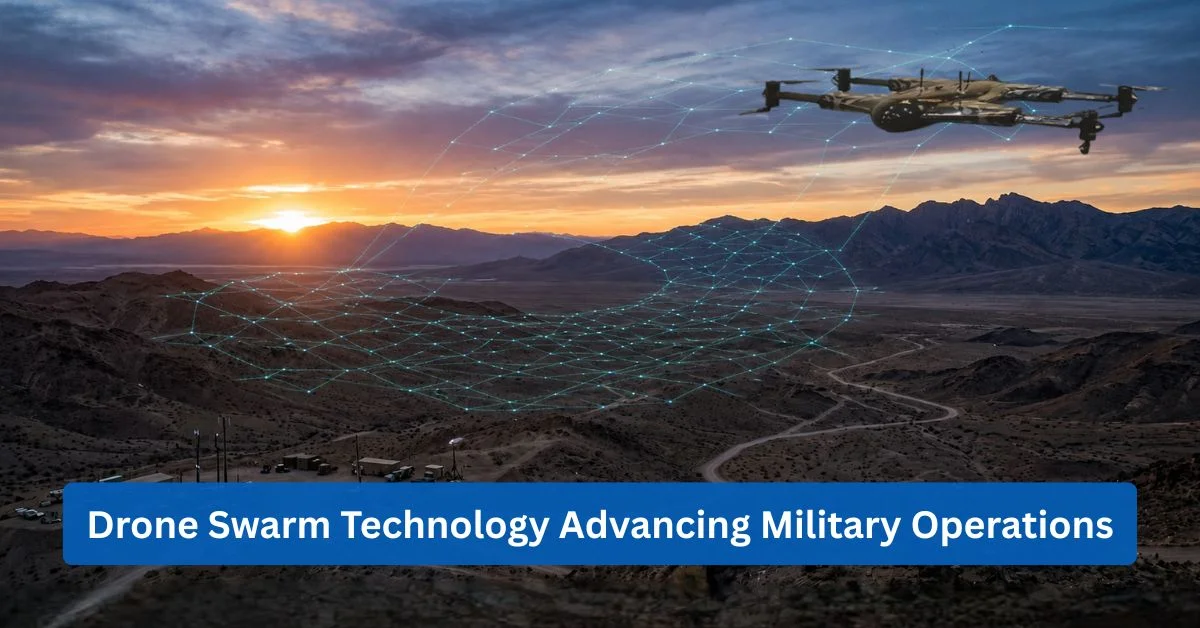
The development of modern defense systems has made drone swarm technology to be the most innovative in the military industry . What has been considered as experimental is slowly turning out to be an integral part of better defense strategies. The basis of these coordinated formations of unmanned aerial vehicles (UAVs) is the development of AI drone technology, changing the way operations are executed in surveillance, reconnaissance, and tactical operations.
In addition, autonomous drone swarms are not deployed as single drones; they are connected and can communicate in real time, make adaptive decisions, and synchronize their actions. This is not merely a technological change but a paradigm shift in defense organizations' ability to handle complex missions. It is being further advanced by companies such as ZenaDrone who incorporate proprietary technology which increases performance and reliability.
This blog emphasizes why drone swarm technology can be applied in military operations, why it is relevant in the military industry, and how it enhances modern military operations.
What is Drone Swarm Technology?
Drone swarm technology is the use of multiple UAVs which can be utilized as one. These drones are not autonomous but rather cooperate by mutual algorithms, decentralized communication, and coordinated behavior. The swarm is a network of independent and a more massive network which is represented by each drone. This structure enables:
- Distributed intelligence: There is no single point of failure.
- Scalability: Swarms can be scaled up or down based on mission requirements.
- Adaptability: Modifications in real time concerning changes in the environment.
In drone swarm operations, drones constantly communicate with each other, sharing information about terrain, targets, and threats. Because of this, they are more resilient than traditional UAV deployments. It also enables faster data collection and more comprehensive situational awareness, which are critical in high-stakes defense environments.
Role of AI in Coordinated Drone Operations
Autonomous drone swarm operations rely on sophisticated artificial intelligence to be effective. Even coordinating dozens (or even hundreds) of drones simultaneously would be impractical without AI.
AI drone systems enable:
- Real-time making of decisions without human intervention
- Dynamic planning of the path to avoid obstacles and optimize routes
- Recognition and tracking of the target with the use of machine learning algorithms
- Adjustment of drone roles based the mission needs because of its collaborative behavior
With modern military UAV technology, AI can be viewed as a powerful support system to coordinate drone operations with human operators while leveraging AI tools to improve the efficiency of the swarm and its responsiveness.
For example, AI can process real-time visual data during surveillance operations, detecting patterns or anomalies that may indicate a threat. In the tactical environment, it can allocate particular tasks to drones, e.g., reconnaissance, AI-powered drone surveillance, or interception, depending on the changing circumstances.
Such autonomy will alleviate the cognitive burden on human operators and greatly enhance operational efficiency. It also allows faster reaction time which may be vital in a defense situation where seconds count.
ZenaDrone’s Proprietary Camera System
The capability and quality of onboard sensor systems is a major distinction in the current defense drone innovation. ZenaDrone and its proprietary camera technology is an example of how efficient drone swarms can be enhanced through the use of cutting-edge imaging technology.
Unlike conventional camera systems, the platform of ZenaDrone is created to provide:
- High-resolution visual data for monitoring with precision
- Multispectral imaging features to improve detection
- Streaming of data over the swarm network
- Seamless integration with AI algorithms for automated analysis
This camera system will turn every drone into an improved data-collection point. In addition, drones provide a rich, multi-layered perspective of the working environment when deployed in swarms.
In drone swarm operations, this means:
- Broader area of coverage without compromising the detail
- Improved accuracy in identifying a target or any anomalies
- Faster aggregation and interpretation of data
ZenaDrone systems can transcend mere surveillance because of the synergy between advanced imaging and AI. They facilitate proactive intelligence, helping operators identify potential threats before they mature.
This can be particularly useful in complex situations where visibility is low or the situation evolves quickly.
Applications in Military and Surveillance
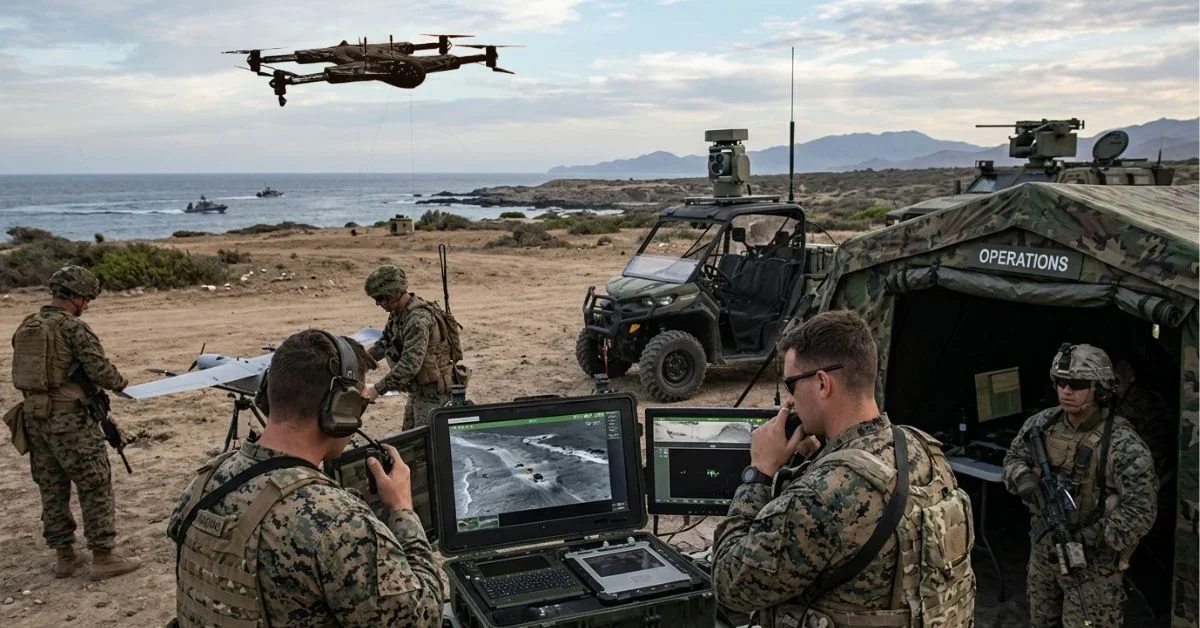
AI-powered drone systems are changing military operations by enabling coordinated, real-time decision-making across interconnected units. They run intelligent networks, useful in enhancing efficiency, responsiveness and situational awareness in complex environments, like in combat situations or emergency response operations where information timeliness is paramount.
1. Intelligence, Surveillance, and Reconnaissance (ISR)
The primary application of autonomous drone swarms exists in ISR operations which they conduct as their main function. The swarms provide ongoing intelligence by monitoring extensive areas simultaneously.
The advantages includes:
- Persistent monitoring without any gaps
- Lessened risk to the operator
- Enhanced situational awareness
2. Tactical Operations and Threat Response
Active defense situations such as counterterrorism operations, battlefield engagements, and perimeter breach responses benefit from drone swarm technology which provides fast deployment and synchronized operational capabilities. Swarms can be used to:
- Track the targets that are moving
- Secure perimeters
- Support ground operations with aerial intelligence
Coordination driven by AI ensures that a single drone contributes effectively to the mission, whether by data gathering or threat response.
3. Border Security and Surveillance
Border security operations now use modern military UAV technology which has become their primary tool for surveillance. Drone swarms can patrol vast and remote areas more efficiently than traditional methods.
The ZenaDrone advanced imaging systems enable the swarms to identify unusual activity and track movement patterns while delivering operational intelligence throughout the entire situation.
4. Infrastructure and Asset Protection
The development of defense drones has moved beyond their traditional military drone applications to create systems that protect vital infrastructure which includes power plants, pipelines, and communication networks. Drone swarms can:
- Continuously monitor large facilities
- Detect security breaches
- Quickly respond to emerging security threats
5. Disaster Response and Emergency Support
While defense operations are the primary purpose of drone swarm missions, these missions also serve as valuable tools for disaster management. Swarms can assist in:
- Search and rescue missions
- Damage assessment
- Delivering critical supplies
Emergency situations benefit from their capacity to function independently in tough conditions.
Future of Autonomous Drone Systems
The future of autonomous drone swarms depends on ongoing progress in artificial intelligence, connectivity, and sensors. The systems will gain new abilities as their technical design evolves to include more advanced features.
Key trends shaping the future include:
1. Increased Autonomy
Future AI drone systems will need less human control than their current operational requirements. Advanced machine learning models will enable drones to execute complex tasks without human operators, resulting in better operational performance and faster response times.
2. Swarm Intelligence Evolution
Next-generation drone swarm technology will focus on improving collective intelligence. This encompasses:
- Better algorithms in coordination
- More efficient communication protocols
- Enhanced adaptability in dynamic environments
3. Integration with Other Defense Systems
The military drone technology systems which operate on the ground and in space and at command facilities, will progressively adopt drone swarms into their existing systems. This development will establish a defense network that operates as a single unit and responds to threats in real time.
4. Advanced Sensor Fusion
The combination of multiple sensor types, visual, thermal, and multispectral, will provide deeper insights and more accurate data. ZenaDrone's proprietary camera systems create the necessary foundation to achieve this level of complete system integration.
5. Scalable Deployment Models
Drones swarm operations in the future will also allow defense agencies to use swarms of any size to provide immediate operational capabilities. The system needs this ability to handle various mission requirements that arise from different operational situations.
Conclusion
The development of drone swarm technology introduces a major advancement to contemporary military defense systems. The systems achieve their highest operational efficiency through AI-powered drone systems and synchronized multi-drone missions.
ZenaDrone develops its security systems through its main research work which combines proprietary camera technology with artificial intelligence-based operational control systems. Our military drone technology has achieved operational boundaries which enable it to conduct continuous intelligence operations while executing complex threat response tasks.
The role of drone swarms will become more important because of ongoing technological advancements which establish drone swarms as a fundamental aspect of defense drone development. Today's technology enhances current capabilities while laying the foundation for intelligent, autonomous defense systems.
Contact Us
This site is protected by reCAPTCHA and the Google Privacy Policy and Terms of Service apply.