



Drones for Solar Inspection & Energy Monitoring
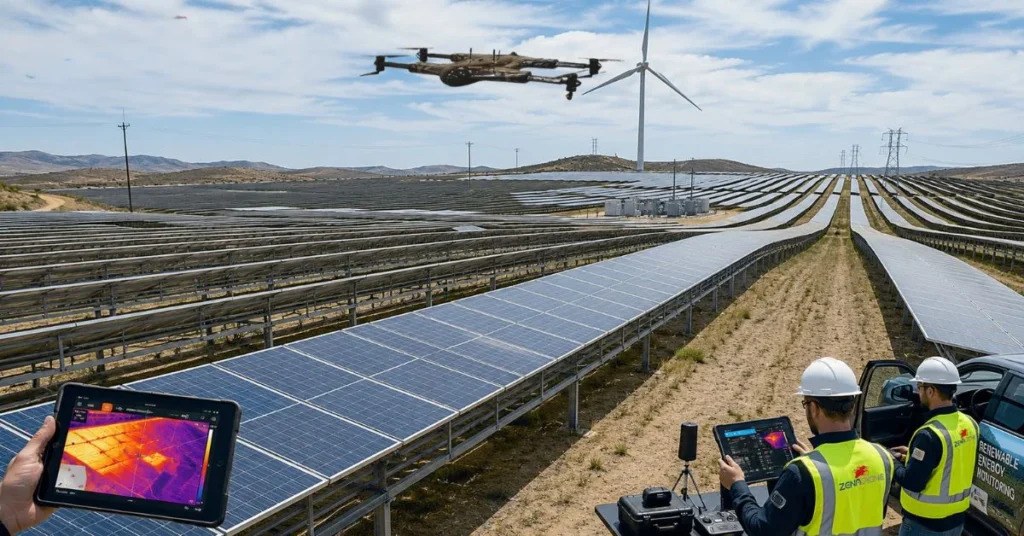
The renewable energy sector remains on the rise, with more companies investing in cleaner and smarter infrastructure. With the increase in the size of solar farms, wind turbines and utility equipment, it is also important to find quicker ways to inspect and monitor equipment. As a result, the use of drones in renewable energy sector is gaining traction throughout the industry.
In today’s world, renewable energy drones are employed in thermal imaging, aerial inspections, solar monitoring and infrastructure surveys. Many renewable energy drone services facilitate drone operators to better inspect large energy sites without having to send people on manual inspections to hard to access or dangerous areas.
Drones for energy industry applications are still being developed and enhanced with AI analytics, automated flight systems, and advanced sensors, all of which are being used in solar farm drone inspection projects and for utility monitoring.
In this article, we will go over the various applications of drone technology to renewable infrastructure, the advantages and disadvantages of UAV systems, and the future of energy inspections without humans.
What Are Renewable Energy Drones?
Renewable energy drones are unmanned aerial vehicles that are used to inspect, monitor and survey renewable infrastructure. These UAV systems gather visual, thermal, and spatial data that can be leveraged to evaluate the condition and performance of energy assets.
They are used for the following:
- Solar farm monitoring
- Wind turbine inspections
- Utility infrastructure inspection
- Power line monitoring
- Inspections of renewable energy assets
AI-driven analytics and autonomous flying systems are increasingly common in many drones for energy industry operations.
How UAV Technology Supports Renewable Infrastructure
Modern UAV renewable energy solutions allow operators to inspect large facilities more efficiently than many traditional methods. Drones can quickly scan infrastructure while capturing detailed imagery and thermal data.
These systems support:
- Energy asset monitoring
- Drone thermal imaging
- Predictive maintenance drones
- Utility asset management
- Renewable infrastructure monitoring
Drone systems also minimize the need for employees to enter hazardous areas for inspection. In many utility projects, the use of UAV aerial inspection methods provides a better and more visible way to operate the project with a reduction in downtime. With the expansion of renewable infrastructure around the world, the use of UAV systems in inspection and maintenance operations should continue to increase.
Types of Renewable Energy Drone Systems
- Inspection Drones: The inspection drones are widely applied in industrial drone inspection and renewable energy drone inspections. These UAVs usually are equipped with thermal cameras and high-resolution imaging systems.
- Solar-Powered Drones: A solar powered drone is a drone that is powered by the sun, either to assist or extend flight time. A solar panel on drone can help boost its endurance for extended missions. Lightweight drone with solar panel configurations are used in some solar drone systems to supplement battery charging during daylight hours.
- Autonomous UAVs: Pre-programmed inspections are conducted by autonomous UAV systems, requiring little pilot participation. More and more these drones are being used to perform automated drone inspections on energy infrastructure.
- AI-Powered Drones: AI-powered drones automatically analyze inspection data and flag equipment problems, hotspots, and deviations from performance.
How Drones Are Used in the Renewable Energy Industry
Solar Farm Inspection
One of the most common applications of drones in renewable energy is solar farm inspection. Manual inspections can be time-consuming in large solar facilities if the panels are spread out in large areas.
Drones for solar panel inspection allow operators to rapidly identify damaged or underperforming panels using thermal imaging and automated analysis tools.
There are numerous solar panel inspection drones that can cover a full solar farm in a brief time frame and gather in-depth operational data. Additionally, drone inspection services are being utilized for preventative maintenance and periodic inspections.
Wind Turbine Blade Inspection
Drone inspections of wind turbines provide operators with an opportunity to evaluate the condition of wind turbine blades without having to manually climb the tall structures to conduct inspections.
Drone inspections can be used to identify:
- Surface cracks
- Blade erosion
- Structural wear
- Lightning strike damage
Such inspections can be safer and quicker than traditional inspection methods.
Power Line & Grid Monitoring
There are a lot of utilities drone systems for grid inspections and utilitymonitoring. Drone for utility inspection are used to locate damaged components, overheated systems and vegetation interference along power lines.
Utility inspection drones for power lines also aid in access to challenging areas during inspections. Drone energy operations can assist in monitoring infrastructure in remote areas where manual access to the area could be difficult or costly.
Thermal Imaging for Energy Assets
Thermal drone inspection systems identify non-uniform heat distribution, which can point to equipment issues or electrical problems.
Thermal imaging by drones is frequently employed in the following ways:
- Solar farm monitoring
- Battery storage facilities
- Power substations
- Renewable infrastructure monitoring
Thermal analysis can also be used to help with operational assessment and planning for predictive maintenance.
Battery Storage Facility Inspection
Regular inspections are needed for battery energy storage facilities because of overheating and fire hazards. UAV aerial inspection systems offer a safer means of inspecting these environments.
Drone Inspection for Solar Power Plants
Why Solar Panel Inspections Matter
Dirt build-up, damaged cells, overheating or electrical faults can cause loss of efficiency in solar panels. Regular inspections ensure continued energy production and minimize maintenance problems.
Solar panels can lose efficiency due to dirt buildup, damaged cells, overheating, or electrical faults. Regular inspections help maintain energy production and reduce maintenance issues. One of the reasons drones in renewable energy are becoming more popular is because of this.
Detecting Hotspots & Faulty Panels with Thermal Cameras
Thermal drones for solar panel inspection can detect hot spots, which can signal failing PV cells or electrical connections. Solar panel inspection drone use infrared cameras to provide fast and detailed temperature readings across large installations.
Drone-Based Solar Asset Monitoring
Monitoring solar farms using drones provides a more consistent assessment of panel conditions and performance of infrastructure.
Commercial solar panel inspection drones can be used to monitor:
- Panel alignment
- Inverter performance
- Shading issues
- Damaged equipment
A number of operators also leverage renewable energy drone inspections for the purposes of maintenance planning and long-term asset management.
Improving Solar Farm Efficiency with UAV Data
Drone mapping for solar farms offers operators an aerial perspective to help plan maintenance and optimize energy. Another use for renewable energy drone services is to find underperforming areas in large solar facilities. This can help to enhance the accuracy of inspection and aid in the analysis of operational data.
AI Analytics & Automated Reporting
AI analytics and cloud reporting tools are available in many renewable energy drone services. AI drones for utility inspections can automatically detect anomalies and produce maintenance reports based on the inspection data gathered.
Benefits of Drones in Renewable Energy Operations
Faster Inspections Compared to Manual Methods
Drone inspection services enable operators to inspect infrastructure in a quicker manner than many traditional approaches. A solar farm drone inspection project that previously took several days, can be achieved significantly quicker with UAV systems.
Improved Worker Safety
Drones help eliminate the necessity of workers to go into hazardous or hard-to-reach infrastructure. This is particularly useful for drones for energy industry use for wind turbines, substations and power line inspections.
Reduced Operational Costs
Renewable energy drone services can help to cut down on labor costs, equipment costs, and downtime. But real savings will vary with infrastructure size and its needs.
Increased Accuracy with Thermal & LiDAR Sensors
LiDAR drone inspection systems develop very minute maps of 3D terrain, for terrain analysis and infrastructure evaluations. They complement thermal drone inspection technology to enhance the accuracy of inspection.
Real-Time Monitoring & Predictive Maintenance
Predictive maintenance drones assist the operators in observing the infrastructure state and detecting problems before they arise. Real-time monitoring data is now used for many drone energy applications for maintenance scheduling.
Reduced Downtime for Energy Infrastructure
Time to inspection and automated reporting may help to minimize maintenance delays in drones in renewable energy operations.
Autonomous & Solar-Powered Drones
What Are Solar-Powered Drones?
Solar powered drones are drones that utilize solar power to help their onboard battery power during flight. Incorporating solar panel elements into the aircraft body of a drone, the drone can capture solar energy during flight.
How Solar UAVs Work
A solar power drone is an unmanned aerial vehicle equipped with photovoltaic cells that harnesses solar energy to generate electricity for the drone’s flight. While solar powered UAV technology is still developing, long-endurance flight systems are getting better.
Long-Endurance Flight Advantages
The solar drone can fly for a longer period than ordinary battery-powered UAVs, depending on the weather conditions.
This can support:
- Renewable infrastructure monitoring
- Environmental surveys
- Large-area inspections
Autonomous Drone Missions for Energy Infrastructure
Unmanned drones for solar farms can be programmed to automatically gather inspection data as they fly a pre-programmed route. These systems provide consistent inspections and ease pilot workload.
Fixed-Wing vs Multirotor Energy Drones
Large area inspections are typically performed with fixed-wing drones, and close-range inspections are carried out by multirotor UAVs. The aircraft designs of different types of drones vary according to the specific applications in drones for energy sector.
Key Drone Technologies Used in Energy Inspections
- Thermal Imaging Cameras: Temperature differences can be detected by thermal imaging cameras which can be used to identify issues with infrastructure. These systems are vital to thermal drone inspection operations and solar farm drone inspection projects.
- LiDAR Sensors: LiDAR drone inspection systems create detailed topographic and structural maps which can be used for infrastructure analysis.
- AI & Machine Learning Analytics: AI drone analytics can aid in automating defect detection and speed up reporting inspection results.
- GPS & Autonomous Navigation Systems: In autonomous systems for UAVs, GPS navigation and obstacle avoidance systems are used to improve flight precision.
- Cloud-Based Drone Data Platforms: Cloud platforms help operators to manage reports of inspection, aerial imagery, and maintenance records.
- Digital Twin Technology: Some companies are using digital twin technology and drone inspection data to create models of the performance of infrastructure and the behavior of energy assets over time.
Renewable Energy Sectors Using Drone Technology
- Solar Energy: Solar farm and maintenance planning is frequently performed using drones for photovoltaic inspections.
- Wind Energy: Wind turbine drone inspection helps to improve safe and efficient blade inspections.
- Hydroelectric Facilities: UAVs aerial inspection are used for the inspection of dams, reservoirs and surrounding infrastructure.
- Oil, Gas & Utilities Transition Projects: In hybrid energy infrastructure projects, utilities drone operations are also employed.
- Smart Grid Infrastructure: Drone energy systems enable expansion of the smart grid and utility modernization.
Challenges of Using Drones in Renewable Energy
- Weather & Environmental Conditions: Weather such as rain, strong winds and extreme temperatures can impact the performance of your drone and the quality of your inspection work.
- Regulatory Compliance & FAA Requirements: The drone operator is required to follow aviation regulations and local UAV restrictions.
- Data Security & Privacy Concerns: Cybersecurity is a concern with renewables energy drone inspections, as it produces high volume of operational data.
- Battery Limitations & Flight Time: Long-duration UAV operations continue to be a challenge with battery capacity.
- Scaling Large Infrastructure Inspections: As the scale of renewable infrastructure grows, so can the complexity of managing large inspection programs and drone fleets.
Future Trends in Renewable Energy Drone Technology
- AI-Powered Autonomous Inspections: Previously, the speed and amount of manual analysis would be limited by human inspection, but with AI-driven autonomous inspections, this could improve.
- Drone Swarms for Large Solar Farms: Drone based solar farm monitoring efficiency could be boosted with drone swarms for large facilities.
- BVLOS (Beyond Visual Line of Sight) Operations: The future may see renewable energy drone inspections operating over greater distances thanks to BVLOS.
- Solar-Powered Long-Endurance UAVs: Research and development are still underway with long-endurance solar powered drones.
- Robotics & Smart Energy Infrastructure Integration: Drone systems can become more and more integrated with robotics and automated infrastructure systems.
Best Drones for Renewable Energy Inspections
- Enterprise Inspection Drones: Enterprise UAVs are often used for industrial inspection workflows and for advanced imaging systems.
- Thermal Drones for Solar Farms: Best drones for solar panel inspection feature thermal imaging and AI analysis software.
- Autonomous Fixed-Wing UAVs: Fixed-wing UAVs are commonly used for large-scale renewable infrastructure monitoring.
- Drone Software Platforms for Energy Companies: Many drone inspection services provide cloud-based reporting and analytic tools.
How to Choose a Drone Solution for Energy Infrastructure
Key Features to Consider
Organizations should evaluate:
- Camera quality
- Thermal imaging
- Flight endurance
- Autonomous capabilities
- Data processing software
Sensor & Camera Requirements
Different drones in renewable energy inspection solutions require different imaging systems and sensors.
Flight Time & Coverage Area
Larger facilities often require longer-endurance UAV systems and efficient aerial coverage.
AI Analytics Capabilities
AI-based reporting tools may improve operational efficiency and inspection analysis.
Regulatory & Safety Compliance
Organizations should ensure drone operations comply with aviation and workplace safety regulations.
ROI of Drone Inspections in Renewable Energy
- Cost Savings Compared to Traditional Methods: Drone inspection services for solar farms can help to lower labor needs and downtime during inspections.
- Faster Asset Maintenance Cycles: Faster inspections help to schedule maintenance and repairs faster.
- Increasing Energy Production Efficiency: A solar farm drone inspection can help to detect underperforming panels that will decrease the output of the system.
- Reducing Human Risk & Insurance Costs: Utilizing drones for utility inspection can minimize worker exposure to hazardous situations.
Why Renewable Energy Companies Are Investing in Drone Technology
- Growth of the Global Renewable Drone Market: Renewable energy drone market is still growing with the development of renewable energy infrastructure.
- Sustainability & Carbon Reduction Benefits: The use of drones can help minimize unnecessary travel and increase efficiency.
- Smart Infrastructure & Automation Adoption: The future of renewable energy asset inspection and infrastructure management is still evolving with automation and AI. Several companies are also investing in long-term operational planning with solar power drone technology and autonomous monitoring systems.
Conclusion
Drones in renewable energy are being used in solar farms, wind installations, utilities and smart infrastructure projects. Inspection, thermal imaging, predictive maintenance, and monitoring of renewable infrastructure are achieved at a greater scale than ever before with UAV systems.
Renewable energy drone services give the operator access to data from inspections in a quicker timeframe, and eliminate the need to conduct manual inspections in hazardous conditions. Other technologies like solar powered drones, AI analytics, and thermal imaging systems are also enhancing the way energy companies conduct maintenance and operational planning.
While issues with weather, regulations and batteries remain, drone technology continues to evolve throughout the energy industry. The use of drones for renewable infrastructure operations and monitoring will continue to be a key tool as autonomous UAV systems and drone inspection services enhance.
Frequently Asked Questions About Renewable Energy Drones
How are drones used in solar energy?
Drones are employed to inspect solar panels, for thermal imaging, to monitor infrastructure, and to plan maintenance.
What is a solar-powered drone?
A solar powered drone uses solar energy to supplement its onboard battery system during flight.
Can drones inspect wind turbines?
Yes. Drone surveys of wind turbines help identify any damage or defects in the blades, erosion and structural issues.
What sensors are used for energy inspections?
Typical inspection sensors are thermal imaging cameras, LiDAR, RGB cameras, and multispectral imaging sensors.
Are autonomous drones safe for utility inspections?
With proper use and under regulatory requirements, autonomous drones can help to enhance inspection consistency and minimize worker exposure.
What are the benefits of drone thermal imaging?
Drones with thermal imaging can detect equipment and electrical problems, as well as inefficient infrastructure.
How much do renewable energy inspection drones cost?
The cost of the inspection depends on the UAV platform, sensors, software, and the need for inspection.
Contact Us

Thank you for your message. It has been sent.