


 Deutsch
 Português
Thermal Drones for Search and Rescue: Enhancing Wildfire Emergency Response
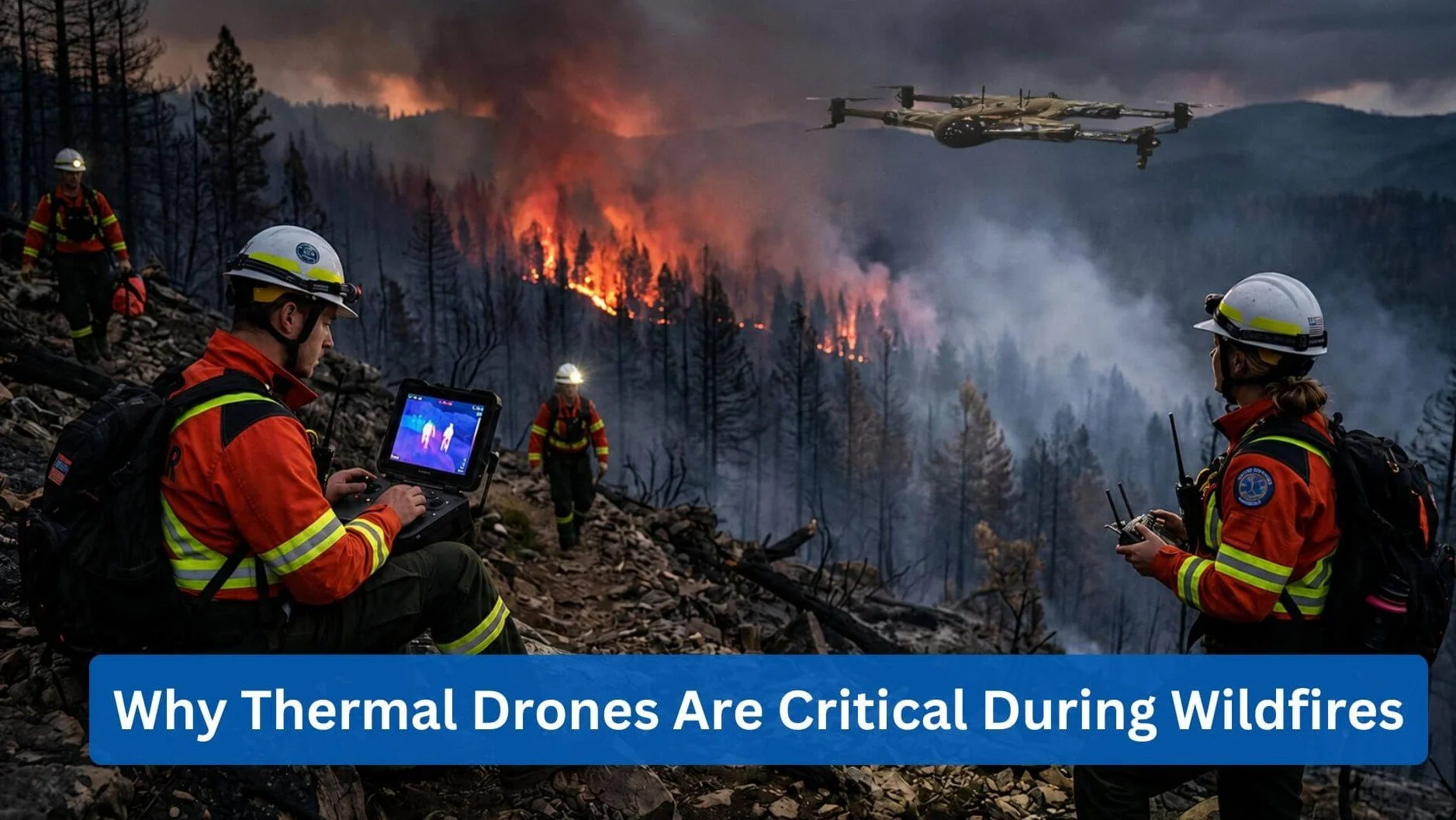
Wildfires have occurred frequently and severely. Their occurrence creates significant challenges for the emergency responders who are assigned with locating the victims and controlling the rapid spreading of fires. As these disasters increase, advanced technologies, including thermal drone solutions for emergency response and search and rescue teams, are playing a critical role in improving the speed, safety, and effectiveness of rescue operations. Among the most impactful innovations are the thermal drones for search and rescue, which use thermal imaging to detect if there are any heat signatures, even in environments that are filled with smoke or with low light.
This blog will talk about the exploration of how thermal drones work, why they are important when there are wildfire emergencies, the technologies that power them, and the benefits that they can provide to the firefighters and search and rescue teams. It will also include the challenges, the advancements in the future, and especially, how they are transforming modern emergency response.
What Are Thermal Drones for Search and Rescue?
Thermal drones are considered unmanned aerial vehicles (UAVs) that are equipped with infrared imaging cameras helpful to detect heat. Thermal drones are different from conventional drones since conventional ones only rely on RGB cameras. Thermal imaging drones capture any differences in surface temperatures, enabling the operators to identify people, animals, vehicles, and hotspots even with poor visibility.
These specialized aircraft have become valuable tools for services that focus on emergencies because they provide aerial intelligence while removing the need for the responders to expose themselves to unnecessary danger. Thermal drones’ ability to fly over terrains that are hazardous, dense forests, steep mountains, and zones where wildfires usually occur allows the rescuers to gather important information that would otherwise need many hours of ground searching.
Why Search and Rescue Missions Are Becoming More Complex
Modern search and rescue operations are facing growing challenges as problems like wildfire rapidly spread, the reduction of visibility due to smoke, and remote terrain delay rescue efforts. Unfortunately, climate change has also increased the frequency of disasters. This creates larger emergency zones that strain the response teams.
Traditional methods include practices like assigning ground crews, using helicopters, and manned aircraft. Although effective, it all still requires significant manpower, higher costs, and longer deployment times. As emergencies become complex, agencies are adopting technologies that are advanced enough to speed up searches while reducing the risks to be possibly encountered by the responders.
The Growing Role of Thermal Drone Technology
Drone technology has evolved rapidly over the past decade. Drones before were used to primarily capture aerial photographs, but modern UAV search and rescue platforms integrate thermal sensors, AI (artificial intelligence), GPS navigation, obstacle avoidance, and transmission of live video.
Emergency agencies increasingly deploy drones for emergency response because they can:
- Survey in areas that are dangerous before personnel enter
- Identify hotspots when there's wildfire suppression.
- Locate if there’s a missing person faster
- Monitor changing fire behavior.
- Provide live aerial intelligence to command centers.
- Support the planning of evacuation.
These capabilities significantly improve response times while at the same time, enhancing decision-making.
Importance of Rapid Response During Wildfires
Time is one of the most critical factors during any wildfire emergency. A few minutes' delay may determine whether the individuals who are trapped can survive or whether the firefighters can safely contain a rapidly expanding blaze. Thermal camera drones allow responders to launch within minutes and can then immediately begin the scanning process in the affected areas during wildfire search and rescue.
Since they provide real-time footage, rescue coordinators can quickly prioritize the search locations and allocate the resources where they are most needed to be used. Rapid deployment also lessens the unnecessary exposure of firefighters to environments that are hard and dangerous to navigate in.
Overview of Thermal Imaging Capabilities
Thermal cameras detect infrared radiation naturally emitted by every object with a temperature above absolute zero. Instead of capturing visible colors, thermal cameras generate images based on temperature differences between objects. This is done through the use of colors that are contrasting or grayscale palettes. Objects that are warmer do usually appear brighter than cooler surroundings; that’s why humans stand out compared to the vegetation, rocks, and landscapes during a fire.
This capability enables emergency response drones to identify:
- Missing People
- Injured victims
- Animals
- Hidden fire hotspots
- Overheated equipment
- Vehicles
- Potential structural hotspots
These insights allow responders to make informed decisions even when visibility is extremely limited.
How Do Thermal Drones Work?
Understanding how thermal drone technology functions helps explain why it has become so valuable for emergency operations. Thermal drones are different from standard camera drones that rely on sunlight or artificial lighting, thermal drones detect emitted heat energy. This means that they can continue operating effectively during darkness, heavy smoke, or fog where traditional camera struggle
Thermal Imaging Explained
Thermal camera drones detect infrared radiation that is emitted by objects and convert it into images that put more emphasis on the differences in temperature. This allows the rescuers to identify people in forests, collapsed structures, and other difficult terrain in a quick manner.
Detecting Heat Signatures
As humans, our bodies emit heat, making us visible through thermal cameras even when hidden from normal sight.
Thermal imaging can detect:
- Human’s body heat
- Recently occupied vehicles
- Active fire hotspots
- Burning vegetation
- Animals
- Machinery
Operators interpret these heat signatures alongside GPS data to pinpoint precise rescue locations.
Difference Between Thermal and RGB Cameras
Standard RGB cameras capture visible light. Different from standard ones, thermal cameras detect heat signatures. Below is a table indicating the key differences between these two imaging technologies important for wildfire search and rescue operations:
Feature | RGB Camera | Thermal Camera |
Requires light | Yes | No |
Night operation | Limited | Excellent |
Smoke Penetration | Poor | Better |
Heat detection | No | Yes |
Fire hotspot detection | No | Yes |
Many modern thermal camera drones combine both sensors. This combination allows the operators to switch between visible and thermal imagery depending on the requirements of the mission.
Key Drone Components for SAR Missions
Professional search and rescue drones typically include:
- High-resolution thermal sensors
- RGB zoom cameras
- GPS and RTK navigation
- Systems for obstacle avoidance
- Long-range communication links
- Gimbals that are stabilized
- Extended flight batteries
- AI-assisted target recognition
- Live streaming capabilities
If these technologies work together, it will create highly effective aerial rescue platforms that are capable of operating in environments that are demanding.
Why Thermal Drones Are Critical During Wildfires
Wildfires create some of the most dangerous environments emergency responders encounter. The thick smoke, flames that are rapidly shifting, falling trees, and unstable terrain make traditional search operations extremely hazardous. This is where the thermal drones for search and rescue provide their greatest value.
- Low-Visibility Operations: Thermal drones can help detect heat signatures in low-visibility conditions including smoke, depending on smoke density and environmental conditions.
- Smoke Penetration Capabilities: Unlike standard cameras, thermal imaging’s role is to detect temperature differences. Through this, firefighters can monitor the spread of the fire, locate survivors and hotspots, and assess the routes for evacuation.
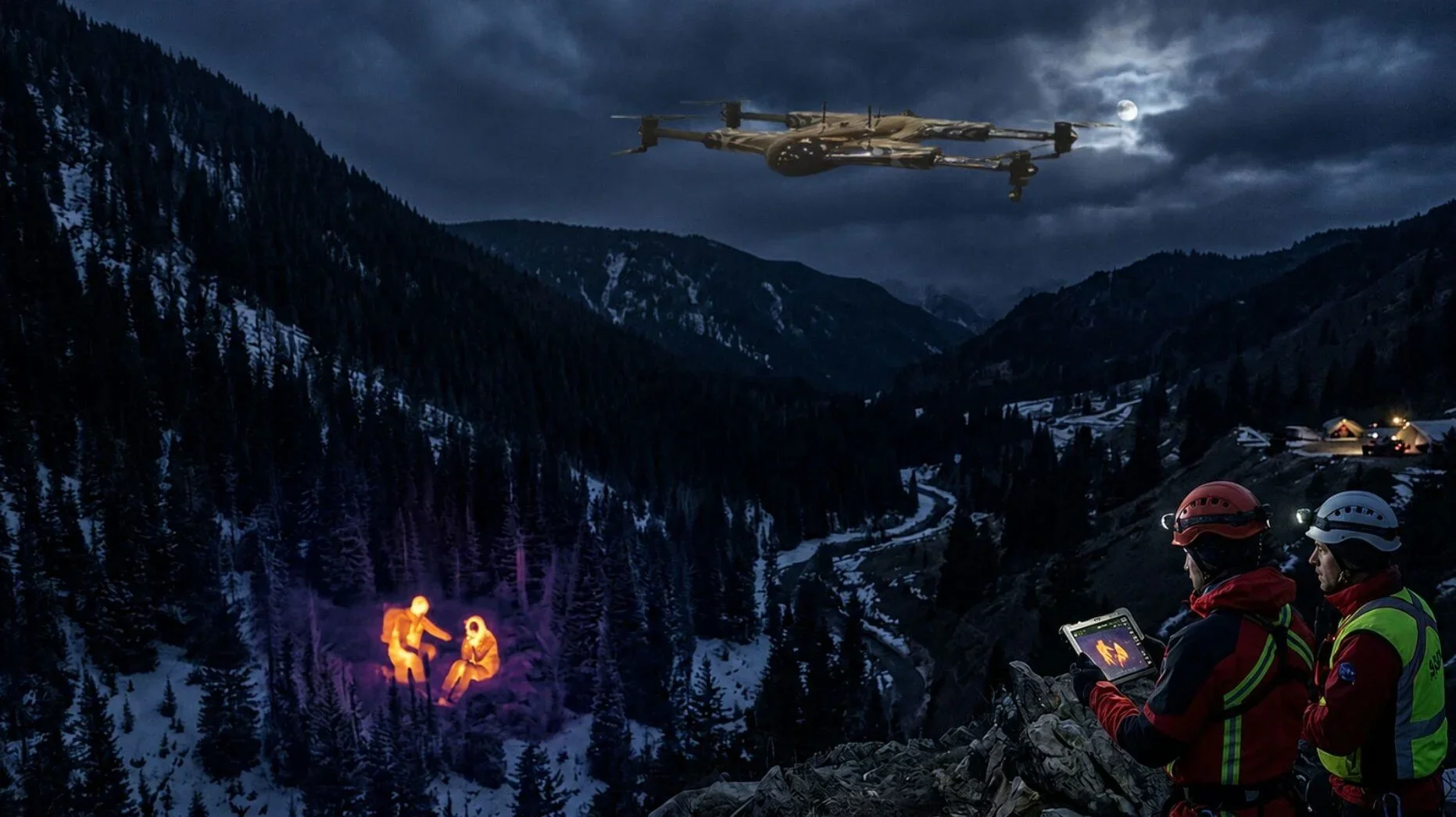
- Night-Time Rescue Missions: Thermal drones effectively operate during nighttime by detecting body heat, enabling continuous search and rescue despite darkness in a specific area.
- Locating Survivors Quickly: Drones for emergency response are useful in rapidly scanning areas that are large and difficult to navigate afterwards and transmit victim GPS locations. This reduces the time consumed for the search and improves the success of the rescue.
Supporting Firefighter Decision-Making
Beyond locating victims, thermal drones provide commanders with critical operational intelligence.
They help identify:
- Safe entry routes
- Dangerous hotspots
- Changing fire fronts
- Flare-ups that are hidden
- Paths for escaping
- Resource deployment priorities
This real-time situational awareness allows the incident commanders to make faster and safer decisions at the same time, reducing the risks to frontline responders.
Are Thermal Drones Better Than Traditional Search Methods?
For a very long time, traditional search and rescue operations have relied on ground teams, helicopters, and manned aircraft to locate the victims and assess the areas where the disaster occurred. Despite the essentiality of these methods, they can be time-consuming, expensive, and limited by the hazardous terrain as well as poor visibility.
Thermal drones complement and enhance these approaches that are done traditionally. Thermal drones are better than traditional ones considering the fact that they provide faster, safer, and more cost-effective aerial support. Some of the reasons why they are the best include quickly scanning dangerous areas, rapidly deploying more, and at a lower cost than using a helicopter and hiring a professional pilot. Thermal drones deliver close-range real-time monitoring that manned aircraft cannot, detect heat signatures in smoke, darkness, and other conditions with low-visibility where standard camera drones are less effective to use.
Key Advantages of Thermal Drones
- Rapid deployment
- Lower operating costs
- Improves the safety of the responders
- Access to difficult terrain
- Real-time thermal intelligence
- Faster detection of victims
Thermal drones complement traditional rescue methods by providing critical information before responders enter dangerous environments.
What Technologies Power Thermal Drones for Search and Rescue?
Modernized drones for emergency response combine several advanced technologies in order to improve detection accuracy, navigation, and mission coordination.
- Thermal Cameras: High-resolution thermal cameras can detect heat that makes it easier to identify people, animals, fire hotspots, and other sources of heat in environments that are challenging.
- AI-Powered Object Detection: Artificial Intelligence Drone are also known as AI Drone, analyzes thermal imagery in real time to identify if there are potential victims and hazards. This is helpful in improving the accuracy of detection and reducing the workload of operators.
- GPS and RTK Positioning: GPS and RTK provide a navigation that provides precise and accurate coordinates of the victims, making the ground teams able to reach rescue locations more quickly.
- Live Video Streaming: Live HD video streams give emergency command centers real-time aerial views, improving communication and decision-making during rescue missions.
- Beyond Visual Line of Sight (BVLOS): BVLOS capability allows drones to cover larger areas beyond the visual range of the pilot. It is more ideal to be used for large-scale wildfire and search operations.
Flight Planning Software
Professional drone software allows operators to design automated flight paths before takeoff.
Features include:
- Grid search patterns.
- Terrain following.
- Avoidance of an obstacle.
- Automatic waypoint navigation.
- Mapping of the area.
- Return-to-home functions.
These capabilities are working to provide consistent coverage and to decrease pilot workload at the same time.
Benefits for Emergency Response Teams
Thermal drones made a transformation in emergency response. They not only made rescue teams work faster but also allowed them to make better decisions and operate in challenging operations more safely. Here are their specific benefits for emergency response team:
- Faster Victim Detection: Thermal drones can quickly scan areas with large sizes. This is very helpful for rescuers in locating missing individuals faster.
- Improved Responder Safety: Drones are useful in assessing areas that are considered as hazardous. This is important to be practiced before sending personnel to enter, reducing their exposure to danger.
- Reduced Operational Costs: They are more affordable to operate than helicopters and manned aircraft.
- Better Situational Awareness: Real-time aerial imagery helps monitor the conditions of fire, potential evacuation routes, and locations of the team.
- Faster Decision-Making: Live thermal data enables the commanders to quickly adjust rescue and adjust the strategies for firefighting.
What Challenges Should Organizations Consider Before Deploying Thermal Drones?
Thermal drones are significantly improving emergency response. It is also important for organizations to remember to address operational, technical, and regulatory challenges in order to ensure both safe and effective deployment.
- Weather Limitations: Strong winds, heavy rain, dense smoke, and extreme temperatures can reduce flight performance and thermal image quality.
- Battery Management: Limited battery life requires spare batteries and efficient charging for longer missions.
- Regulatory Compliance: Operators must follow the aviation rules, airspace restrictions, and they must have pilot certification requirements.
- Pilot Training: Proper training in drone operation, thermal imaging, and emergency response is essential for safe and successful missions.
- Data Interpretation: Thermal images require a skilled analysis to avoid false positives and improve accuracy of detection.
Future of Thermal Drones in Search and Rescue
AI Drone technology continues to evolve rapidly, and the future promises even greater capabilities for UAV search and rescue operations. Advances like automation, connectivity, and of course, sensor technology will allow further improvements especially in terms of speed and the effectiveness of search and rescue missions. Aside from these innovations, there are several technologies that grow continuously along with them.
- AI-Assisted Rescue Missions: AI will analyze thermal images in real time to identify people, vehicles, and hazards while at the same time helping in terms of prioritizing search areas for faster and more efficient rescue operations.
- Autonomous Drone Deployments: Future drones may launch automatically, follow routes that are already planned, and return to charging stations with a minimal intervention of a human, reducing the response times.
- Drone Swarm Technology: Drone swarms will allow multiple drones to simultaneously search in areas that are large, share real-time data, and provide a continuous aerial coverage during emergencies.
- Integration with Emergency Command Systems: Future drones will have an integration with the emergency command systems, the GIS weather data, and communication networks just for the purpose of improving both coordination and decision-making.
- Predictive Emergency Response: AI-powered predictive analytics will use thermal imagery and environmental data to forecast the spread of the fire and identify search areas that must be highly prioritized before the conditions worsen.
Conclusion
As wildfires occur more frequently, thermal drones for search and rescue are becoming essential for modern SAR operations. Faster detection of victims is one of the essential things to consider while saving lives during wildfires. In addition, they enable faster detection of victims, improve situational awareness, and strengthen UAV search and rescue operations, especially regarding wildfire emergencies. These capabilities are helpful to protect both victims and responders during the wildfire search and rescue.
Finally, the evolution of AI and autonomous capabilities has made thermal drones for search and rescue perform a role that’s great enough to prioritize public safety. These advanced solutions from drones are a big improvement that will improve response times, support better decision-making, and help emergency agencies save more lives during future disasters.
Frequently Asked Questions
How do thermal drones locate missing people in smoke or darkness?
They are equipped with infrared cameras which can help responders to locate people even in the dark or in an area that is smoky.
Can thermal drones detect people hidden under trees or debris?
Yes, under light vegetation and debris. Dense tree cover or heavy debris may reduce detection.
Why are thermal drones more effective than standard camera drones for rescue missions?
Rather than detecting visible light, they detect heat instead. This makes them more effective during nighttime as well as in low-visibility conditions.
How far can thermal drones detect a human heat signature?
Detection range depends on the camera and conditions, but high-end models can detect people from several hundred meters away.
Can thermal drones operate during active wildfires?
Yes. They help locate victims, monitor fire spread, and identify hotspots while operating at safe distances.
What weather conditions affect thermal drone performance?
Strong winds, heavy rain, snow, and extreme heat can reduce flight performance and image quality.
How do firefighters use thermal drones during wildfire emergencies?
Firefighters use them to locate victims, monitor the behavior of fire, identify the hotspots, and also assess the evacuation routes.
Are thermal drones effective for night-time search and rescue operations?
Yes. Thermal cameras detect heat, making them highly effective during night operations.
What features should emergency agencies look for in a thermal rescue drone?
Look for a high-resolution thermal camera, GPS or RTK, obstacle avoidance, AI detection, long flight time, and live video streaming.
Can AI improve the accuracy of thermal drone searches?
Yes. AI is helpful in identifying heat signatures, reducing false positives, and of course, improving the search efficiency.
Are thermal drones cost-effective for public safety organizations?
Yes. They cost less to operate than helicopters while providing fast and valuable aerial intelligence.
What industries besides emergency services use thermal drones?
Thermal drones are also used in different fields such as agriculture, in inspecting infrastructure, construction, energy, mining, environmental monitoring, and security.
Contact Us
This site is protected by reCAPTCHA and the Google Privacy Policy and Terms of Service apply.